
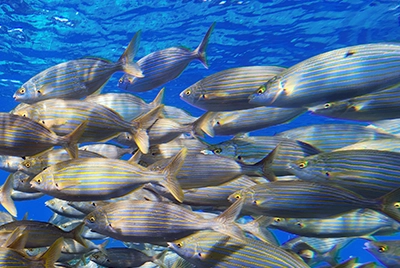
The Mediterranean is a semi-enclosed sea with waters rich in biodiversity despite its small size compared to oceans it is home to many iconic species that divers can observe throughout the year here is a selection of iconic fish with their main biological characteristics
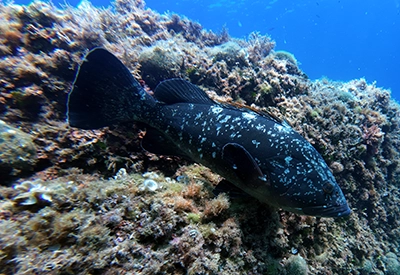
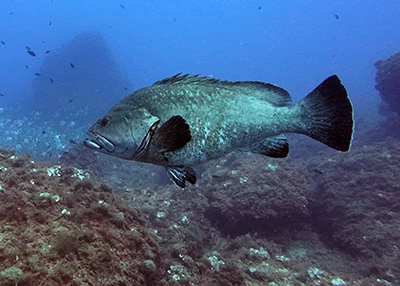
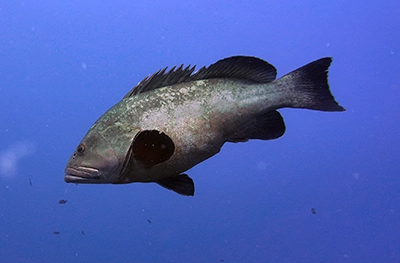
Dusky grouper Epinephelus marginatus
- Adult size: up to 1.5 meters
- Weight: up to 60 kg
- Longevity: 40 to 50 years
- Reproduction: protandrous hermaphrodite (born female, becomes male around 10 years). Breeding season: summer (June to August)
- Habitat: rocky bottoms between 5 and 100 meters
- Behavior: territorial, sedentary, curious but cautious
- Status: protected species in many areas (marine reserves)
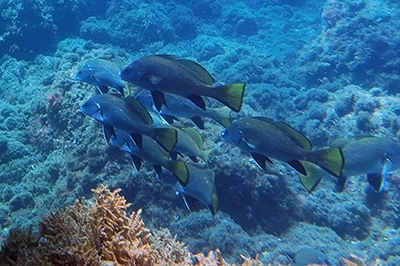
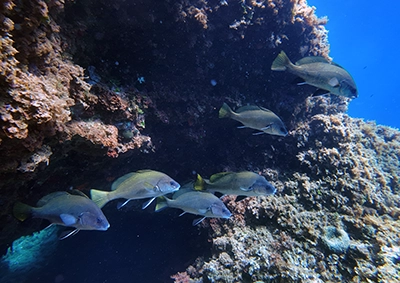
Brown meagre (Sciaena umbra)
- Adult size: 30 to 60 cm
- Longevity: up to 20 years
- Reproduction: spring and summer, breeding in noisy groups (sounds audible by hydrophone)
- Habitat: caves, shaded areas, rocky bottoms between 5 and 100 m
- Behavior: gregarious, discreet, often hidden
- Status: vulnerable species, very rare outside reserves
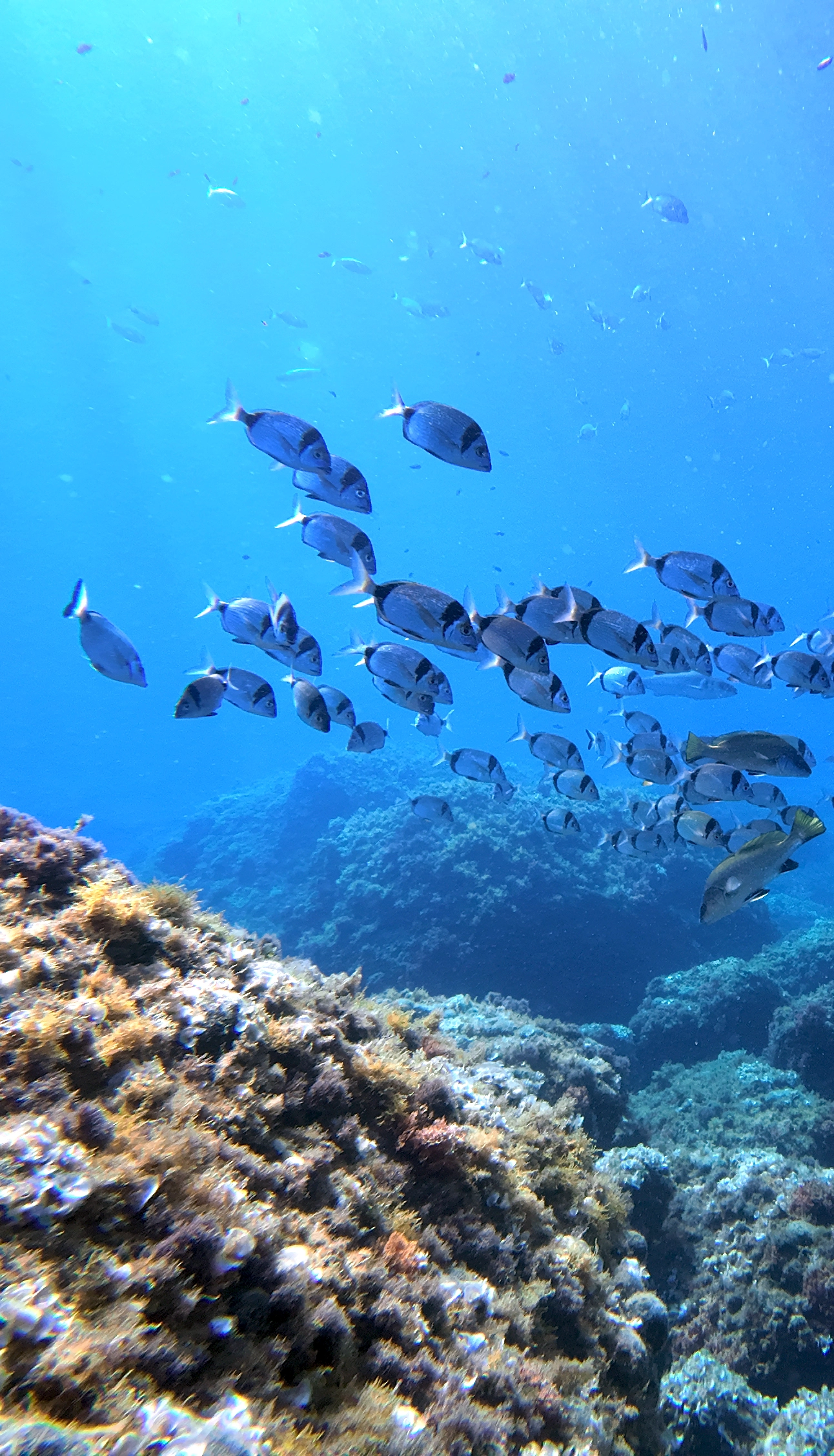
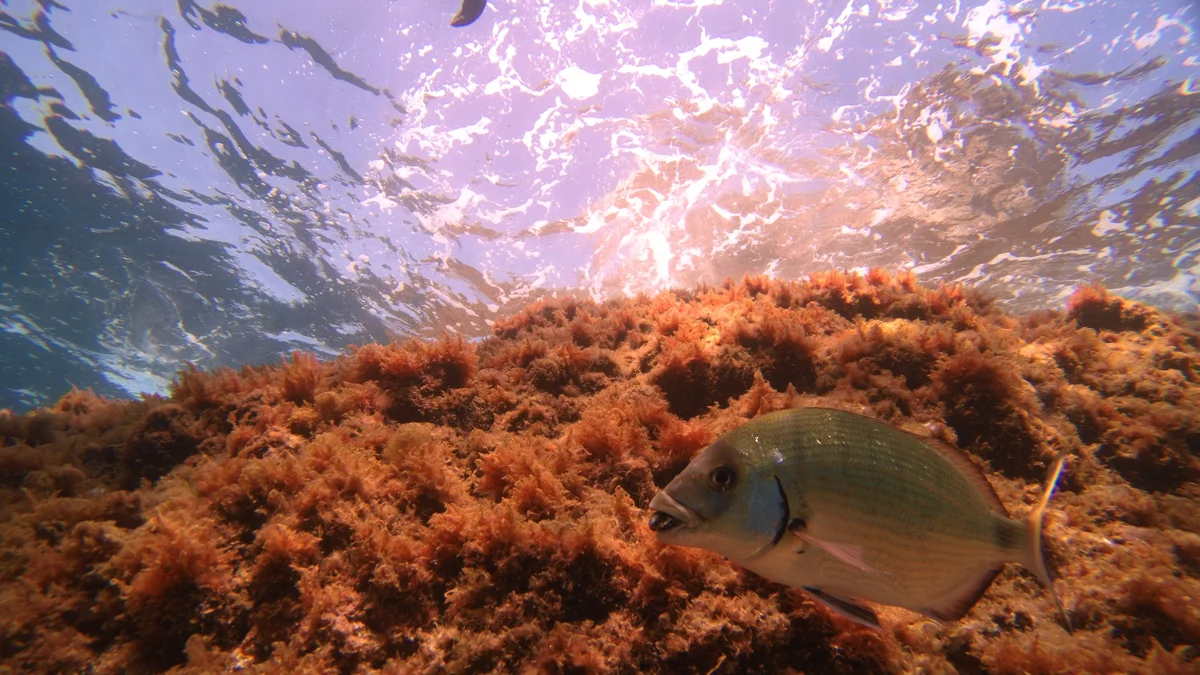
Common two-banded seabream (Diplodus sargus)
- Adult size: 25 to 35 cm (up to 45 cm)
- Longevity: about 10 years
- Reproduction: winter and early spring
- Habitat: rocky areas, seagrass beds, between 1 and 50 m
- Behavior: social, opportunistic, sometimes solitary
- Status: common species but sensitive to local overfishing
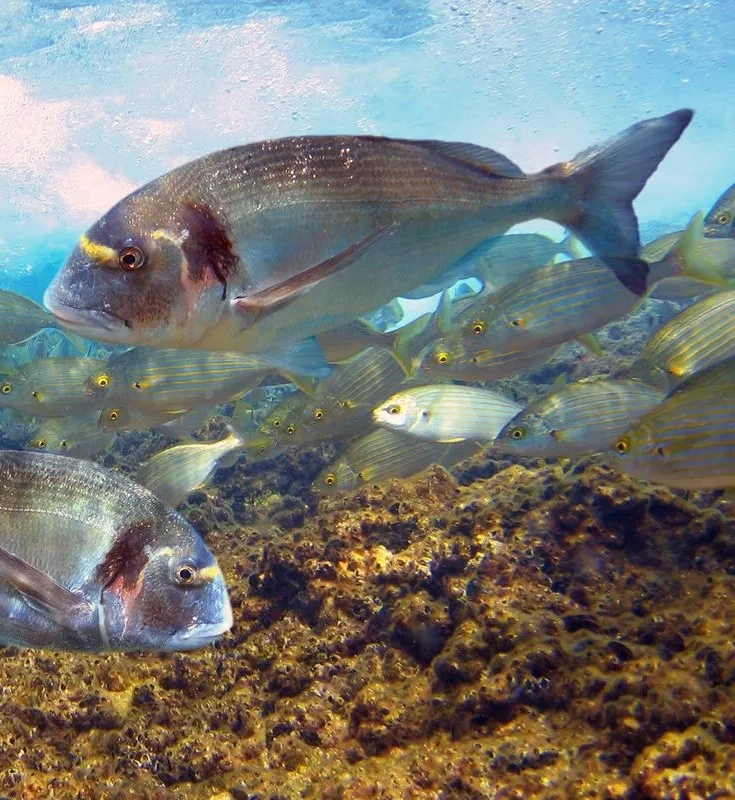
Gilt-head bream Sparus aurata
- Adult size: 35 to 70 cm (up to 1 m)
- Longevity: 10 to 11 years
- Reproduction: protandrous hermaphrodite, reproduction in autumn
- Habitat: sandy areas, seagrass beds, estuaries
- Behavior: rather solitary or in small groups
- Status: exploited species, also present in farming
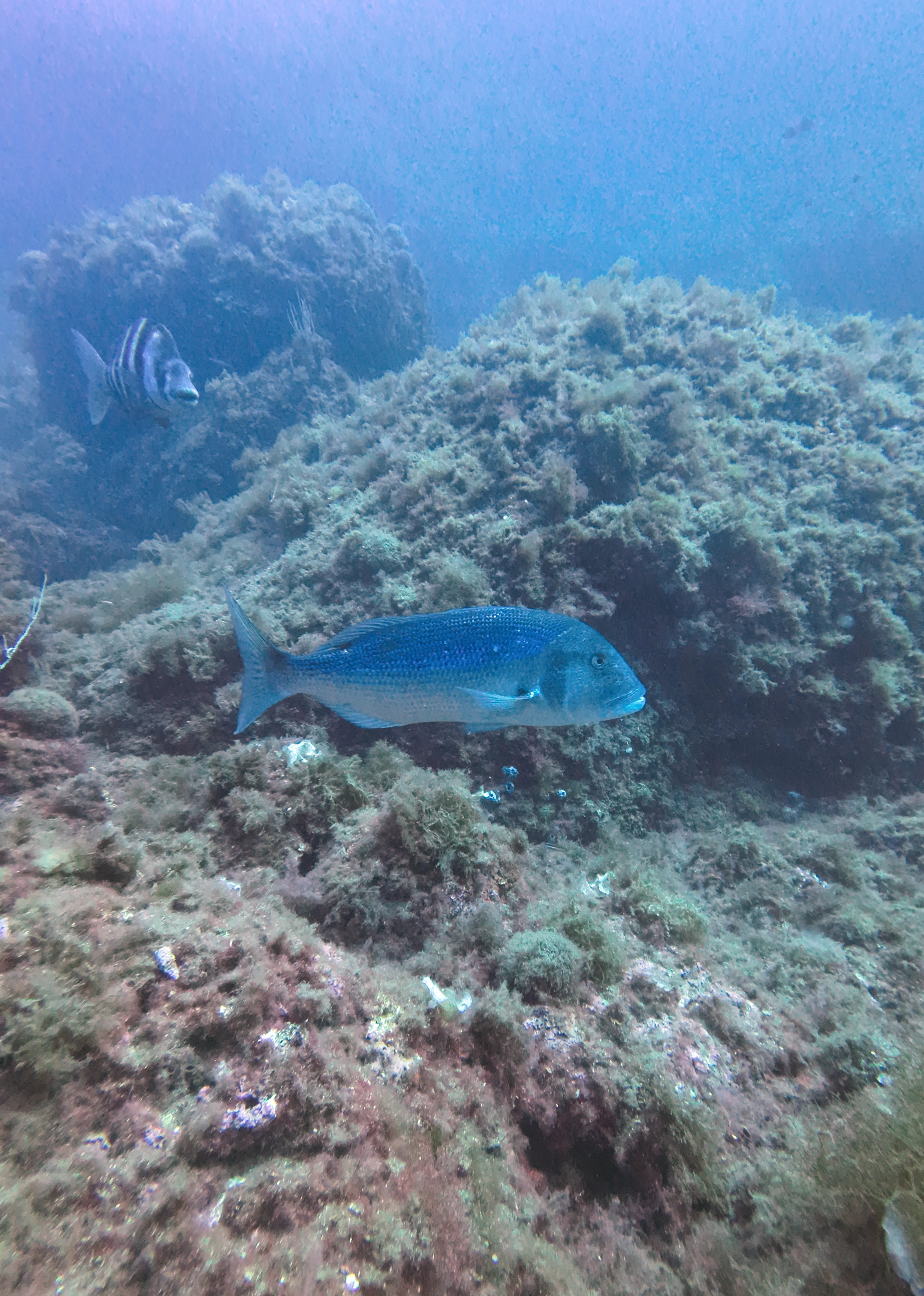
Common dentex (Dentex dentex)
- Adult size: 50 to 100 cm
- Longevity: up to 20 years
- Reproduction: spring, between April and June
- Habitat: rocky drop-offs, between 15 and 100 m
- Behavior: solitary or in small groups, very wary
- Status: vulnerable species, highly sought after by fishing
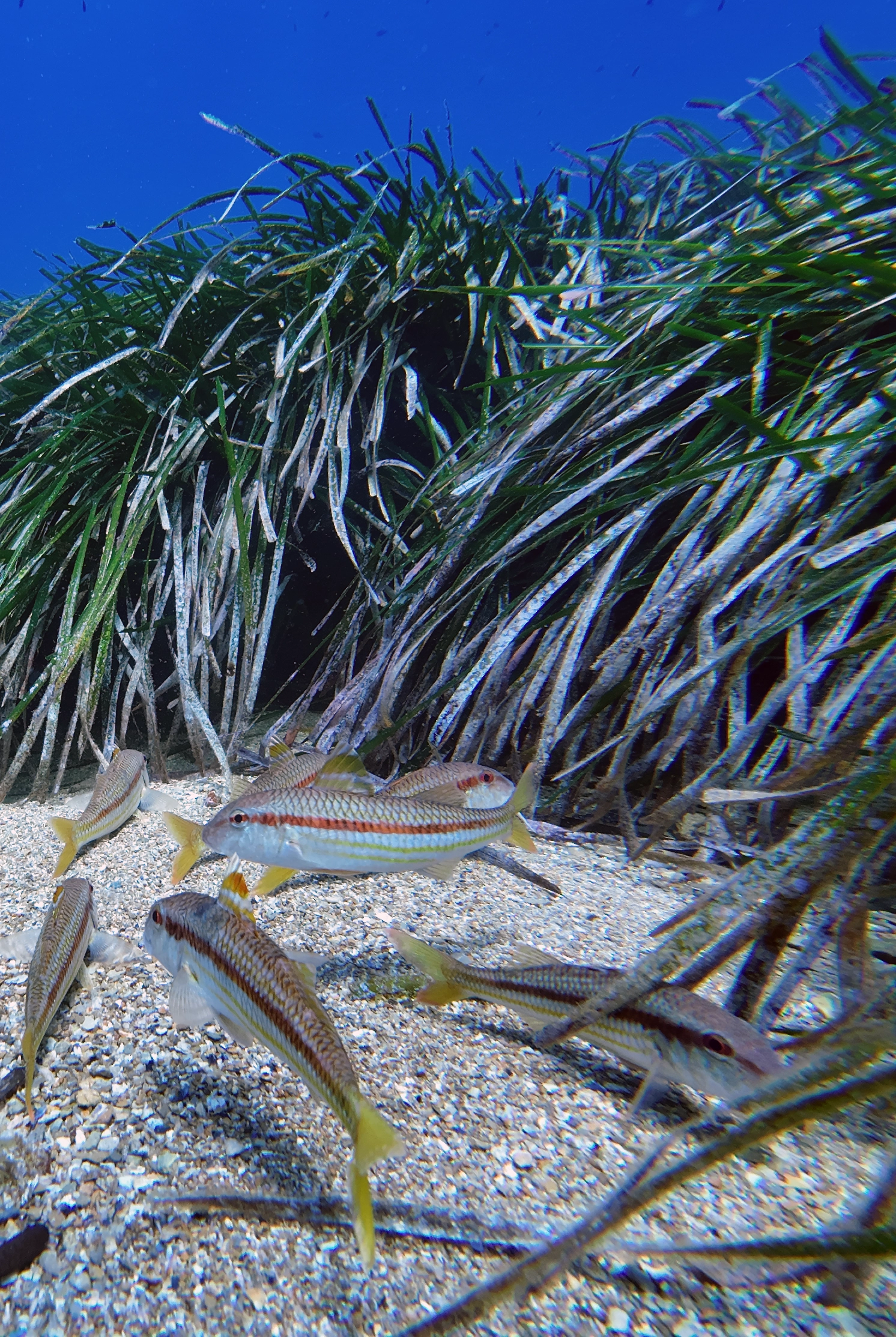
Red mullet Mullus surmuletus
- Adult size: 20 to 30 cm
- Longevity: about 5 to 6 years
- Reproduction: spring and summer
- Habitat: sandy or rocky bottoms, up to 150 m
- Behavior: peaceful, digs the ground with its barbels
- Status: common species, locally vulnerable
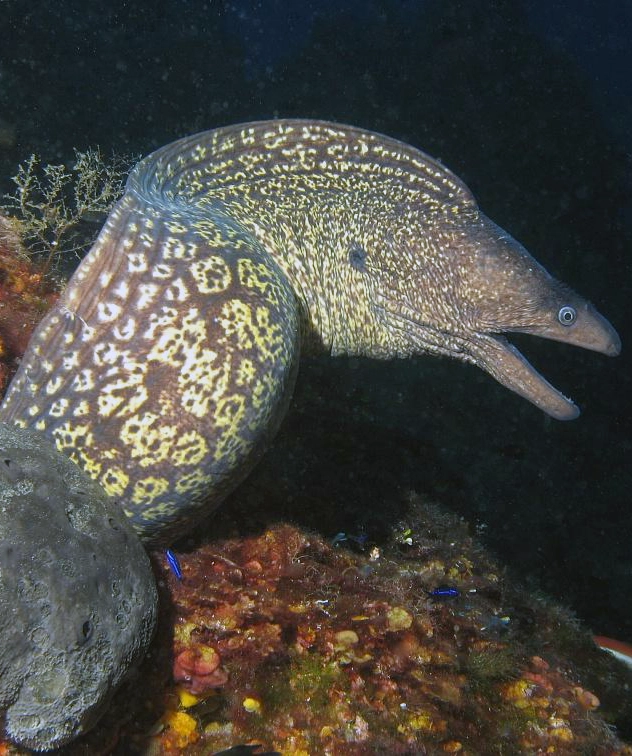
Common moray
- Adult size: 70 cm to 1.3 m
- Longevity: up to 20 years
- Reproduction: summer, in open water (eggs and planktonic larvae)
- Habitat: rocky bottoms, crevices, up to 100 m
- Behavior: nocturnal, discreet, often motionless during the day
- Status: not threatened but sometimes captured
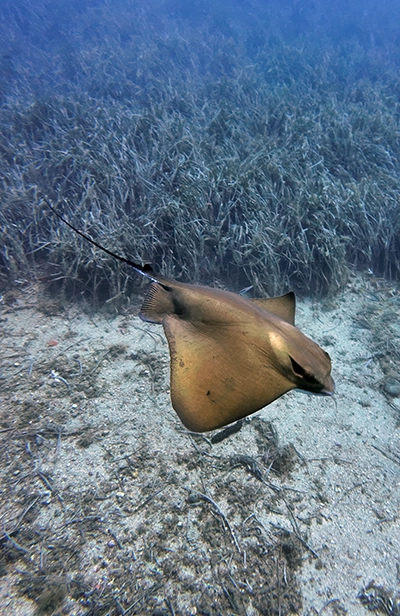
Eagle ray Myliobatis aquila
- Adult size: wingspan up to 2 m
- Longevity: about 20 to 25 years
- Reproduction: viviparous, gestation of 6 to 12 months
- Habitat: sandy bottoms, seagrass beds, up to 150 m
- Behavior: solitary or in small groups, active swimming
- Status: near threatened species (IUCN)
Yellowmouth barracuda (Sphyraena viridensis)
Easily recognized by its long, silver body, the yellowmouth barracuda has numerous dark vertical bars along its flanks, a projecting lower jaw and a deeply forked tail edged with black.
Common size: around 40 cm, with a published maximum of 128 cm
Lifespan: still poorly documented
Reproduction: reproduces through successive spawning events, releasing several batches of eggs during the breeding season
Habitat: coastal waters, rocky areas, drop-offs and seamounts, from the surface down to approximately 100 m
Behavior: social predator frequently observed in schools and particularly active at dusk
Status: no global IUCN assessment is currently available; its distribution and population trends remain insufficiently documented
Schools of yellowmouth barracuda can provide an impressive sight for divers, especially around rocky formations and sometimes close to divers during safety stops. To learn more about this species, view our complete yellowmouth barracuda species profile.

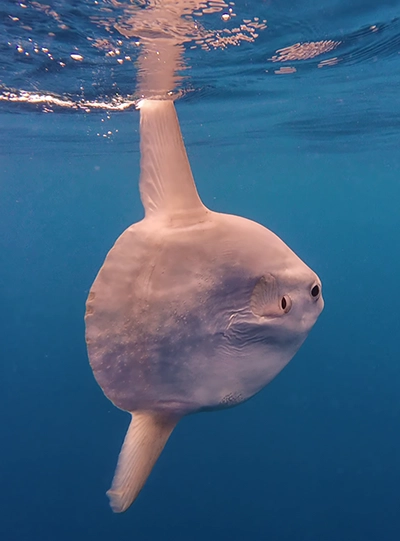
Ocean sunfish Mola mola
- Adult size: up to 3 m tall, 1 ton
- Longevity: 20 to 30 years
- Reproduction: poorly understood, massive spawning (up to 300 million eggs)
- Habitat: pelagic, sometimes near the coast
- Behavior: slow, often at the surface to warm up or get cleaned
- Status: vulnerable (IUCN), victim of bycatch
Greater amberjack Seriola dumerili
- Adult size: 80 cm to 1.5 m (up to 2 m for large individuals)
- Weight: up to 60 kg
- Longevity: about 15 to 20 years
- Reproduction: spring and early summer (spawning in open sea, pelagic eggs)
- Habitat: pelagic species, frequents drop-offs, shallow banks, and open coastal areas, between 10 and 200 m
- Behavior: gregarious in juveniles, solitary or in small groups in adults, often hunting
- Status: not threatened but subject to fishing pressure (sport and commercial)

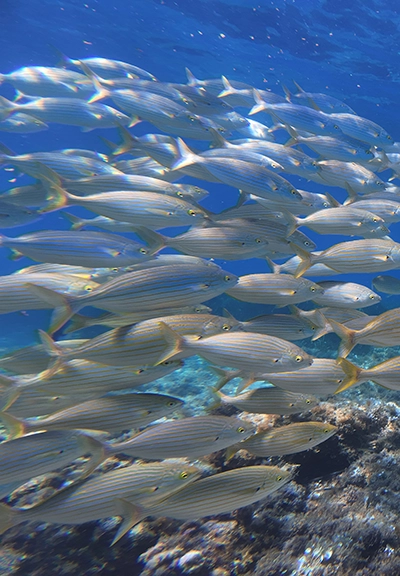
Sarpa salpa
- Adult size: 20 to 35 cm (up to 50 cm)
- Longevity: up to 9 years
- Reproduction: from May to September; protandrous hermaphrodite species (males become females with age)
- Habitat: posidonia meadows, shallow rocky areas (1 to 30 m)
- Behavior: gregarious, diurnal, very common near the coast
- Status: common and not threatened species
Red scorpionfish (Scorpaena scrofa)
A master of camouflage, the red scorpionfish has a large head covered with skin flaps and a robust body patterned with red, orange and brown tones that blend remarkably well with the seabed. It often remains motionless while waiting for a fish or crustacean to come within striking distance.
Common size: around 30 cm, up to 50 cm
Lifespan: still poorly documented; some biological estimates reach approximately 25 years
Reproduction: mainly from May to August, with several successive spawning events; the eggs are enclosed in a gelatinous matrix
Habitat: rocky, sandy or muddy bottoms, usually between 20 and 150 m, but recorded down to 500 m
Behavior: solitary, sedentary and primarily an ambush predator
Status: classified as Least Concern by the IUCN, although it is targeted by commercial and recreational fisheries
The spines of its dorsal fin are venomous and can inflict a very painful sting. The red scorpionfish is not aggressive towards divers, but it should never be touched, even when it appears completely motionless. To learn more about this species, view our complete red scorpionfish species profile.


European conger (Conger conger)
Easily recognized by its extremely elongated, robust and scaleless body, the European conger is one of the largest eel-shaped fish found in the Mediterranean and eastern Atlantic. Its greyish to dark-brown coloration allows it to blend easily into rocky surroundings.
Adult size: commonly around 1 m, with large females reaching approximately 1.5 m; published maximum length of 3 m
Lifespan: still poorly documented; sexual maturity is reached between 5 and 15 years of age
Reproduction: reproduces only once during its lifetime, mainly in summer; a female can produce between 3 and 8 million eggs
Habitat: rocky or sandy bottoms, from coastal waters down to approximately 500 m, with exceptional records beyond 1,000 m
Behavior: solitary and mainly nocturnal predator feeding on fish, crustaceans and cephalopods
Status: classified as Least Concern by the IUCN
Its impressive size, powerful jaws and mainly nocturnal lifestyle make the European conger a memorable encounter for divers. During the day, it generally remains hidden and should never be disturbed inside its shelter. To learn more about this species, view our complete European conger species profile.
The Mediterranean damselfish: clouds of fish above Mediterranean reefs
The Mediterranean damselfish (Chromis chromis) is one of the most familiar fish species encountered by divers in the Mediterranean Sea. It is easily recognized by its small, deep, laterally compressed body and forked tail. Adults display a dark brown coloration, sometimes appearing almost black, while juveniles stand out with their particularly vibrant electric-blue coloration. This striking difference in color can make them appear to be two entirely different species.
Mediterranean damselfish inhabit rocky reefs, underwater walls, coralligenous formations, and the edges of seagrass meadows. As a social species, they often form schools swimming a few meters above the reef. These gatherings move in flowing waves as the fish swim together, capturing tiny organisms suspended in the water. Juveniles generally remain closer to rocks and algae, where they can find shelter.
To observe them, maintain stable buoyancy and move slowly. Keep a respectful distance from the school without attempting to swim through it or gather the fish together. By remaining calm and still, you can appreciate their coordinated movements and spot the young blue fish sheltering near cracks and crevices.
You can also explore the Mediterranean damselfish species profile to help identify this species during your dives.
The painted comber: a small predator with remarkable markings
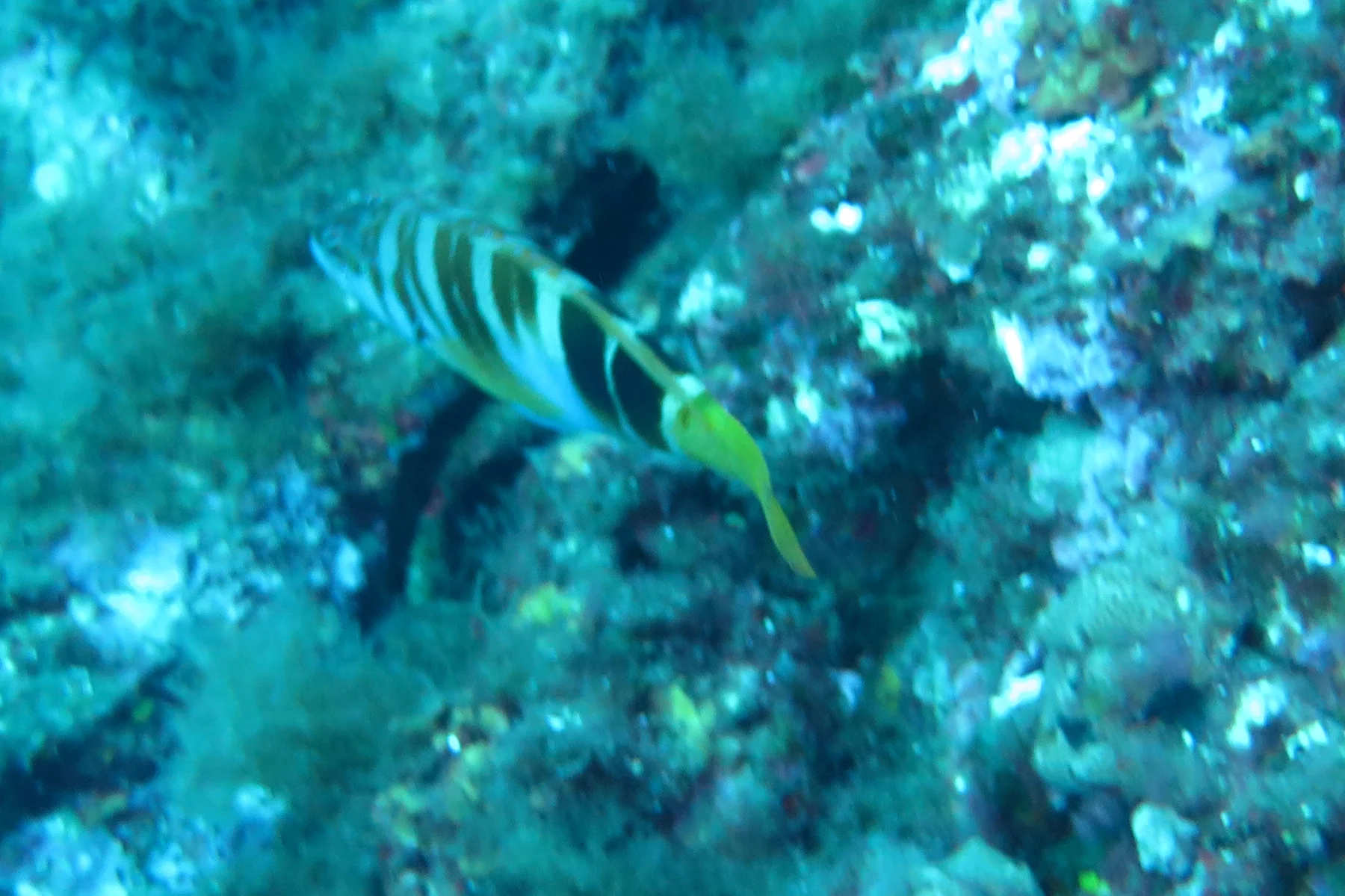
The painted comber (Serranus scriba) is a particularly interesting Mediterranean fish to observe up close without disturbing it. Its scientific name refers to the intricate patterns covering its head: fine iridescent blue lines and spots that look as though they were drawn by hand. Its reddish-brown to olive-colored body features several dark vertical bands. Another distinctive characteristic is its blue-violet patch on the belly, usually visible behind the pectoral fin.
It inhabits rocky seabeds, boulder fields, seagrass meadows, and areas covered with algae. Unlike fish that live in large schools, the painted comber is often seen alone, occasionally near a few others of its species. This small territorial predator feeds on crustaceans, small fish, and other animals living close to the seabed.
When diving, take your time examining the areas around rocks without disturbing their inhabitants. The painted comber may remain relatively motionless before suddenly darting away. Approach slowly without blocking its access to shelter, and avoid shining your dive light directly at it for extended periods. Its intricate markings are particularly easy to appreciate when observed calmly from a reasonable distance.
To learn more about identifying this species and distinguishing it from other combers, visit the painted comber species profile.
The ornate wrasse: a burst of color in shallow Mediterranean waters
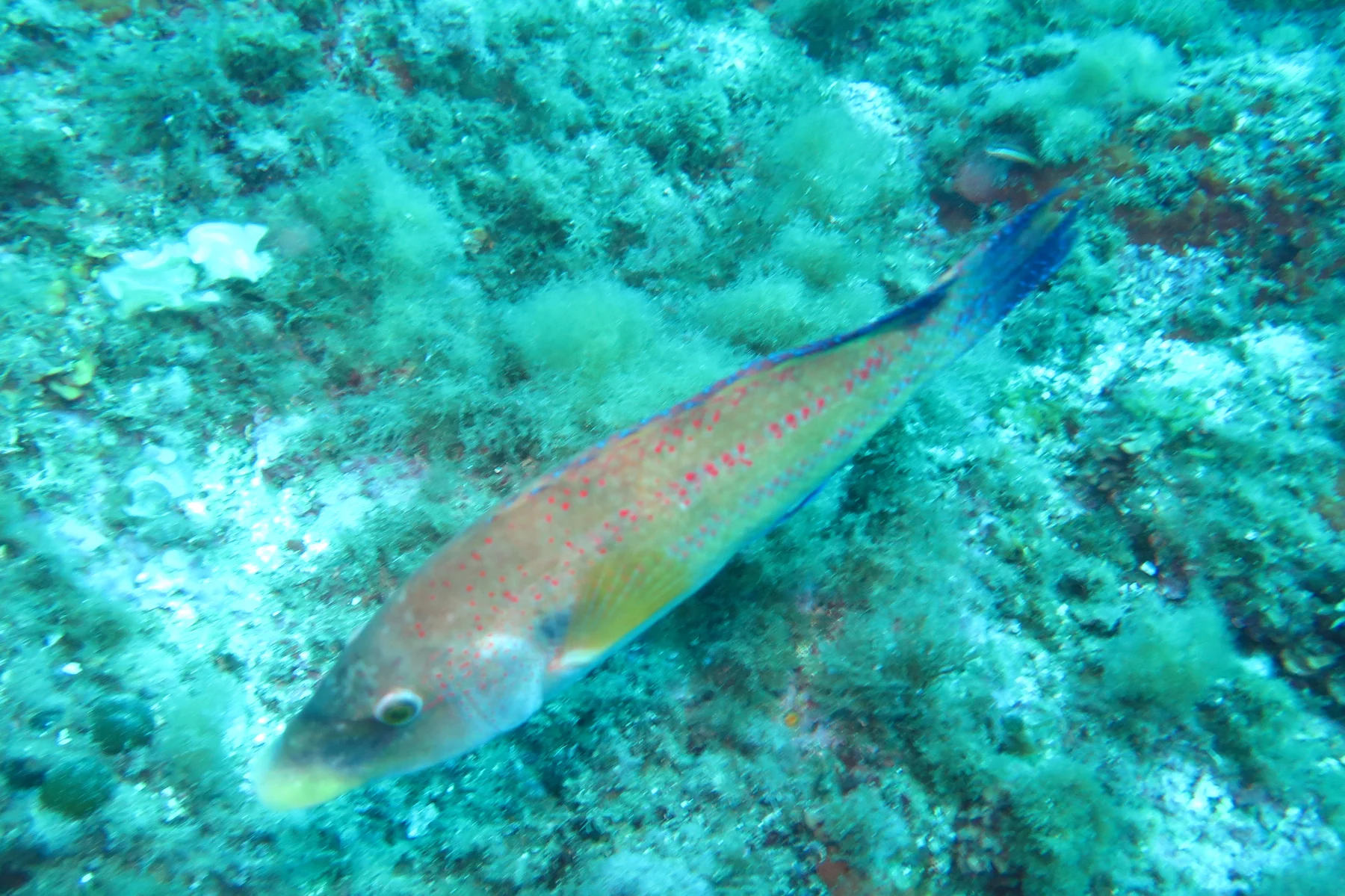
The ornate wrasse (Thalassoma pavo) is among the most colorful fish found in Mediterranean waters. This member of the wrasse family has an elongated body, a pointed snout, and a continuous dorsal fin. Its coloration varies considerably depending on age and developmental phase. Some individuals display beautiful shades of green or blue-green, crossed by wavy orange or reddish lines. A dark spot near the rear of the dorsal fin is another useful identification feature.
This species favors shallow rocky seabeds, algae-covered areas, and the edges of seagrass meadows. Active during the day, it constantly explores its surroundings in search of small invertebrates. Its rapid movements and sudden changes of direction can make underwater photography challenging. Individuals may be encountered alone or in loosely organized groups.
To appreciate its colors, settle calmly near a rocky area without touching the seabed. Allow the fish to swim freely and avoid following them when they move away. Patient observation often makes it possible to appreciate several different color patterns within the same area.
Discover the detailed characteristics of this species in the ornate wrasse species profile, listed as “Crénilabre paon” in the catalogue.
The zebra seabream: a large seabream recognized by its five dark bands

The zebra seabream (Diplodus cervinus) deserves a special place among the iconic fish of the Mediterranean Sea. More robust than several other seabream species, it has a deep, laterally compressed, silvery body. Its identification mainly relies on five broad, dark vertical bands, along with thick lips and strong teeth. These features help distinguish it from the common two-banded seabream, whose markings are generally narrower.
The zebra seabream inhabits rocky seabeds, underwater walls, boulder slopes, and occasionally shipwrecks. Juveniles also occupy shallow coastal habitats, particularly near seagrass meadows. Adults are regularly observed alone or in small groups. They search for food close to the seabed, feeding on mollusks, crustaceans, and other invertebrates.
This fish can be wary of divers. To observe it, maintain a sufficient distance and avoid approaching it head-on. Moving slowly and parallel to the reef may allow you to distinguish its characteristic bands without causing it to flee. Do not attempt to force it out of hiding when it retreats into a shelter.
To recognize its distinctive physical characteristics and discover its preferred habitats, visit the zebra seabream species profile.
Conclusion
These fish embody the richness and diversity of Mediterranean wildlife whether you are passionate about marine biology or an amateur diver learning to recognize them and understand their behavior enriches every dive let's preserve this unique biodiversity together


01 Comments
sophie
May 14, 2026Very good article on the iconic fish of the Mediterranean! Very useful for recognizing the underwater fauna encountered while diving, such as the grouper, the sea bream, or the moray eel. The explanations are clear and help to better understand the species and their behaviors. A practical and interesting guide for all diving enthusiasts in the Mediterranean!