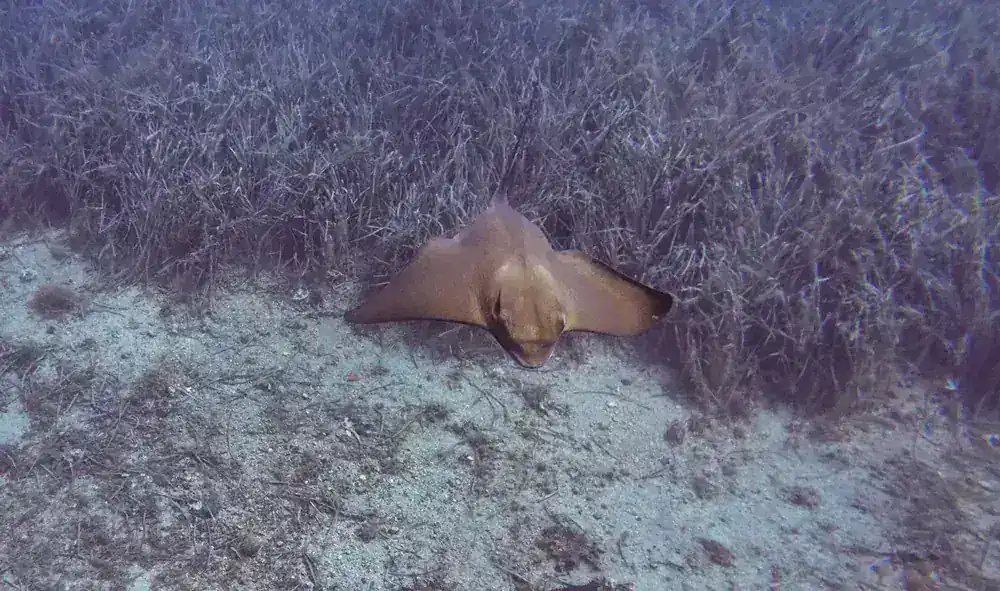
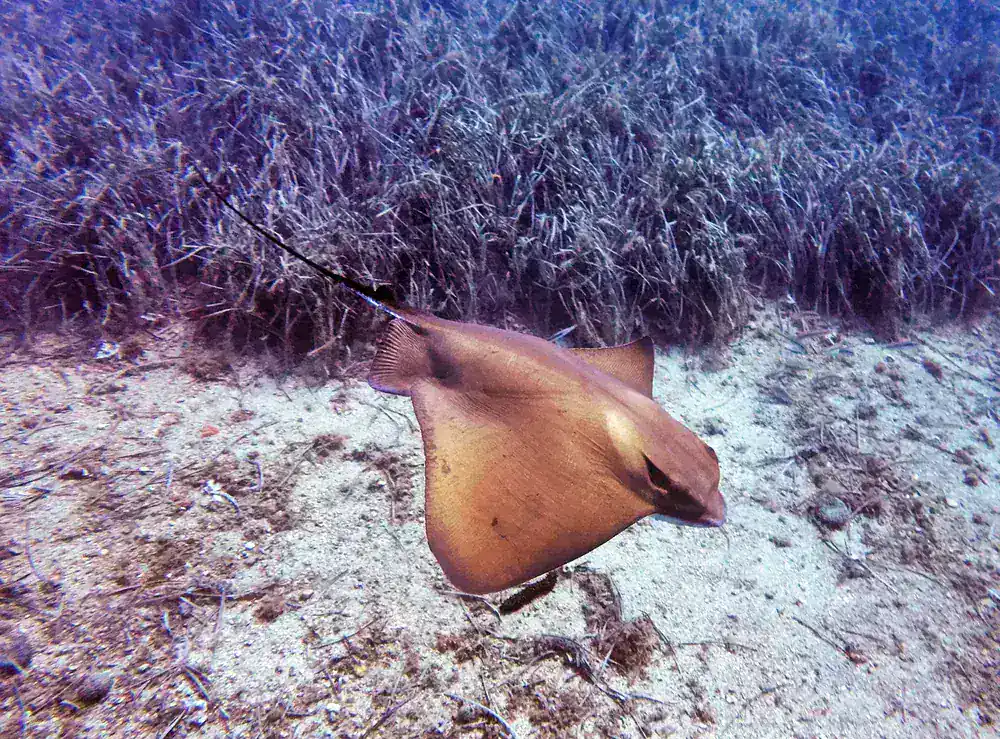
Edible and sometimes sold for food, but the species is listed as Vulnerable; avoid consumption and choose sustainable alternatives. Check applicable local guidance.
Culinary quality / 5
3
Danger level
Caution
Usual observation depth
10–100 m
Lifespan (years)
12
Behaviour
Generally solitary or observed in small groups. It swims actively above the bottom, often frequents shallow coastal waters, and may undertake seasonal migrations. It uses its caudal spine to defend itself if threatened.
Observation zones
Sandy and muddy flats, seagrass beds, coastal reefs, bays, estuaries and open waters of the continental shelf.
Diet
Primarily bottom-dwelling invertebrates, notably bivalve mollusks, crustaceans, and worms; it may also consume small fish.
Reproduction
Viviparous
Identification marks
Broad diamond-shaped disc with pointed fin tips; protruding head and snout; olive-brown to gray upper surface and pale underside; long whip-like tail bearing a venomous spine and a small dorsal fin near its base.
Similar species
It can be confused with other eagle rays, notably the bull ray Aetomylaeus bovinus. The latter generally has a more rounded snout and light spots or reticulation visible on the upper surface; confirm the identification with the range and coloration details.
Approach rules
Observe calmly from at least 3 m away. Do not block its path, pursue it, touch it or corner it; stay away from the tail and stinger. Avoid flash at close range and never feed it.
Protection
Assessed as Vulnerable globally on the IUCN Red List. It is not listed in the CITES Appendices. Measures relating to fishing and trade may vary by jurisdiction; consult current regulations and conservation recommendations.