
Understanding Neutral Buoyancy and Trim
Good buoyancy control is one of the most valuable skills a recreational scuba diver can develop. It makes underwater movement more comfortable, reduces unnecessary effort, protects marine environments and helps divers maintain a stable position while observing aquatic life.
Neutral buoyancy describes the condition in which a diver neither rises nor sinks without deliberately swimming upward or downward. It results from balancing the diver's overall weight against the upward force created by the water displaced by the diver and their equipment.
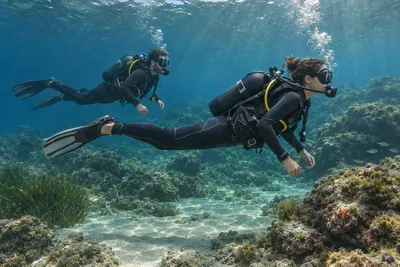
However, neutral buoyancy and good trim are not the same thing. Trim refers to the orientation and balance of the diver's body underwater. A diver might be neutrally buoyant while remaining excessively head-up, feet-down or tilted sideways.
For many recreational activities, a relaxed, approximately horizontal position provides efficient movement and reduces the risk of accidentally disturbing the seabed. Other activities may require a different body orientation. Good trim is therefore about maintaining an appropriate, controlled position rather than forcing one posture in every situation.
Continuous finning can conceal buoyancy problems. A diver who constantly kicks to avoid sinking may mistakenly believe their equipment is properly adjusted. Once they stop swimming, the underlying imbalance becomes apparent.
Likewise, using the hands to maintain position can disguise poor balance and increase unnecessary movement. Effective buoyancy control allows a diver to remain stable with minimal effort, using breathing, appropriate equipment adjustment and calm body positioning.
The objective is not perfect immobility. Small vertical changes naturally accompany breathing. The important skill is recognizing these movements, remaining relaxed and avoiding repeated exaggerated corrections.
What Determines the Correct Amount of Weight?
There is no universal amount of ballast suitable for every diver. Weighting depends on several interacting variables, and a configuration that works perfectly during one dive may be inappropriate during another.
Water salinity is an important factor. Seawater is generally denser than freshwater and provides greater buoyant force. A diver may therefore require different weighting when moving between marine and freshwater environments.
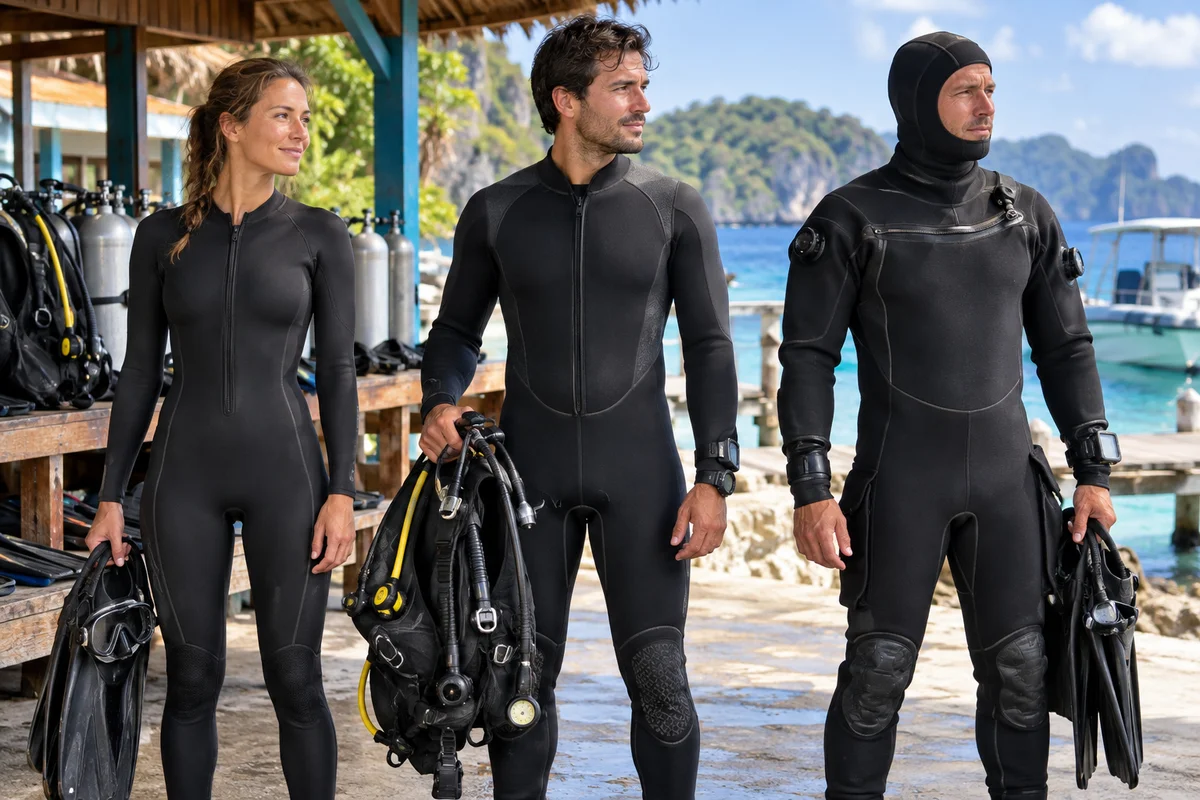
Thermal protection also affects buoyancy. Wetsuits contain neoprene with gas-filled cells that provide insulation and positive buoyancy. Their thickness, construction, fit and condition influence the amount of ballast needed. Dry suits introduce additional considerations because their internal gas volume must be managed according to the diver's training.
Cylinder characteristics matter as well. Cylinders vary in material, capacity, construction and buoyancy behavior. A change from one cylinder type to another can alter both overall weighting and underwater balance.
The breathing gas itself has mass. As gas is consumed, the cylinder and its contents become lighter, potentially increasing the diver's overall buoyancy. Weighting must therefore account for the expected conditions near the planned end of the dive, rather than only the beginning.
Equipment configuration introduces further variation. Exposure accessories, buoyancy devices, backplates, lights, cameras and other equipment may contribute positive or negative buoyancy. Their placement can also influence trim.
Individual factors, including body composition and the buoyancy characteristics of personal equipment, complete the picture. Body size alone is not a reliable method for determining ballast.
A useful practice is recording equipment configuration, water conditions, cylinder characteristics and the weighting that proved appropriate during previous dives. These records provide a starting reference, not a substitute for reassessment.
Whenever equipment or environmental conditions change significantly, weighting should be checked again with appropriate supervision.
Checking Weighting Safely With an Instructor
A reliable weighting assessment is best performed with a qualified instructor in calm, sheltered, shallow water, with a buddy present. The instructor should select suitable conditions and guide the assessment according to the diver's training, equipment and planned dive.
The purpose is to establish whether the configuration provides sufficient control throughout the dive without unnecessary ballast. Excessive weighting often requires additional gas in the buoyancy device, increasing the size of buoyancy changes as ambient pressure varies.
Insufficient weighting can create a different problem: difficulty maintaining the planned shallow position toward the end of the dive, particularly when the cylinder contains less breathing gas.
End-of-dive conditions are essential. The instructor should evaluate whether the diver can comfortably maintain the intended shallow end-of-dive position with the planned remaining gas supply and normal equipment configuration.
This evaluation must follow established training procedures. Never deliberately drain a cylinder to simulate an end-of-dive condition. Breathing gas reserves must remain available for the planned dive and potential contingencies.
The instructor also considers whether the diver can control buoyancy comfortably at the surface and during the underwater assessment. The objective is a balanced configuration, not simply removing as much weight as possible.
Any adjustment should be made using appropriate procedures and under supervision. Divers should never improvise by removing or releasing ballast underwater during routine weighting checks.
After a satisfactory assessment, recording the actual configuration helps future planning. The same amount of ballast should not automatically be transferred to different conditions or equipment.
If the diver cannot maintain control during the assessment, they should signal their buddy and follow their training and the instructor's directions to end the activity safely.
Improving Trim and Distributing Weight Correctly
Once overall weighting is appropriate, the next consideration is how that weight is distributed. Two divers carrying identical ballast may behave differently underwater because the ballast, cylinder and other equipment are positioned differently.
The diver's center of mass and the center of buoyancy influence body orientation. When these forces are poorly aligned, the diver may continually rotate toward an uncomfortable position.
Cylinder positioning can affect balance. Its location relative to the diver's body changes the distribution of mass, although adjustment must remain compatible with the equipment and be approved by the instructor.
Ballast distribution may also influence whether the diver tends to become head-heavy, feet-heavy or tilted sideways. Integrated weight compartments and approved trim-weight locations can provide options, depending on the equipment design.
However, not every location is appropriate for carrying ballast. Weight systems must be used according to their intended design, and all adjustments must preserve secure attachment, equipment functionality and safe access.
Emergency weight releases must remain accessible and identifiable to the diver and, where applicable, their buddy. Ballast must never be positioned in a way that obstructs essential controls or prevents the intended emergency release procedures.
Trim also depends on posture. Relaxed legs, controlled fin movement and comfortable arm positioning can reduce unwanted rotation. An instructor can help identify whether a positioning problem comes from technique, equipment arrangement or both.
A horizontal position is often useful when swimming above delicate habitats because it reduces the likelihood of fins striking the bottom. Yet controlled vertical or angled positions may be appropriate for other tasks.
The best configuration provides predictable balance without compromising safety, mobility or the ability to respond to an unexpected situation.
Managing Buoyancy During Descent, Ascent and the Dive
Buoyancy is dynamic. It changes throughout a dive because ambient pressure, breathing gas consumption and the volume of compressible materials are constantly evolving.
During descent, increasing pressure compresses gas spaces. In a wetsuit, neoprene becomes compressed and generally provides less buoyancy. Gas in a buoyancy device is also compressed, reducing its volume unless appropriately adjusted.
These effects can make a diver increasingly negatively buoyant as the descent progresses. Recognizing the changes early helps prevent excessive sinking and unnecessary physical effort.
During ascent, the opposite occurs. As surrounding pressure decreases, gas in the buoyancy device expands. Neoprene regains some of its original thickness and buoyancy as pressure decreases.
Expanding gas can accelerate an ascent if buoyancy is not managed correctly. Divers must follow their training and established procedures for controlling buoyancy and managing expanding gas while ascending.
Meanwhile, gas consumption gradually reduces the mass carried in the cylinder. This can make the diver more buoyant later in the dive, particularly when combined with the expansion of gas spaces during ascent.
Breathing also produces smaller, more immediate changes. Inhaling increases lung volume and generally increases buoyancy slightly, while exhaling has the opposite effect.
Always breathe normally and continuously. Never hold your breath while scuba diving. Breath-holding, especially during ascent, can create serious pressure-related injury risks. Breathing should never be used as a substitute for properly managing equipment and following safe procedures.
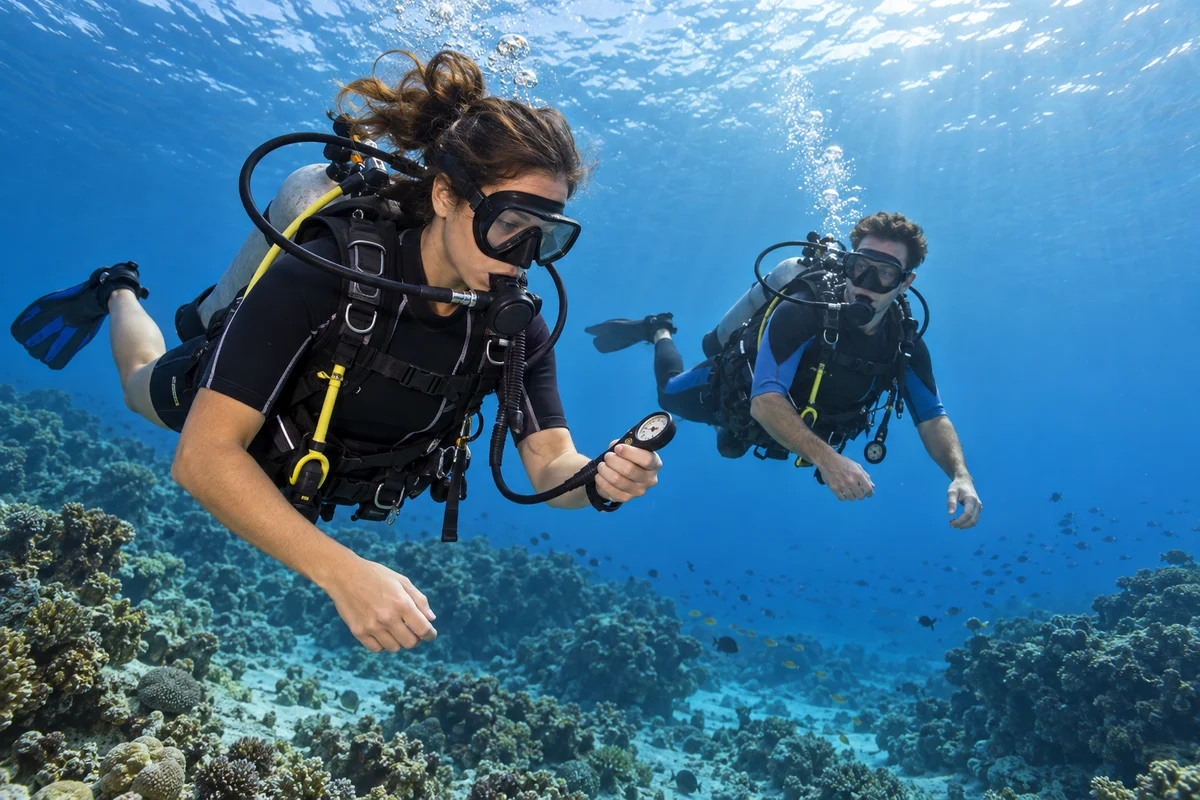
Stable buoyancy develops through anticipation and modest, controlled adjustments rather than repeated large corrections. Divers should monitor their surroundings, available breathing gas and depth information while maintaining awareness of their buddy.
Every descent, ascent and underwater movement must remain consistent with the planned dive, the diver's training and the guidance provided by their dive computer where applicable.
If buoyancy becomes uncontrollable, the diver should signal their buddy and follow trained emergency procedures, ending the dive as safely as circumstances allow.
Three Supervised Exercises to Develop Better Buoyancy
Buoyancy improves through deliberate, structured practice. The following exercises are intended for calm, suitable conditions under instructor supervision, with a buddy present. They are not independent procedures or replacements for formal training.
Exercise: Maintain a relaxed hover.
The instructor guides the diver into a stable underwater position appropriate for the environment. The goal is to remain approximately at the same level without constant finning or unnecessary arm movements.
The diver observes the natural effect of normal breathing and learns to recognize small fluctuations without overreacting. The instructor can help distinguish equipment-related buoyancy issues from posture and movement habits.
Success is measured by calm, predictable control rather than absolute stillness. The activity should remain comfortably within the diver's existing capabilities.
Exercise: Swim briefly, then settle.
Under supervision, the diver completes a short, controlled swim in a suitable area before stopping and allowing their body to settle into a stable position.
This exercise reveals whether continuous propulsion had been hiding an imbalance. If the diver immediately starts sinking, rising or rotating after stopping, the instructor can assess the likely cause.
The emphasis is on recognizing the difference between movement-supported positioning and genuine buoyancy control. The instructor determines any appropriate equipment or technique adjustments.
Exercise: Observe without touching.
In an area selected by the instructor, the diver practices observing a harmless underwater feature while maintaining suitable separation from the bottom and surrounding objects.
The goal is to remain stable without touching rocks, coral, sediment or living organisms. The exercise develops spatial awareness and encourages deliberate, economical movement.
It also reinforces an important environmental principle: good buoyancy protects marine life by reducing accidental contact and sediment disturbance.
All three exercises should be stopped or modified whenever conditions, comfort or control become unsuitable. If control is lost, the diver should signal their buddy and follow their training and the instructor's guidance to end the activity safely.

Pre-Dive Checklist and Frequently Asked Questions
Consistent buoyancy starts before entering the water. A short equipment and planning review can identify changes that might otherwise cause difficulties underwater.
Buoyancy and weighting checklist:
- Review the planned dive and expected environmental conditions.
- Consider whether water salinity differs from previous dives.
- Check the type and characteristics of the cylinder being used.
- Account for the buoyancy of the chosen thermal protection.
- Review equipment additions or changes that may affect buoyancy or trim.
- Confirm that ballast is securely installed in approved locations.
- Ensure essential controls and emergency weight releases remain accessible.
- Discuss weighting concerns and previous experience with the instructor or dive professional.
- Confirm buddy communication, the dive plan and applicable emergency procedures.
- Consider the expected change in cylinder buoyancy as breathing gas is consumed.
Why do I sink when I stop kicking?
Continuous finning may have been compensating for negative buoyancy or an unsuitable body position. An instructor can help determine whether the cause is weighting, buoyancy-device management, trim or technique.
Why do my feet sink even when my buoyancy feels correct?
This may be a trim issue rather than an overall weighting problem. Equipment placement, cylinder position, ballast distribution and posture can all influence orientation. Changes should be assessed with an instructor using approved equipment configurations.
Do I need different ballast in freshwater and seawater?
Possibly. Seawater generally provides more buoyancy because of its greater density. The necessary adjustment depends on the complete equipment configuration and should be assessed rather than guessed.
Why does buoyancy become more difficult during ascent?
Decreasing pressure causes gas spaces to expand, potentially increasing positive buoyancy. Divers must anticipate this change and manage their equipment according to training, the dive plan and dive-computer guidance.
Will better buoyancy reduce breathing gas consumption?
It can contribute to greater efficiency by reducing unnecessary swimming, excessive corrections and physical effort. However, gas consumption also depends on workload, individual physiology, conditions and other factors. Buoyancy improvement does not guarantee a particular reduction.
Should I remove weight whenever I feel over-weighted?
No. Ballast changes must consider the entire dive, including expected end-of-dive conditions. An instructor should supervise the assessment, and divers must never improvise underwater weight removal as a routine correction.
What if I lose buoyancy control?
Signal your buddy immediately and follow your training and applicable emergency procedures. End the dive safely according to the circumstances rather than continuing an activity without reliable control.
Ultimately, effective buoyancy combines appropriate weighting, thoughtful equipment configuration, controlled movement and situational awareness. With supervised practice, divers can become more comfortable underwater while improving safety, efficiency and protection of the marine environment.
00 Comments
No comments yet.