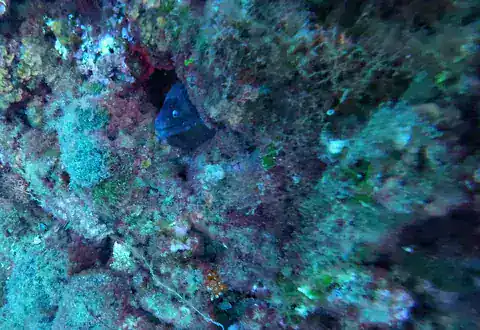
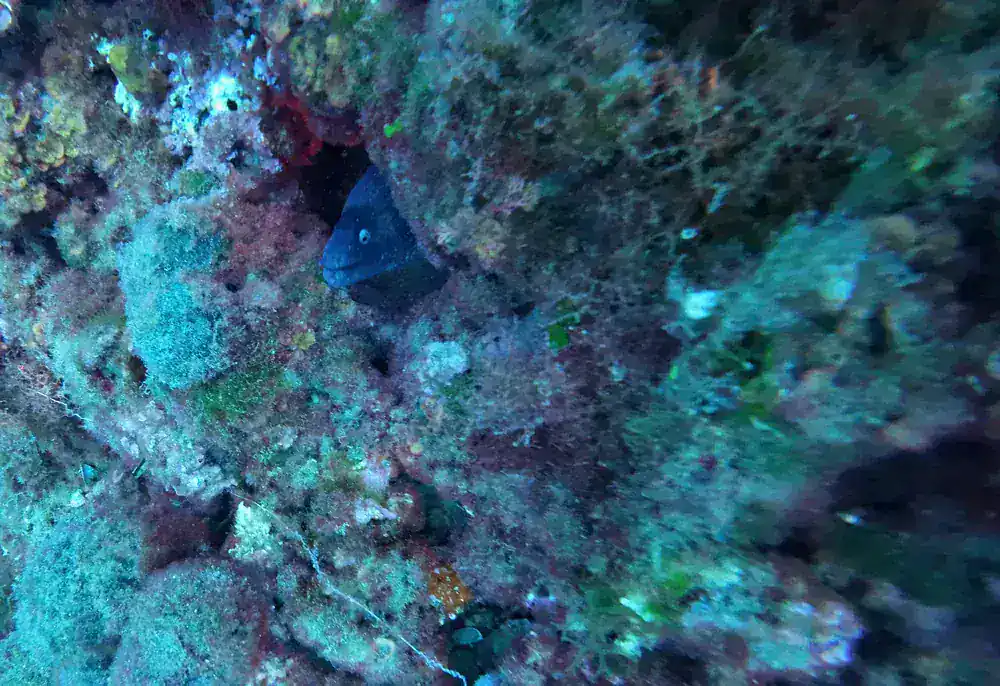
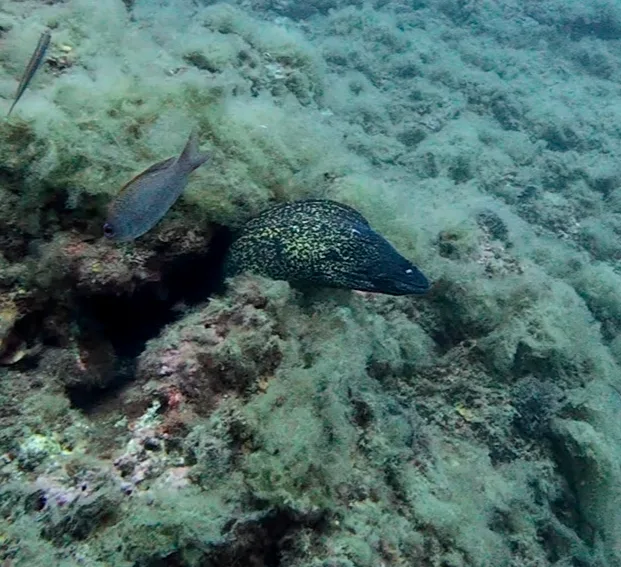
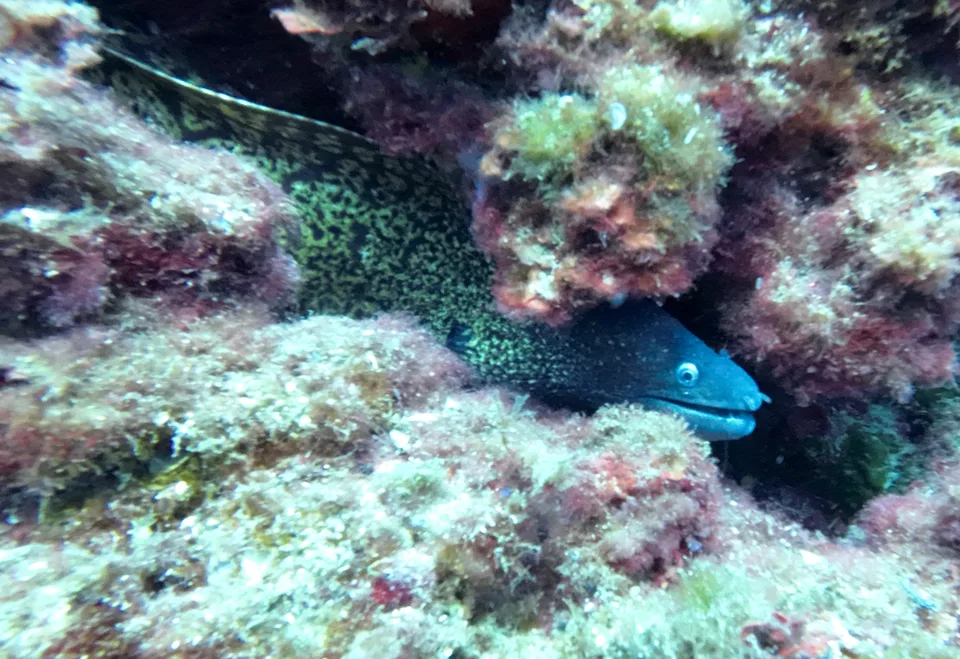
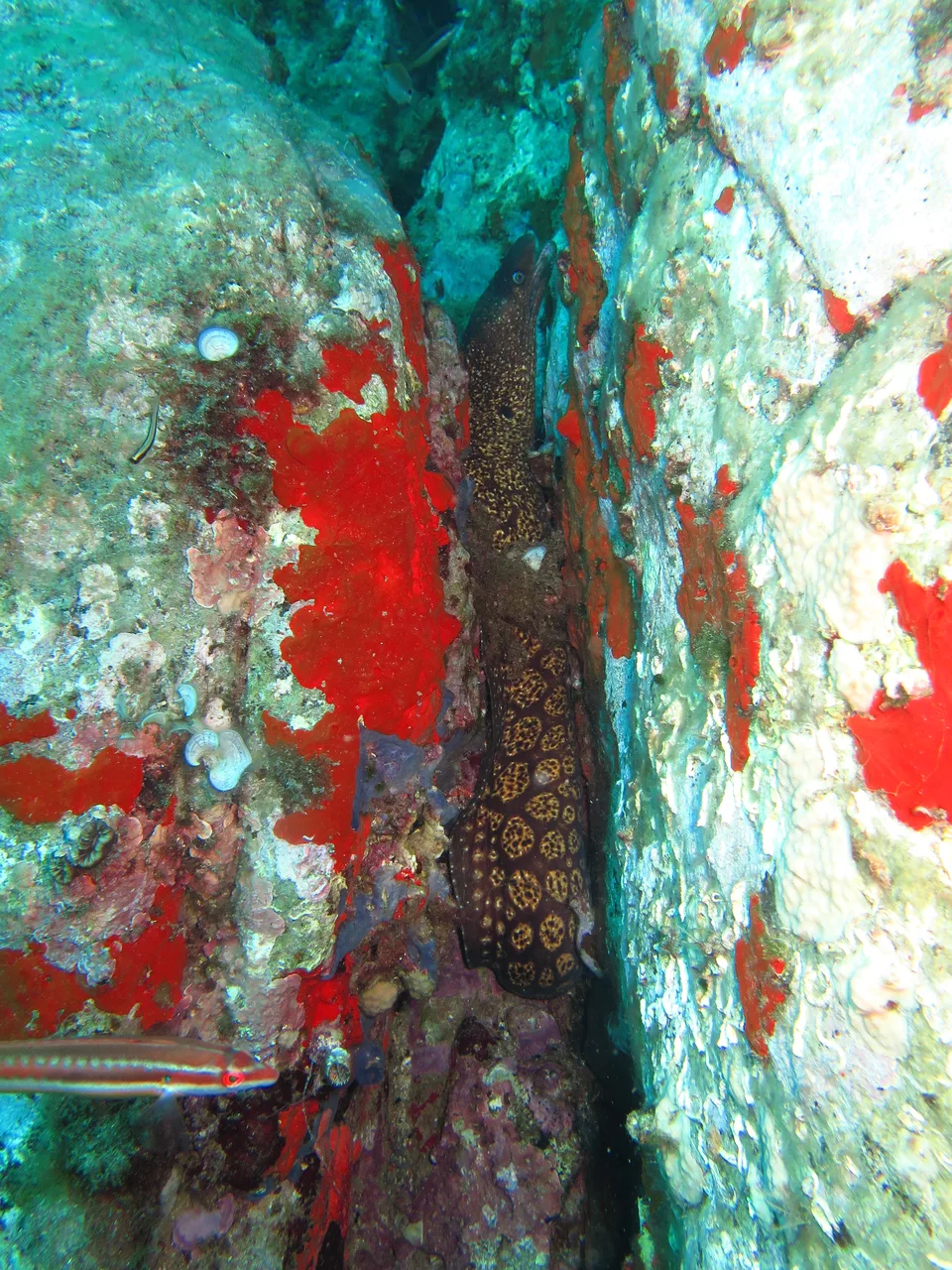
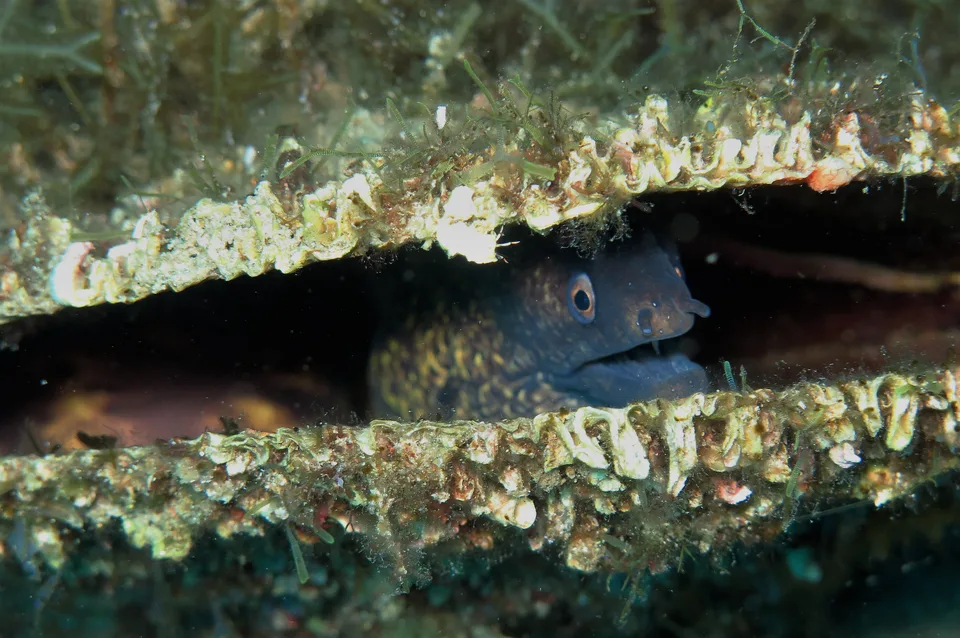
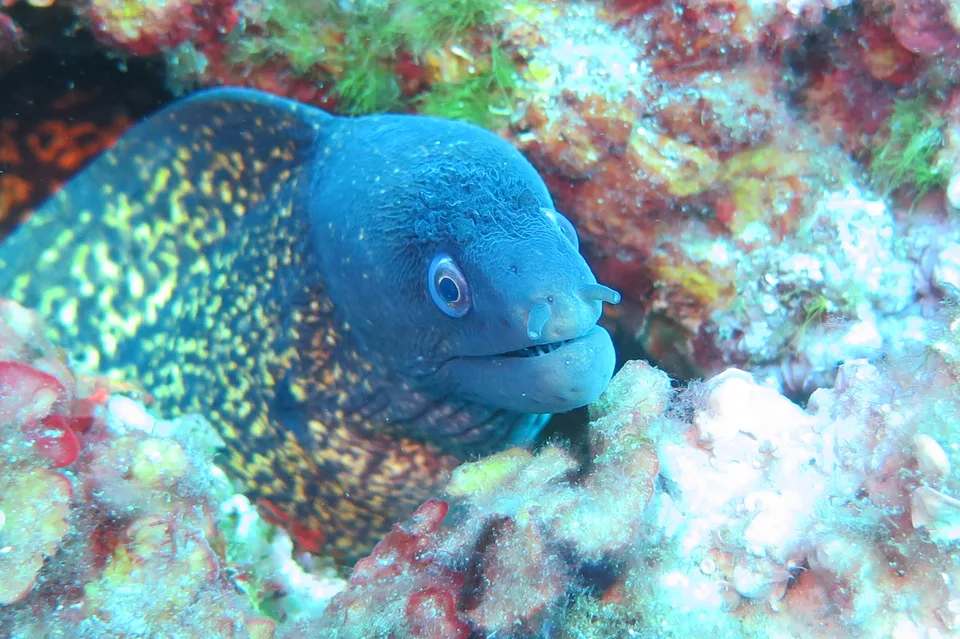
Rocky coastal reefs, boulder fields, crevices, caves and artificial structures; usually sheltered close to the seabed.
Distribution
Northeastern Atlantic, from the British Isles and Portugal southward to Senegal, including Macaronesian islands, and throughout the Mediterranean Sea.
Conservation status
Least Concern
Edibility
Edible and traditionally consumed in some regions, but it should be thoroughly cooked. Avoid consumption where toxin or seafood-health advisories apply; large morays may accumulate contaminants.
Culinary quality / 5
3
Danger level
Caution
Usual observation depth
5–30 m
Lifespan (years)
0
Behaviour
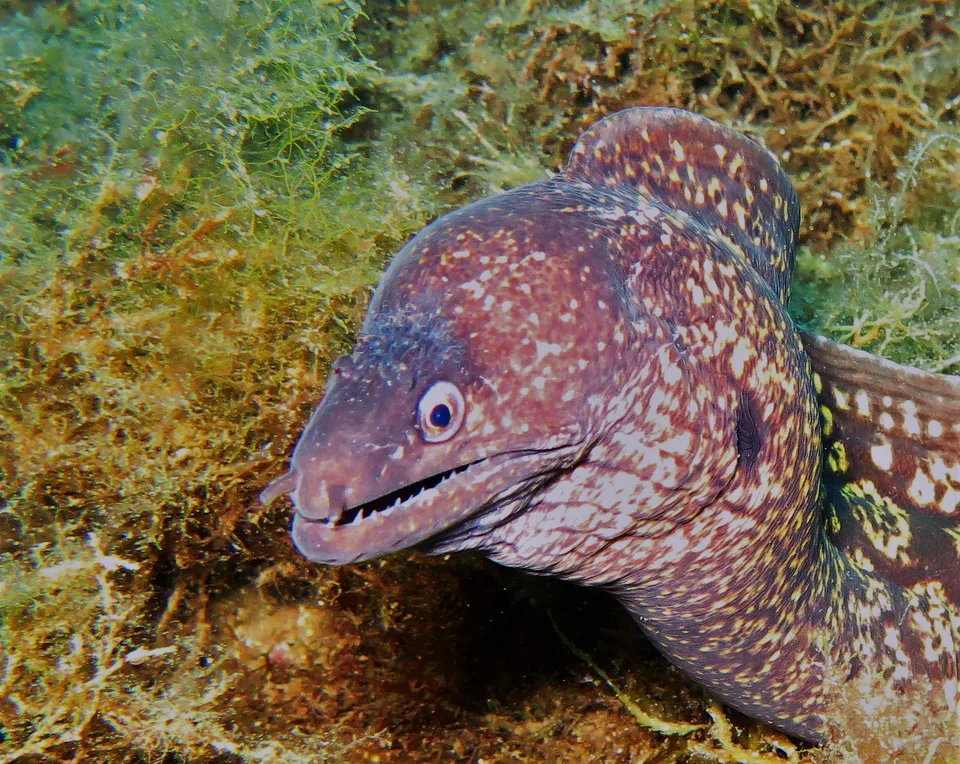
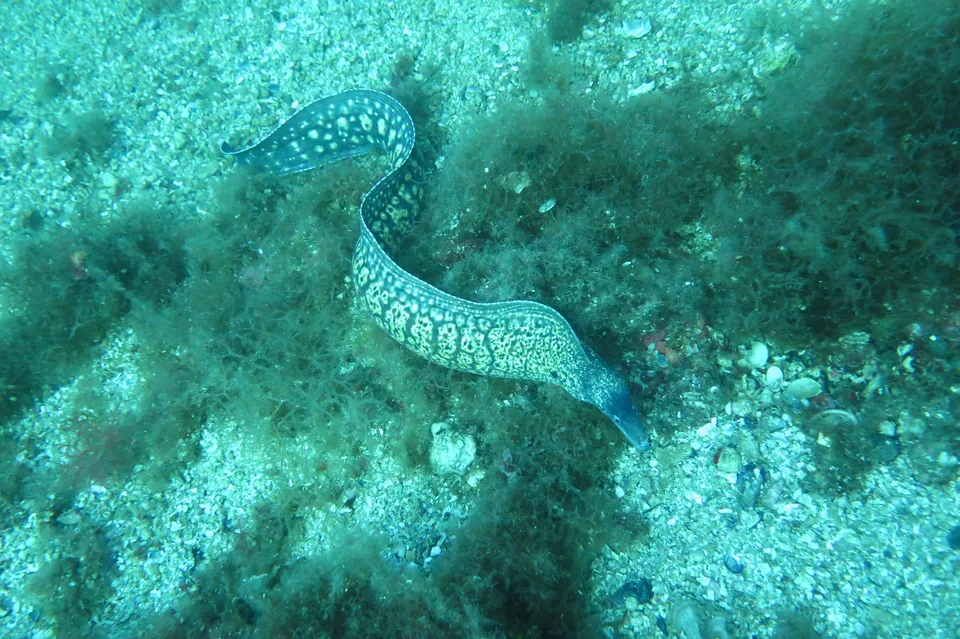
Usually solitary and territorial. It spends daylight hours with its head protruding from a shelter and is most active at night, when it hunts along the bottom. Its open mouth is normal breathing behaviour, not necessarily a threat display.
Observation zones
Rocky reef, boulder field, crevice, cave, wall and wreck; occasionally around seagrass edges and other hard-bottom shelter.
Diet
Predatory carnivore feeding mainly on fishes, crustaceans and cephalopods.
Reproduction
Oviparous
Identification marks
Long, scaleless eel-like body; dark brown to blackish ground colour densely covered with irregular yellow to yellowish spots and mottling. Head is broad with a large mouth and prominent pointed teeth; no pectoral fins.
Similar species
May be confused with the fangtooth moray (Enchelycore anatina), which has a narrower yellowish head, conspicuous long curved teeth and a more elongated snout. The Mediterranean moray is darker and more densely yellow-mottled.
Approach rules
Observe calmly without blocking its retreat or putting hands near holes. Keep a respectful distance, do not touch or feed it, and avoid repeated direct flash photography. Morays can inflict serious bites if provoked or startled.
Protection
IUCN Least Concern (LC). No CITES listing is applicable. Maintain general conservation practice: do not disturb, handle, feed or collect animals, and follow site-specific regulations.