
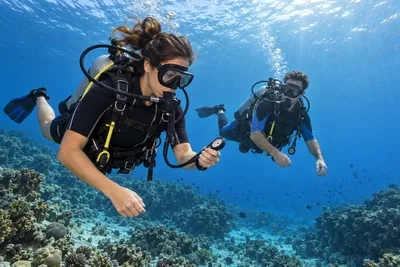
Why Do I Use So Much Air When Scuba Diving?
If your pressure gauge drops faster than your buddy's, you may wonder whether something is wrong with your breathing. In most cases, high air consumption has several contributing factors, including depth, physical effort, buoyancy, stress, equipment configuration and individual physiology.
New divers often use more gas because they are concentrating on unfamiliar skills. Maintaining position, controlling buoyancy, checking instruments and responding to the underwater environment all require attention. Unnecessary movements and increased breathing can follow, particularly when a diver feels uncomfortable.
However, using more air does not automatically make someone a less capable diver. People have different body sizes, breathing requirements, fitness levels and responses to exertion. Experienced divers can also consume substantial amounts of gas in demanding conditions.
The goal is not to breathe as little as possible. It is to breathe naturally, dive comfortably, reduce unnecessary effort and manage your available gas safely.
With suitable training and experience, many divers become more efficient. Improvement should be measured against your own previous dives rather than treated as a competition with your buddy. A shorter dive with comfortable breathing and appropriate gas reserves is always preferable to extending a dive simply to achieve an impressive number.
Depth, Physical Effort, Cold and Stress: What Changes Air Consumption?
Depth is one of the most important factors affecting the amount of gas taken from your cylinder. As you descend, ambient pressure increases. At approximately 10 metres in seawater, the surrounding pressure is twice that at the surface. At 20 metres, it is approximately three times surface pressure.
Your regulator supplies breathing gas at the surrounding pressure. Consequently, an equivalent volume inhaled into your lungs at greater depth represents a larger quantity of gas taken from the cylinder. Even with similar breathing patterns, cylinder gas is used more quickly at depth.
Physical effort also matters. Swimming against a current, fighting poor buoyancy or moving unnecessarily increases muscular work. Working muscles require more oxygen and produce more carbon dioxide, so ventilation normally increases to meet the body's needs.
Cold water can add to the challenge. Inadequate thermal protection may cause discomfort, tension or shivering, increasing metabolic demands. Stress and anxiety can also change breathing patterns and increase consumption.
Individual differences are equally important. Body size, fitness, workload and physiological responses vary between divers, making direct comparisons unreliable.
Finally, comparing pressure readings alone can be misleading. A diver using a larger cylinder may show a smaller pressure decrease while consuming a similar volume of gas. Different depths, dive durations and profiles make comparisons even less meaningful.
Understanding these factors helps explain why your consumption may change considerably between otherwise enjoyable dives.
Breathe Naturally: Why Trying to Save Air Can Be Dangerous
When divers notice their gas supply decreasing, a common instinct is to deliberately reduce their breathing. Unfortunately, restricting ventilation is not a safe method of improving air consumption.
Breathing should remain continuous, natural and comfortable, matching the body's needs at the time. There is no universally suitable breathing rhythm that divers should force themselves to follow.
One particularly harmful practice is called skip breathing: deliberately pausing or holding the breath between inhalations to make the cylinder last longer. This can reduce the elimination of carbon dioxide, allowing it to accumulate in the body.
Elevated carbon dioxide can contribute to headaches, breathlessness, anxiety and impaired performance. The combination of physical exertion and denser breathing gas at depth can make effective ventilation particularly important.
Never hold your breath while scuba diving. Breath-holding is also dangerous because expanding gas during ascent can injure the lungs.
Deliberate hyperventilation is not a solution either. Nor should divers force unusually slow breathing, suppress the urge to breathe or follow a rigid breathing count to reduce consumption.
Instead, concentrate on reducing unnecessary physical effort and maintaining a comfortable breathing pattern. If breathing feels difficult or unusually demanding, communicate the problem rather than attempting to control it through willpower.
Good air management begins with respecting normal physiology, not trying to override it.
Improve Buoyancy, Trim and Finning Efficiency
One of the most useful ways to reduce unnecessary energy expenditure underwater is to improve buoyancy control. A diver who constantly rises, sinks or changes position may expend considerably more effort than someone maintaining a stable, comfortable position.
Correct weighting is an important starting point. Excess weight can require additional buoyancy compensation and contribute to inefficient positioning. Inadequate weight can make maintaining appropriate buoyancy difficult. Weighting should be checked and adjusted through the procedures learned during training, with appropriate supervision.
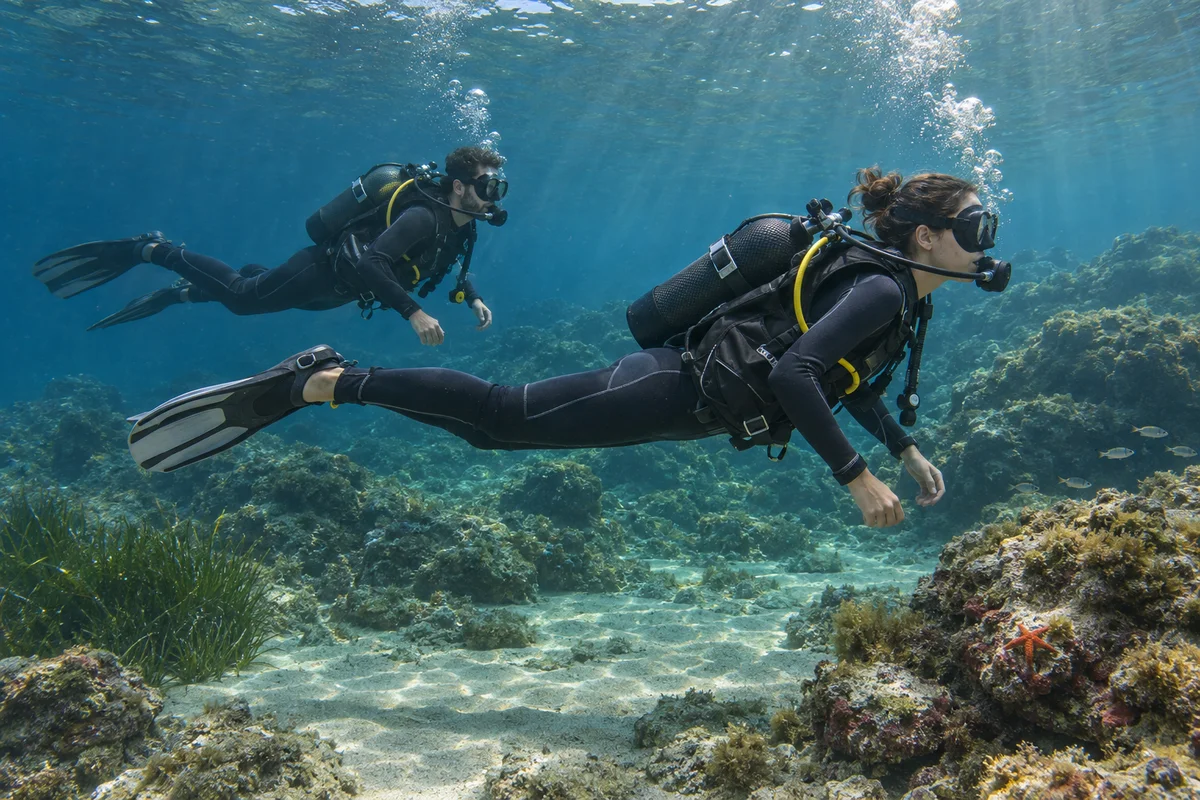
Trim describes your body's orientation in the water. A balanced, streamlined position generally creates less resistance than swimming with your body angled awkwardly or dragging equipment.
Finning technique matters too. Large, hurried kicks are not necessarily more effective than controlled movements suited to your equipment and the conditions. Efficient propulsion helps avoid wasting energy, particularly during longer swims.
Your equipment should fit properly, remain secured and be maintained according to its requirements. Poorly positioned accessories, uncomfortable equipment or a regulator that does not breathe normally can interfere with comfort and efficiency. Suspected equipment problems must be addressed before diving or according to the safety procedures learned during training.
If you are still developing these skills, supervised practice can make a meaningful difference. Our beginner's guide to scuba diving explains the foundations of training and equipment, while our guide to choosing scuba diving fins explores fit, design and stiffness.
The objective is smoother movement and greater control, not a guaranteed reduction in gas consumption.


Reduce Stress and Choose Conditions That Match Your Experience
Air consumption is influenced by more than physical technique. A diver who feels rushed, cold or uncertain may breathe differently from someone who feels relaxed and prepared.
Stress can arise before entering the water. Unfamiliar equipment, challenging conditions, poor visibility or concern about keeping up with a group may create tension. Once underwater, that tension can encourage unnecessary movements and increased ventilation.
Preparation helps reduce avoidable stress. Familiarise yourself with the planned dive, understand the briefing, check equipment properly and discuss concerns before entering the water. Make sure the dive conditions are appropriate for your training, experience and current comfort level.
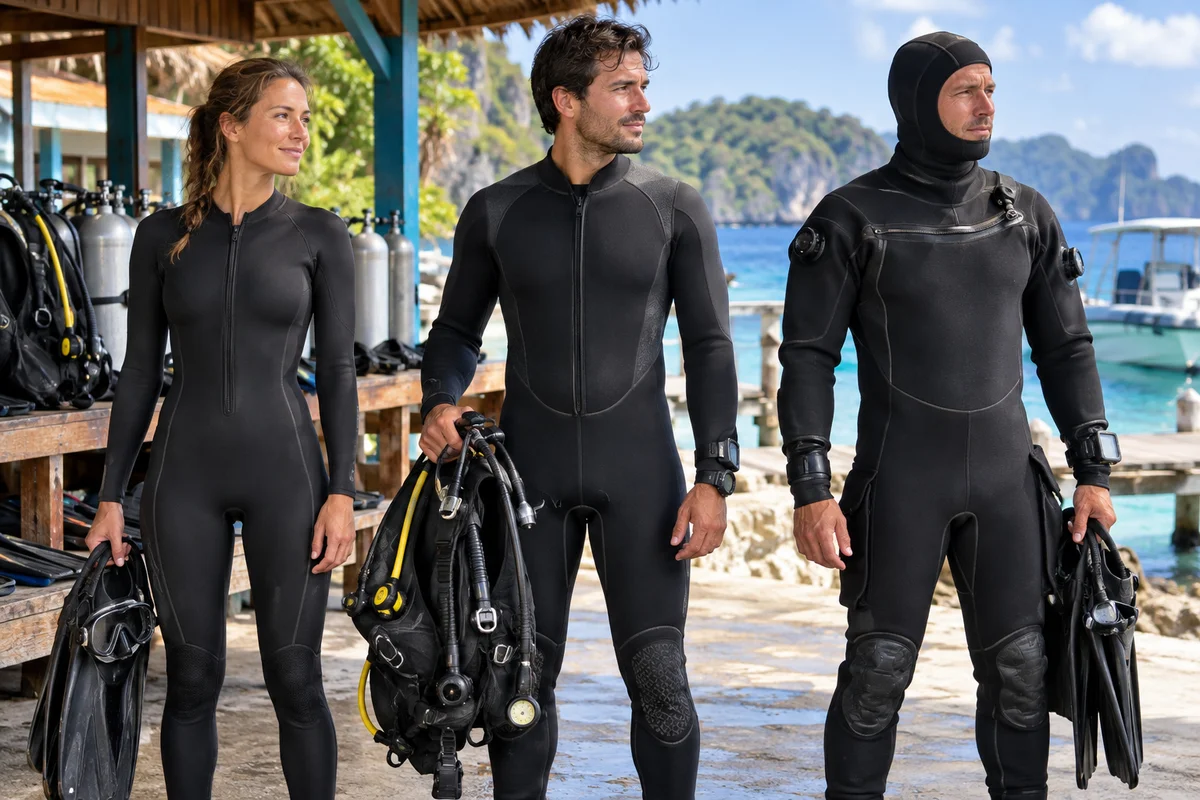
Thermal protection is another important consideration. Being cold can make a dive unpleasant and physically demanding. Choosing suitable exposure protection for the expected temperature and duration contributes to comfort. Our guide to choosing a wetsuit for different water temperatures provides additional information.
During the dive, avoid unnecessary rushing and remain aware of changes in effort or breathing comfort. Communicate early if a current feels stronger than expected, you become cold or you begin to feel anxious.
Adjusting a dive is a sensible response to changing conditions. Sometimes that means reducing the planned activity or ending the dive according to established procedures.
Confidence usually develops through suitable experience, preparation and supervised skill development. It should never depend on ignoring discomfort or trying to match another diver's pace.
Track Your Air Consumption and Recognise Real Progress
A dive log can help you understand your gas consumption more accurately than comparing a single pressure reading with another diver.
For each dive, consider recording:
- Cylinder information: its rated water capacity and starting pressure.
- Ending pressure: the reading recorded at the end of the dive.
- Dive duration and depth profile: including maximum depth and the general time spent at different depths.
- Environmental conditions: temperature, current, visibility and other relevant factors.
- Physical effort: whether the dive involved relaxed exploration, significant swimming or demanding conditions.
- Personal observations: comfort, anxiety, buoyancy difficulties and anything unusual.
These details provide context. A deeper dive with a strong current should not be judged against a shallow, relaxed dive using pressure loss alone.
You may encounter the terms SAC, meaning surface air consumption, and RMV, meaning respiratory minute volume. Terminology varies between training materials and calculation methods.
A consumption figure expressed in bar per minute describes a rate of cylinder pressure decrease and depends on the cylinder and measurement context. A figure expressed in litres per minute describes a volume of gas and is not interchangeable with bar per minute. Depth-related pressure must also be considered when interpreting underwater consumption.
These measurements can support understanding, but they are not substitutes for proper gas planning. There is no universal consumption target that every diver should achieve.
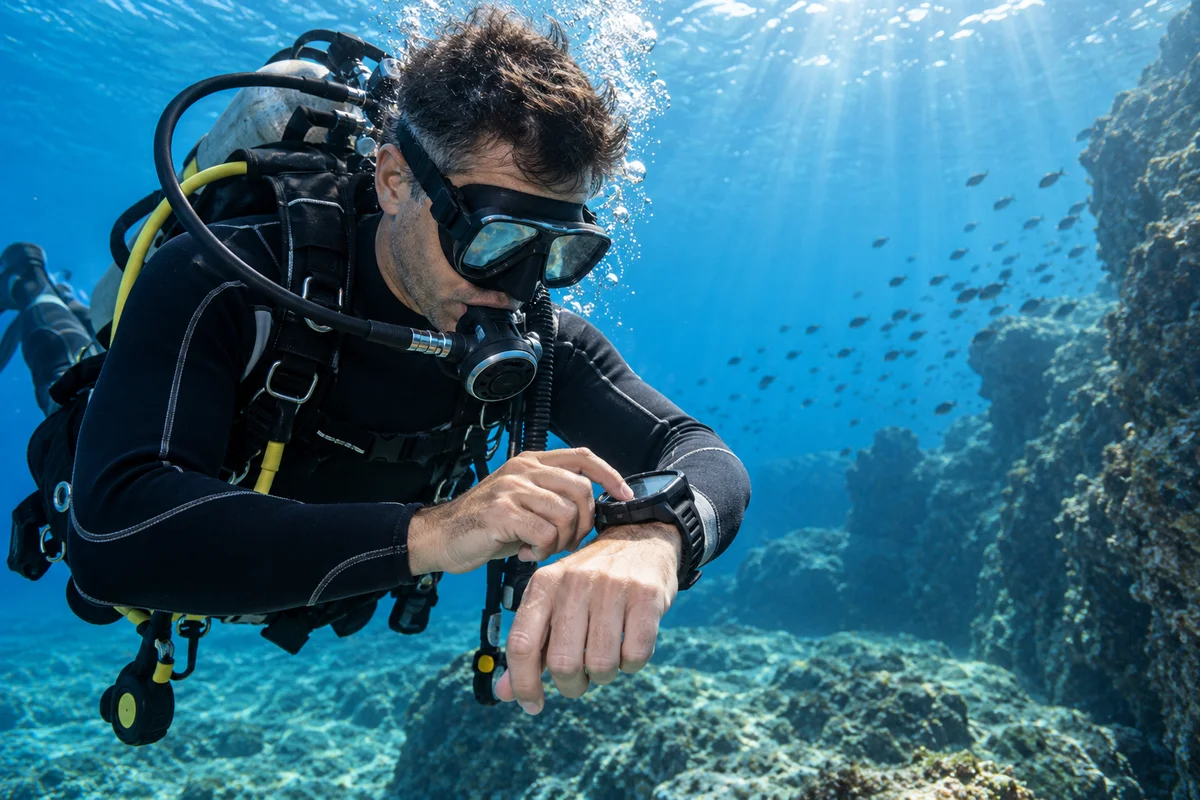
A guide to choosing your first dive computer can help you understand equipment used to record and review dive profiles.
Look for gradual improvements in comfort, control and consistency across comparable dives rather than chasing a particular figure.
Gas Management and Safety Always Come Before Longer Dive Times
Improving efficiency must never compromise safe gas management. Your remaining breathing gas is a safety resource, not a score.
Before entering the water, the dive should have an appropriate gas plan established with the instructor, guide or suitably trained dive team as applicable. Planning must consider the expected profile, depth, duration, conditions, return route, ascent, any required stops and foreseeable unexpected situations.
There is no single remaining-pressure figure that provides an appropriate reserve for every dive. In particular, treating 50 bar as a universally sufficient reserve ignores differences in depth, cylinder capacity, conditions, diver needs and the gas required to complete the dive safely.
During the dive, check your pressure gauge or gas-monitoring instruments as instructed during training and agreed in the briefing. Communicate remaining gas and concerns according to the established signals and procedures.
Do not continue a dive simply because your buddy has more gas available. Similarly, never delay an agreed return or termination point to improve your consumption statistics.
If breathing becomes difficult, unusually laboured or uncomfortable, signal the problem promptly and interrupt the dive according to the procedures you have learned. Do not attempt to compensate by suppressing breathing or pushing through significant breathlessness.
Persistent or disproportionate breathlessness, including symptoms occurring outside diving, warrants assessment by an appropriately qualified healthcare professional. Such symptoms can have different causes and should not be self-diagnosed as poor fitness or anxiety.
Safe decisions, clear communication and adequate gas planning matter far more than extending underwater time.
Practical Checklist and Frequently Asked Questions
Reducing unnecessary gas consumption is usually a gradual process. Before focusing on numbers, review the fundamentals that make diving more comfortable and controlled.
Your practical checklist:
- Choose a dive suited to your current skills, training and comfort.
- Understand the briefing, gas plan and communication procedures.
- Check that your equipment fits, operates correctly and is properly maintained.
- Use suitable thermal protection for the conditions.
- Develop buoyancy, trim and finning skills through supervised practice.
- Breathe continuously and naturally without deliberately limiting ventilation.
- Monitor your gas supply and communicate concerns early.
- Record dive conditions and compare progress across reasonably similar profiles.
Does nitrox reduce air consumption?
No. Breathing an oxygen-enriched gas mixture does not directly reduce the body's ventilation requirements or automatically decrease the amount of breathing gas used. Its advantages and limitations relate to gas composition and appropriate dive planning, not a guaranteed improvement in consumption.
Will a larger cylinder solve the problem?
A larger cylinder may provide more available gas when appropriately filled, but it does not correct inefficient movement, stress, buoyancy difficulties or breathing problems. Its additional size and weight may also affect comfort and configuration. More gas never authorises exceeding the planned depth, duration, decompression or training limits.
Why does my buddy finish with more gas?
You may have different physiological needs, equipment, cylinder capacities or underwater workloads. Even similar dive profiles do not mean identical gas requirements. Comparing pressures without context can create a false impression.
How quickly will my consumption improve?
There is no guaranteed improvement or fixed timetable. Some divers become more efficient as unfamiliar tasks become routine, while others benefit from additional supervised practice or adjustments to their equipment and dive choices.
Should I try to take fewer breaths?
No. Deliberately restricting ventilation is not an appropriate strategy. Reducing avoidable effort while breathing comfortably is a safer approach.
Ultimately, the best progress is not necessarily staying underwater longer than everyone else. It is becoming a calmer, more capable diver who understands personal limits, manages gas responsibly and enjoys each dive without unnecessary pressure.
00 Comments
No comments yet.