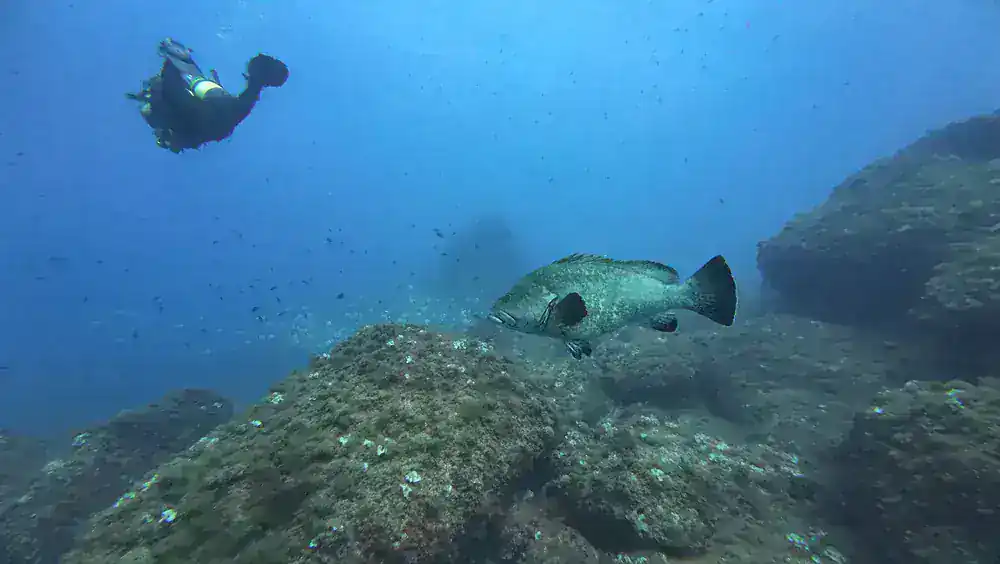
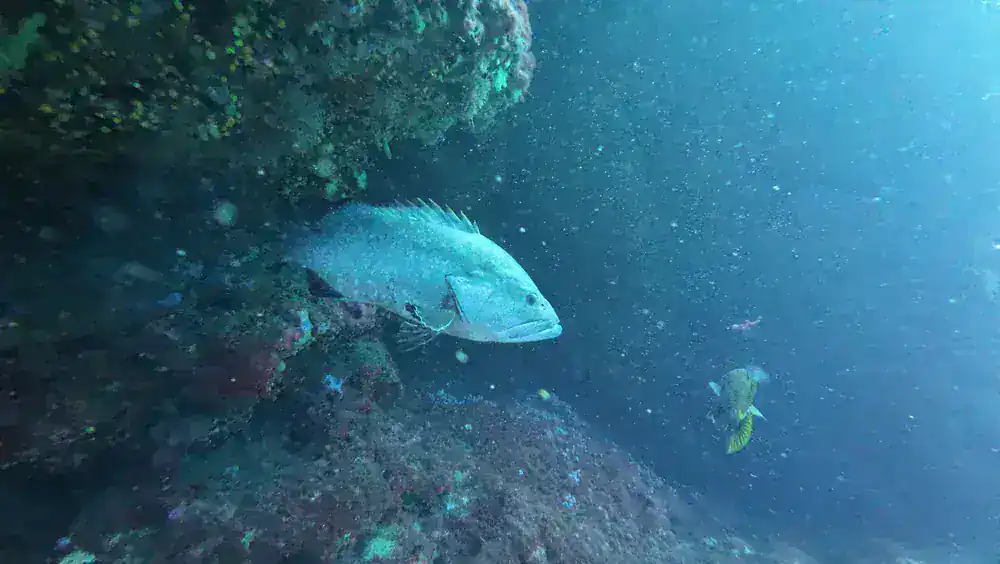
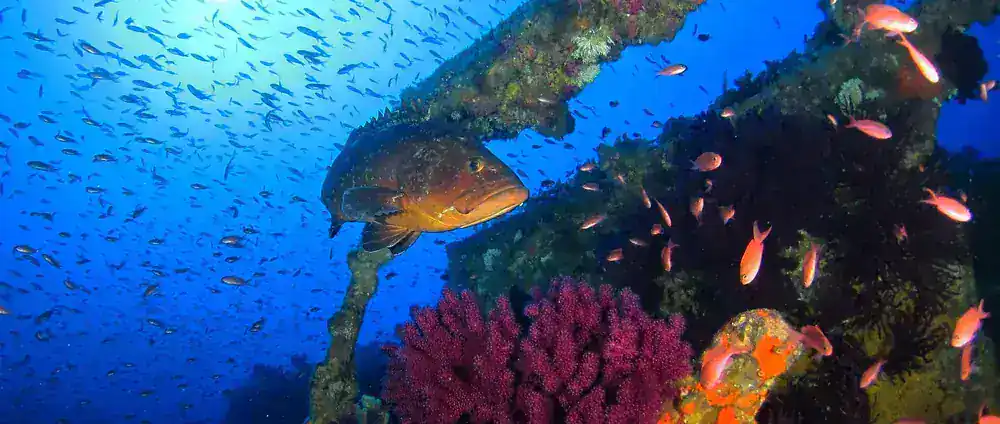
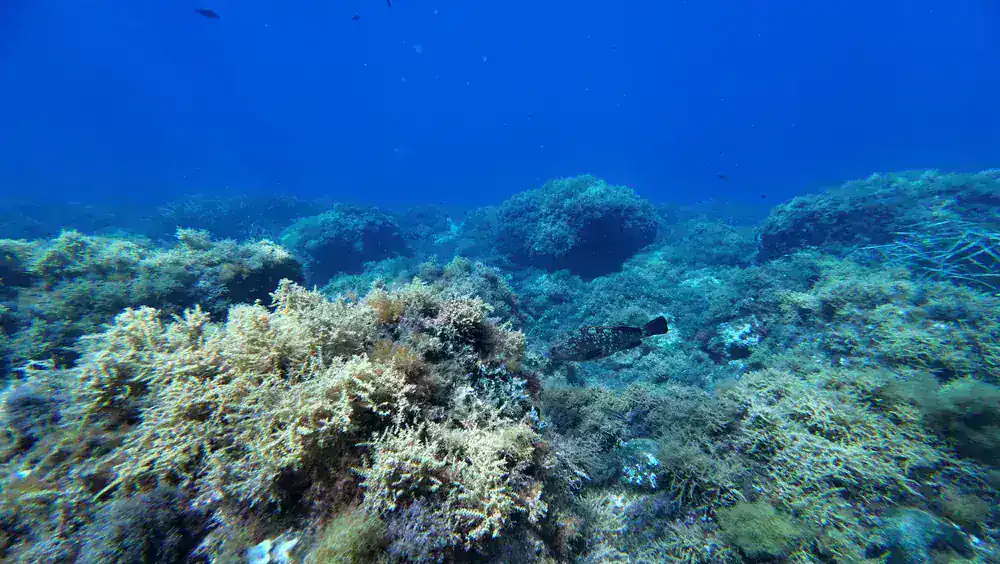
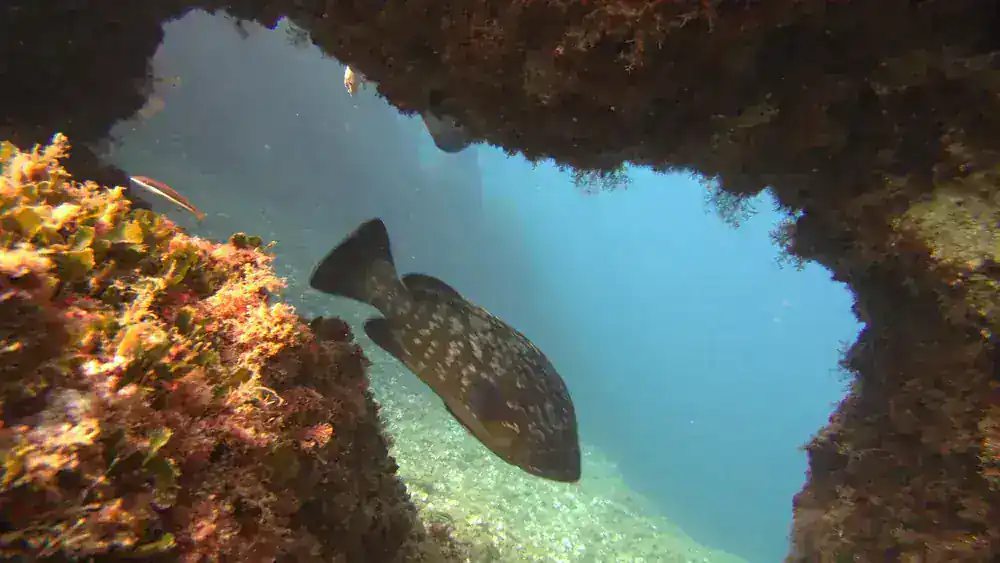
Rocky reefs, boulder fields, reef ledges, caves, crevices and seagrass-associated rocky bottoms. Juveniles often occur in very shallow, sheltered coastal habitats.
Distribution
Eastern Atlantic, from Portugal and the Mediterranean southward to southern Africa, including Macaronesian islands; also recorded in the southwestern Indian Ocean off southern Africa.
Conservation status
Vulnerable
Edibility
Edible and highly regarded as food, but the species is IUCN Vulnerable and vulnerable to overfishing. Prefer sustainable alternatives and always follow applicable catch, size and sale rules.
Culinary quality / 5
4
Danger level
Harmless
Usual observation depth
8–50 m
Lifespan (years)
50
Behaviour
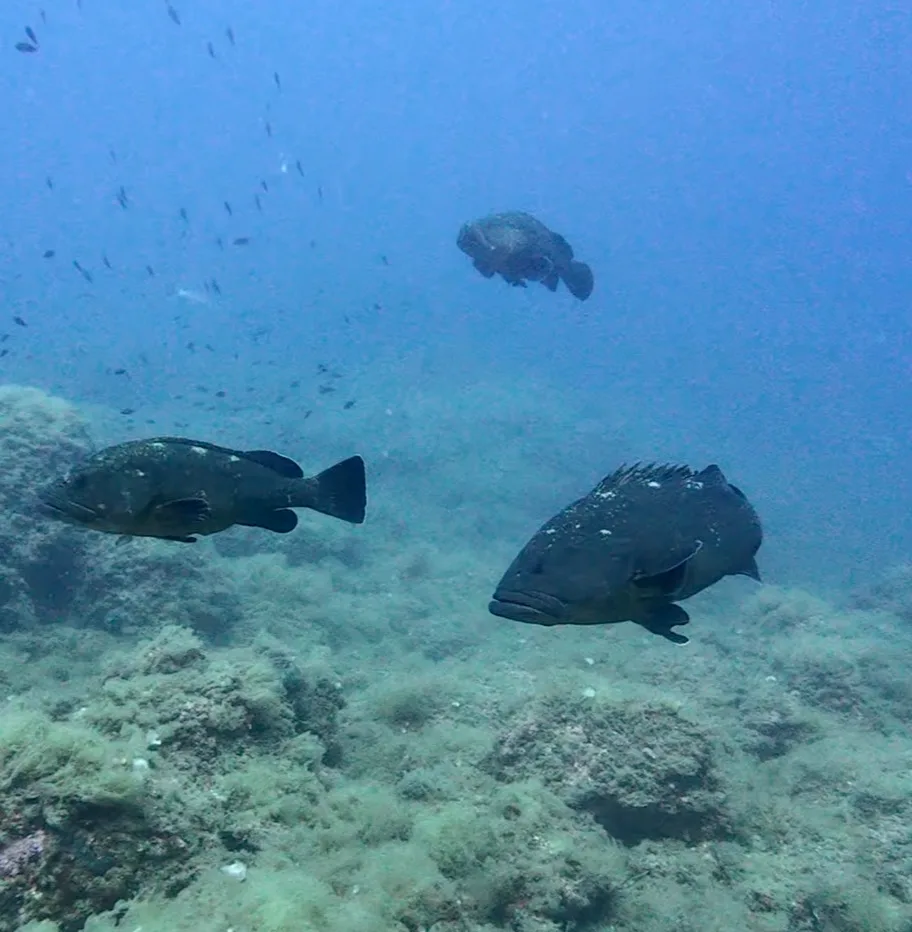
Usually solitary and strongly associated with a home refuge. Adults are territorial around caves and crevices, while juveniles may be more cryptic in shallow shelter. It is primarily active around dawn, dusk and at night, and is a protogynous hermaphrodite: many individuals mature first as females and some later become males.
An opportunistic predatory fish that eats fishes, crabs and other crustaceans, cephalopods and other benthic invertebrates.
Reproduction
Oviparous
Identification marks
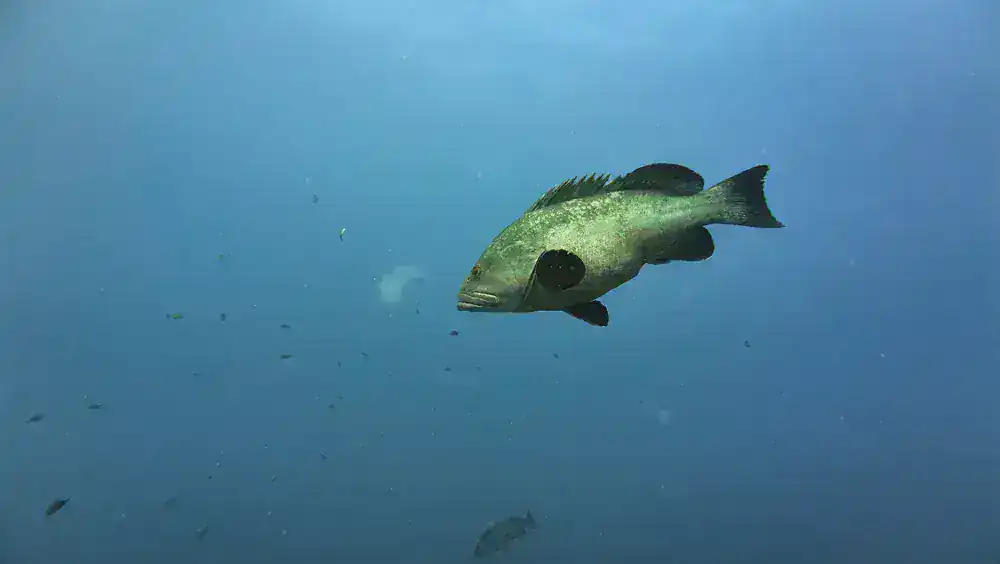
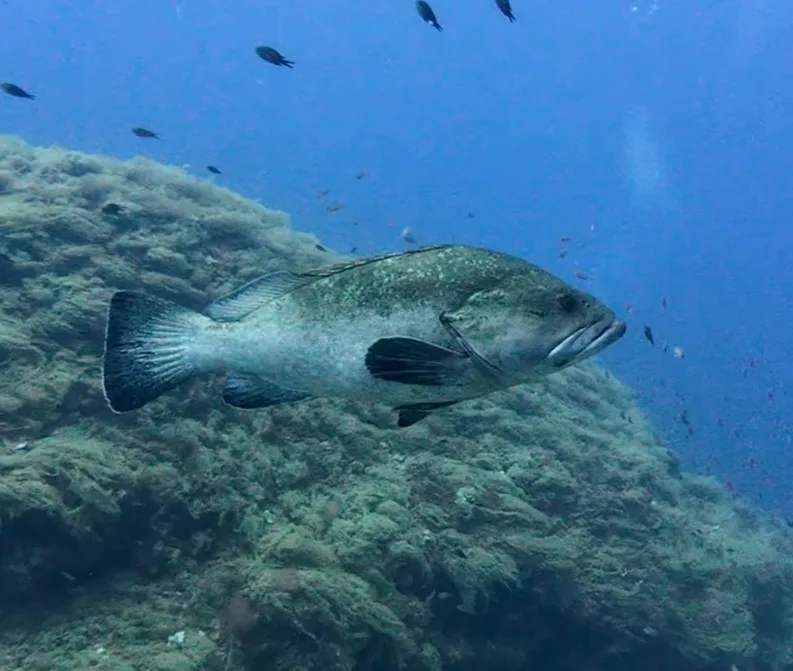
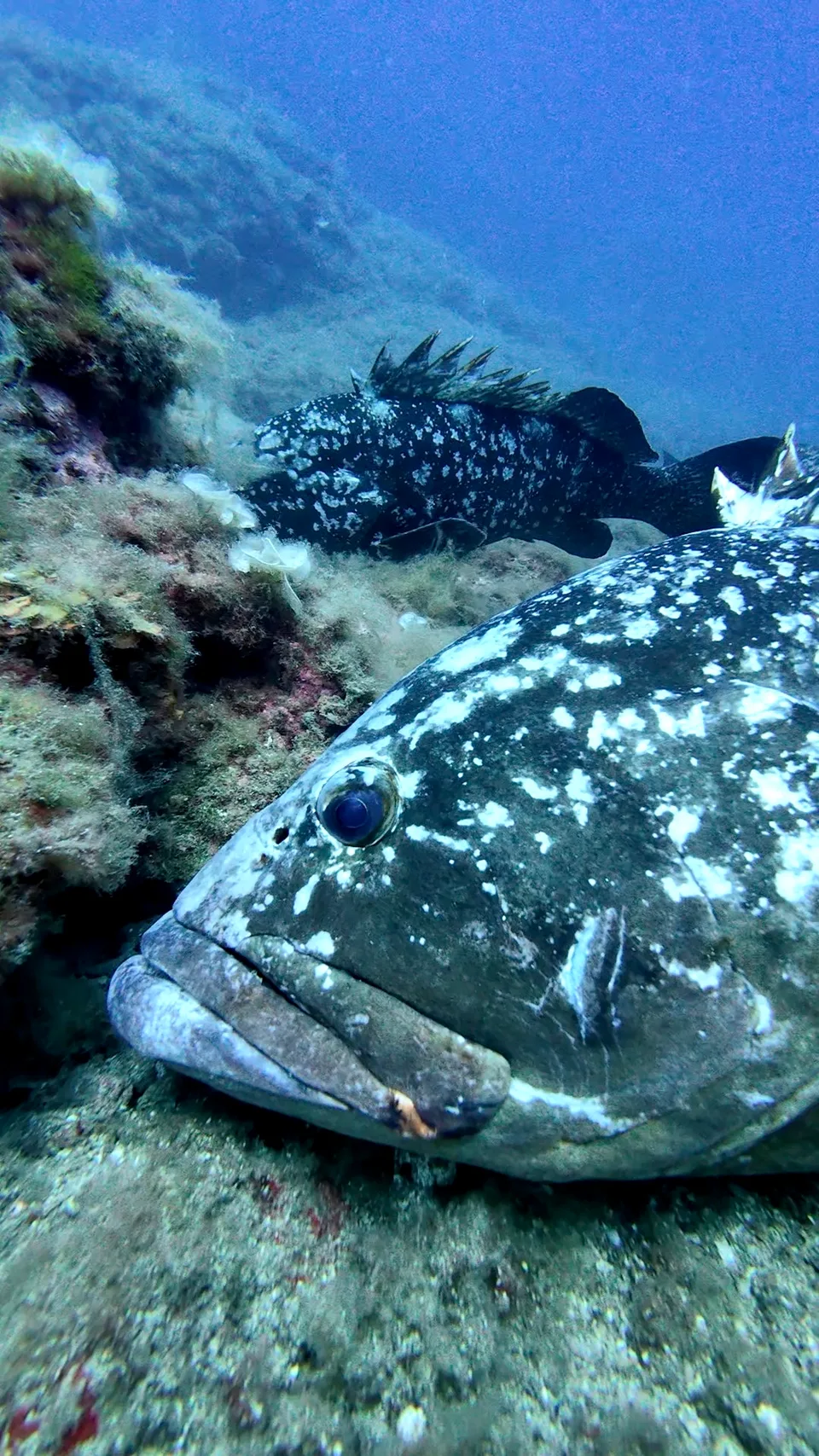
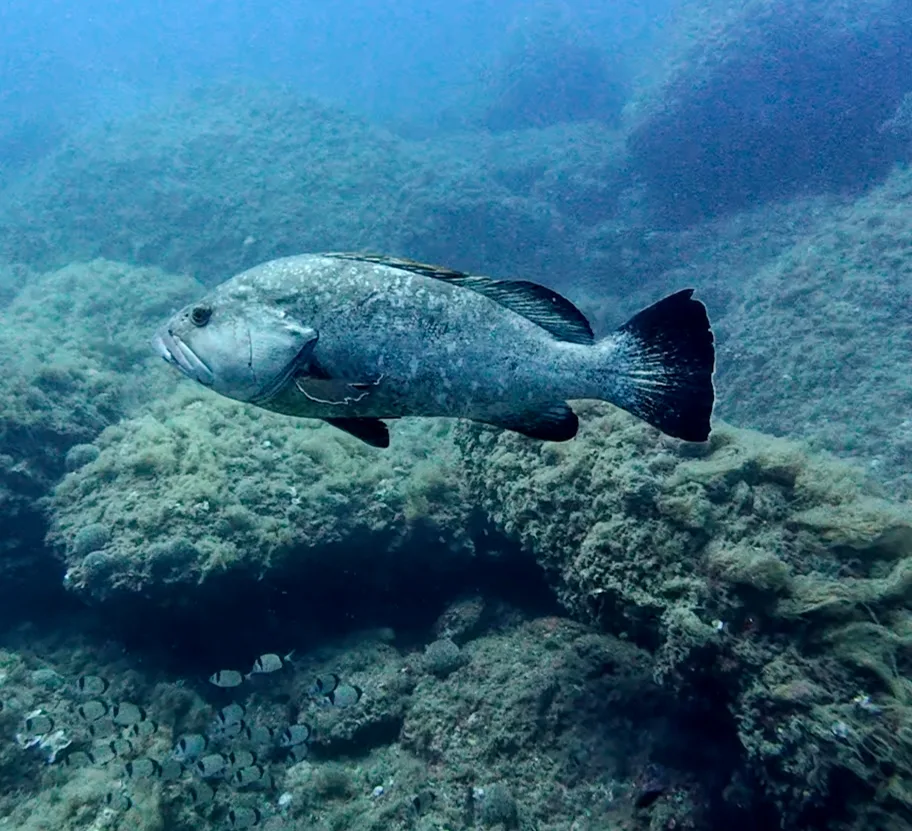
A robust, deep-bodied grouper with a large mouth and rounded tail. Adults are dark brown to grey-brown, usually with many small pale yellowish spots and irregular darker vertical bars; the fin margins may appear pale. Juveniles are more brightly patterned, with conspicuous yellow and pale markings.
Similar species
May be confused with the goldblotch grouper (Epinephelus costae) or other large groupers. E. costae generally has a more distinctive golden blotch on the upper flank and differs in overall body pattern; identification should use the combination of body shape, small yellowish spots and irregular dark bars of E. marginatus.
Approach rules
Approach slowly and quietly, remaining several metres away and allowing the fish an unobstructed route to its refuge. Do not touch, chase, corner, feed or handle it. Avoid repeated close flash photography, especially in caves or during spawning periods.
Protection
IUCN Red List: Vulnerable (VU). This slow-growing, long-lived grouper is susceptible to fishing pressure, especially removal of large breeding adults. Conservation measures and fishery restrictions vary by place; consult current official local rules.