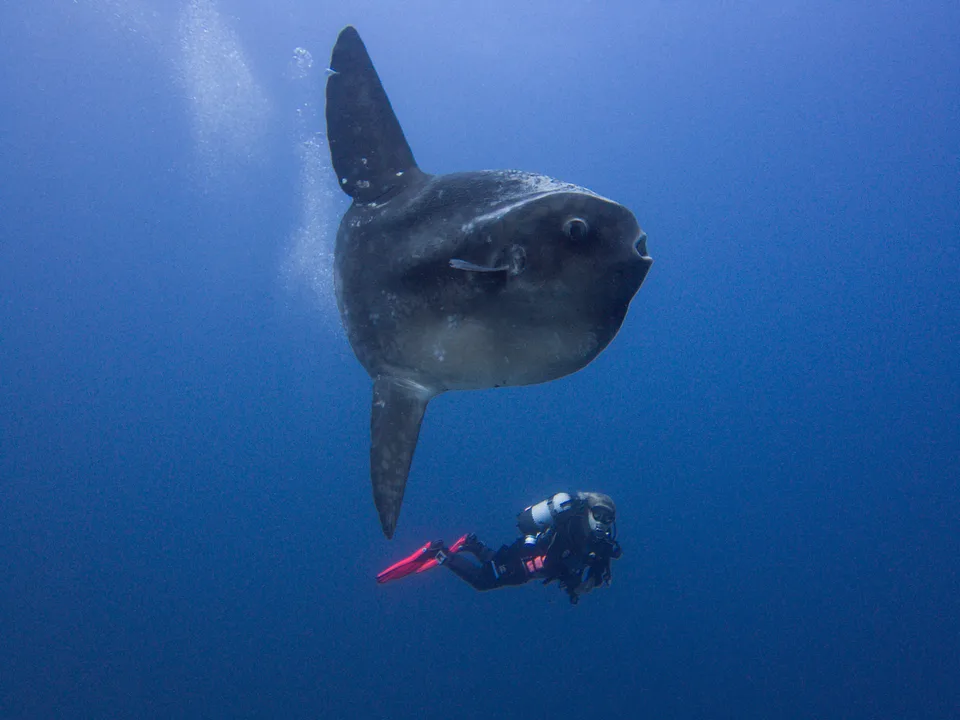
Pelagic and oceanic species living in tropical and temperate offshore waters. It performs deep feeding dives and frequently returns to surface waters.
Distribution
Circumglobal distribution in tropical and temperate waters of the Atlantic, Indian and Pacific oceans, including the Mediterranean Sea.
Conservation status
Vulnerable
Edibility
Edible, and consumed in a few regions, but generally not recommended because the species is Vulnerable and is affected by fisheries bycatch. Culinary use is uncommon in many areas.
Culinary quality / 5
3
Danger level
Harmless
Usual observation depth
5–200 m
Lifespan (years)
20
Behaviour
Generally solitary, although individuals may gather seasonally in productive feeding areas or at cleaning stations. Active day and night, it often basks near the surface and makes deep dives to feed.
Observation zones
Open water, offshore current zones, open coastal waters, cleaning stations and occasionally near reefs or kelp forests. It may also be observed resting or warming near the surface.
Diet
Opportunistic predator feeding on gelatinous zooplankton, notably jellyfish, salps and ctenophores, as well as squid, crustaceans, small fish and other drifting animals.
Reproduction
Oviparous
Identification marks
Very large body, laterally compressed and almost circular; posterior end truncated, forming a rigid clavus instead of a typical tail; dorsal and anal fins very high; small mouth and rough, grayish to silvery skin.
Similar species
May be confused with the southern sunfish, Mola alexandrini, or the hoodwinker sunfish, Mola tecta. Reliable distinction generally requires examination of the shape of the clavus, denticles, and arrangement of the fin rays; photos of the rear edge and fins are useful for expert identification.
Approach rules
Approach slowly and calmly, keep at least 3 to 5 m away, and do not touch it, chase it, ride it, or block its passage. Avoid disturbing cleaning interactions. Do not feed it; avoid flash or use it sparingly, never at very close range.
Protection
IUCN Red List: Vulnerable. The species is not listed in the CITES appendices. It is vulnerable to bycatch, plastic ingestion and other ocean threats; reducing disturbance and avoiding support for unsustainable catches are prudent general measures.