
Between reefs and open water
The Red Sea combines coral reefs, lagoons, sandy bottoms and open water, creating varied habitats for Indo-Pacific wildlife. These ten species can be encountered by divers or snorkelers, but sightings depend on the site, season and conditions. Patience, good buoyancy and respectful distance make every observation better.
1. Whale shark
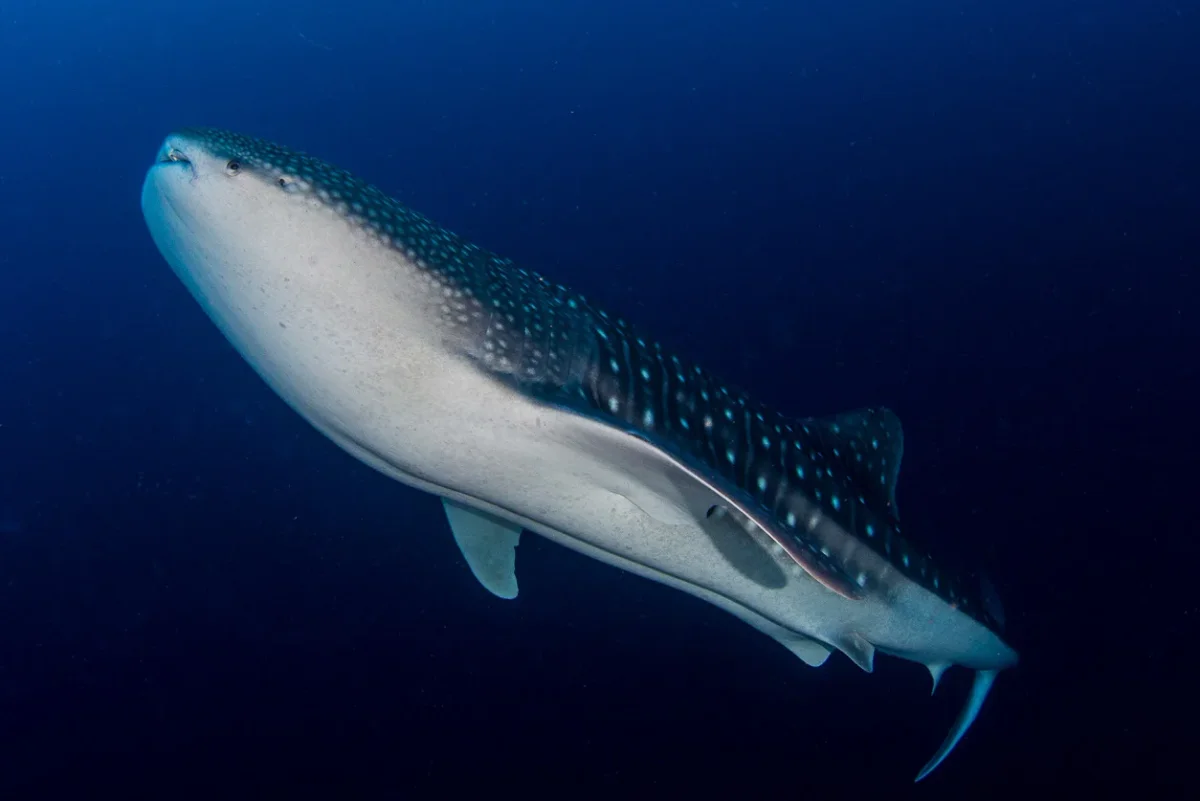
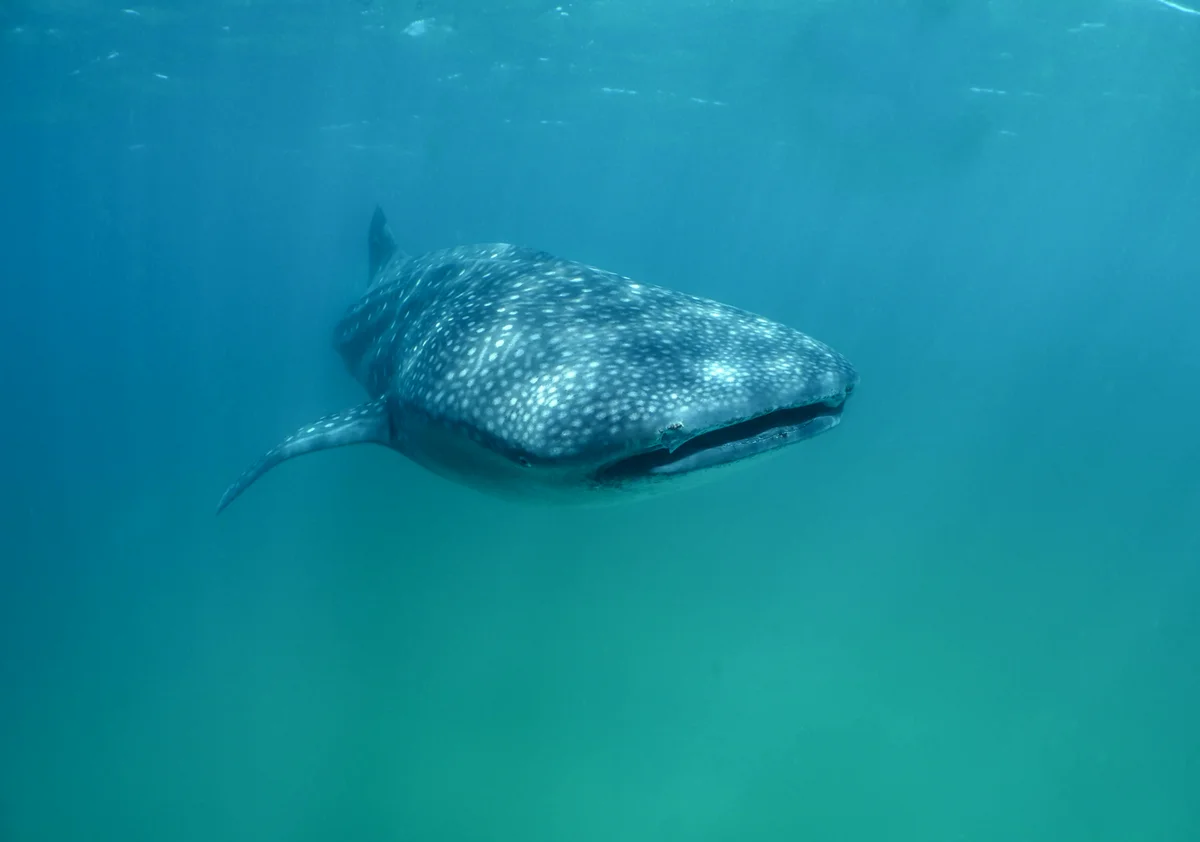
Whale shark (Rhincodon typus). The world’s largest fish is recognised by its broad head and pale spotted pattern. This pelagic filter feeder may pass near reefs, but encounters are irregular. Stay calm, keep clear of its tail and let this Endangered shark choose its route. Whale shark.


2. Hawksbill turtle
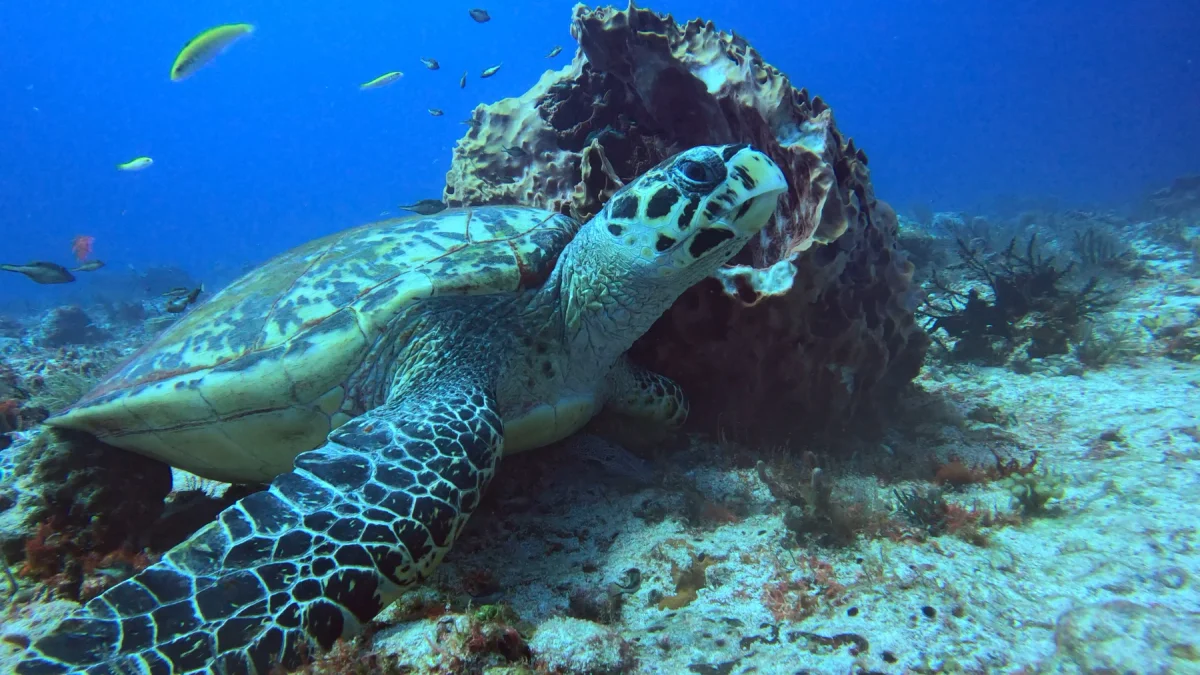
Hawksbill turtle (Eretmochelys imbricata). A narrow beak and overlapping shell scutes identify this reef turtle, which often feeds on sponges. Observe from the side, never touch or chase it, and always leave an unobstructed path to the surface. The species is Endangered. Hawksbill turtle.
3. Bluespotted ribbontail ray
Bluespotted ribbontail ray (Taeniura lymma). Bright blue spots distinguish this small ray on sandy patches beside shallow reefs, where it searches for bottom-dwelling prey. Approach slowly without blocking it and never attempt contact: the tail spine is a defensive weapon. Bluespotted ribbontail ray.


4. Devil firefish
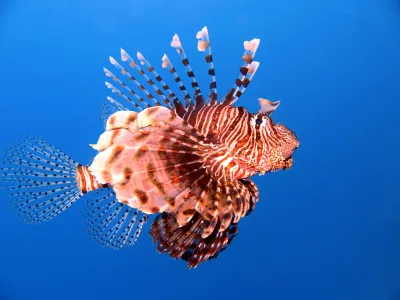
Devil firefish (Pterois miles). This native Red Sea predator has striped colouring, broad pectoral fins and venomous fin spines. It often waits motionless near coral before striking prey. Watch from a safe distance and never touch it, even when it appears calm. Devil firefish.
5. Humphead wrasse
Humphead wrasse (Cheilinus undulatus). Large adults develop a forehead hump, thick lips and a massive greenish body. They roam reef slopes and lagoons for molluscs, crustaceans and sea urchins. Give them space and do not intercept their path; this species is Endangered and listed in CITES Appendix II. Humphead wrasse.


6. Emperor angelfish
Emperor angelfish (Pomacanthus imperator). Adults show vivid yellow and blue stripes, while juveniles have dark bodies crossed by concentric pale rings. This reef fish explores coral structures and overhangs. Slow down, keep your buoyancy controlled and allow it to continue its natural route. Emperor angelfish.
7. Whitetip reef shark
Whitetip reef shark (Triaenodon obesus). A slender body and white fin tips identify this reef shark. It commonly rests beneath ledges by day and becomes more active at night. Do not crowd shelters or block its exit, and keep visual contact while maintaining distance. The species is Vulnerable. Whitetip reef shark.


8. Tawny nurse shark
Tawny nurse shark (Nebrius ferrugineus). This tan, broad-headed shark uses lagoons, reef caves and sandy areas and is mainly nocturnal. It may rest quietly by day, sometimes near other individuals. Never touch or corner it; leave a clear escape route. The species is Vulnerable. Tawny nurse shark.
9. Ocellated eagle ray
Ocellated eagle ray (Aetobatus ocellatus). Its dark back covered with white spots, wing-like fins and very long tail create a distinctive silhouette. It searches coastal reefs and seabeds for hard-shelled prey. Stay behind and to the side without crossing its path. The species is Endangered. Ocellated eagle ray.


10. Giant moray
Giant moray (Gymnothorax javanicus). This large mottled moray usually shows its head from a reef crevice. Repeated mouth opening ventilates the gills and is not automatically aggression. Keep hands out of holes, never feed it and do not try to force it into the open. Giant moray.
Observe without disturbing
Observe Red Sea wildlife without touching, feeding or chasing it. Keep good buoyancy, protect coral and adapt your distance to each animal and site. Sightings always vary with location, season and sea conditions.
Sources: IUCN, FishBase, NOAA Fisheries.
00 Comments
No comments yet.