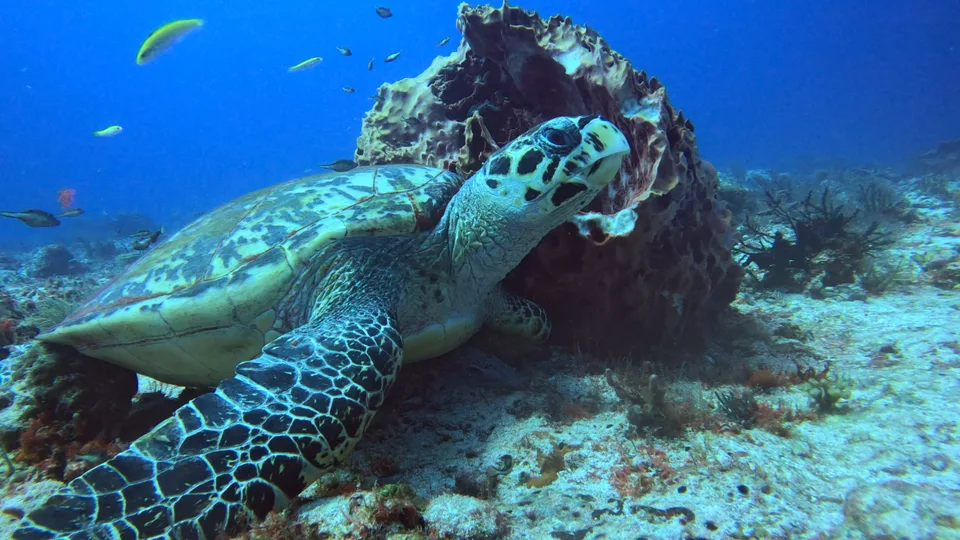
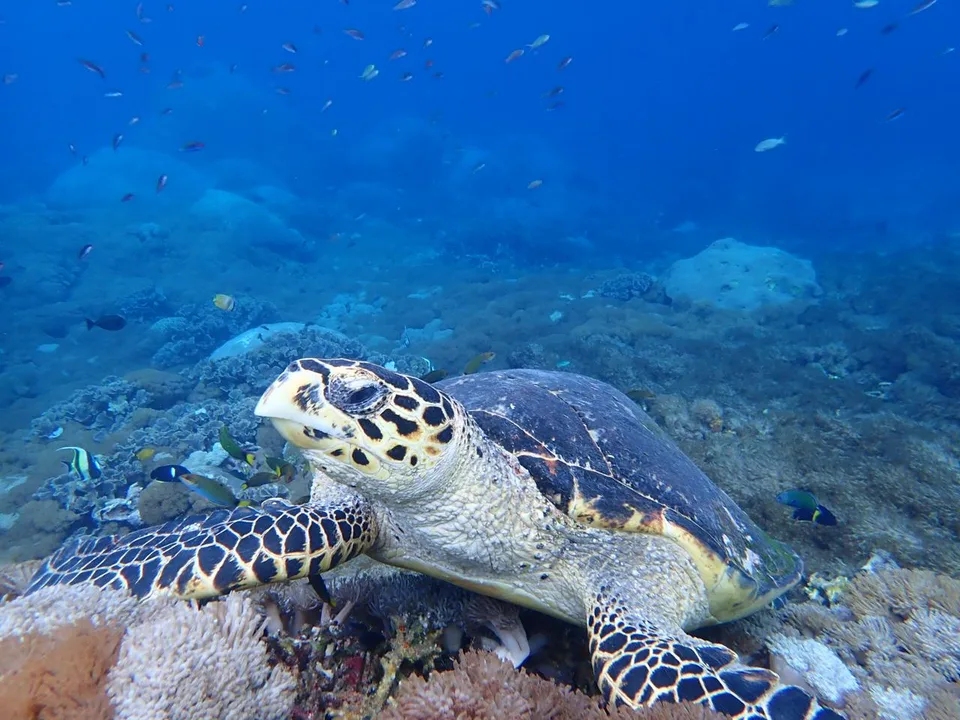
Primarily tropical coral reefs, rocky reefs, lagoons and coastal shallows; juveniles may use mangroves and open-ocean habitats.
Distribution
Circumglobal in tropical and subtropical Atlantic, Indian and Pacific waters, with major feeding areas around coral reefs.
Conservation status
Critically Endangered
Edibility
Not recommended for consumption. This Critically Endangered turtle is internationally protected; meat and eggs may also carry food-safety risks, including marine biotoxins.
Culinary quality / 5
3
Danger level
Harmless
Usual observation depth
1–30 m
Lifespan (years)
50
Behaviour
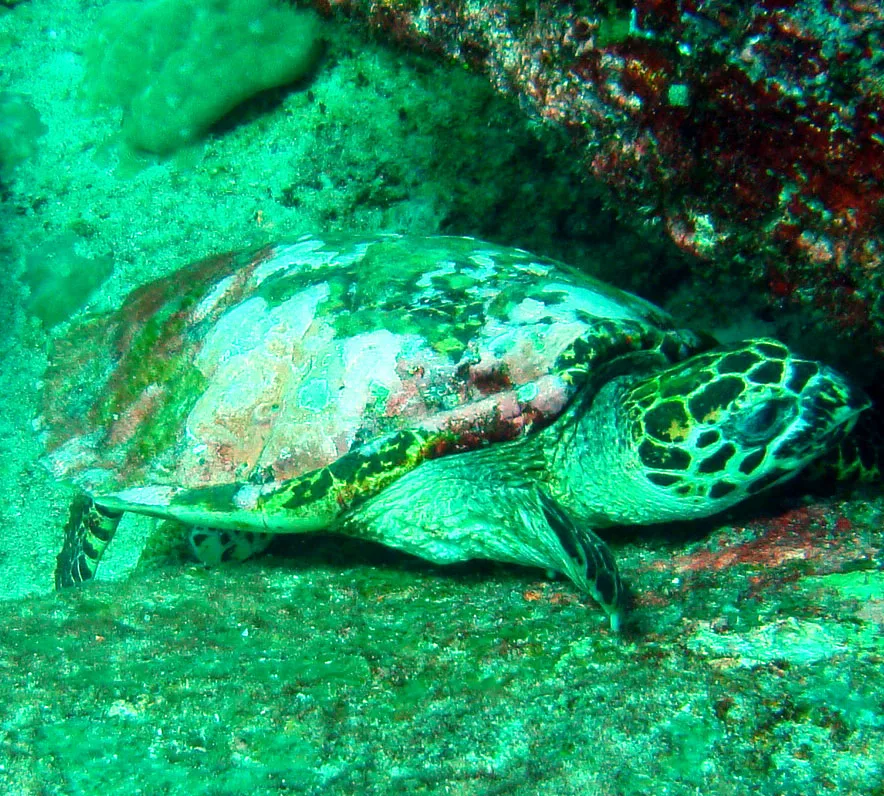
Usually solitary while feeding, although several individuals may gather at rich feeding sites. Mostly diurnal on reefs, resting in crevices or beneath ledges; migrates between feeding and nesting areas.
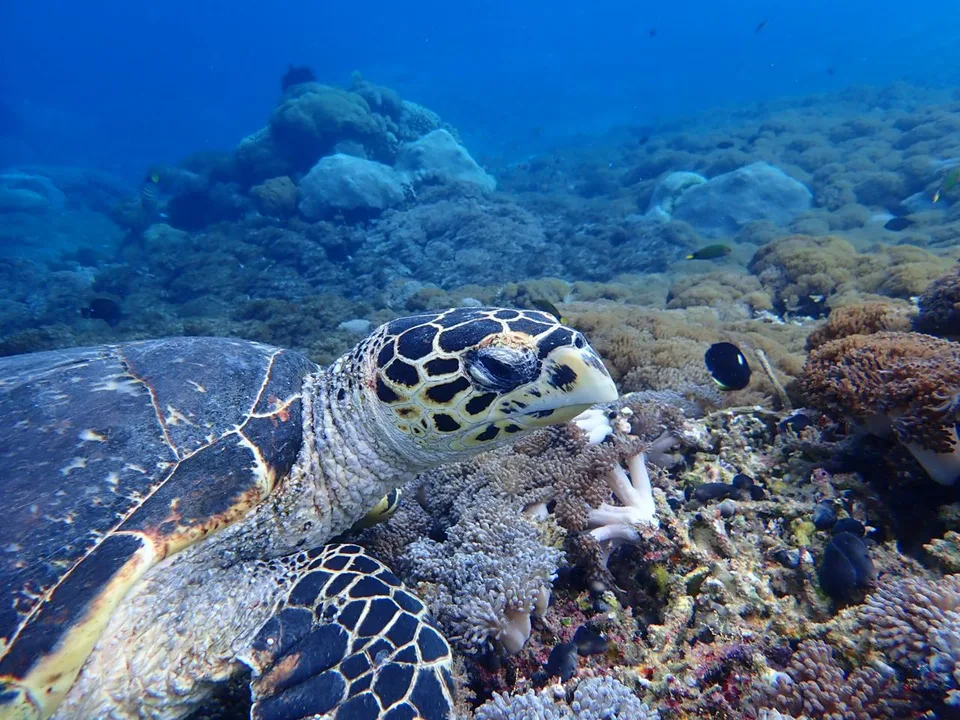
Specialized omnivore, feeding chiefly on sponges; also consumes soft corals, sea anemones, jellyfish, tunicates, algae and other small sessile invertebrates.
Reproduction
Oviparous
Identification marks
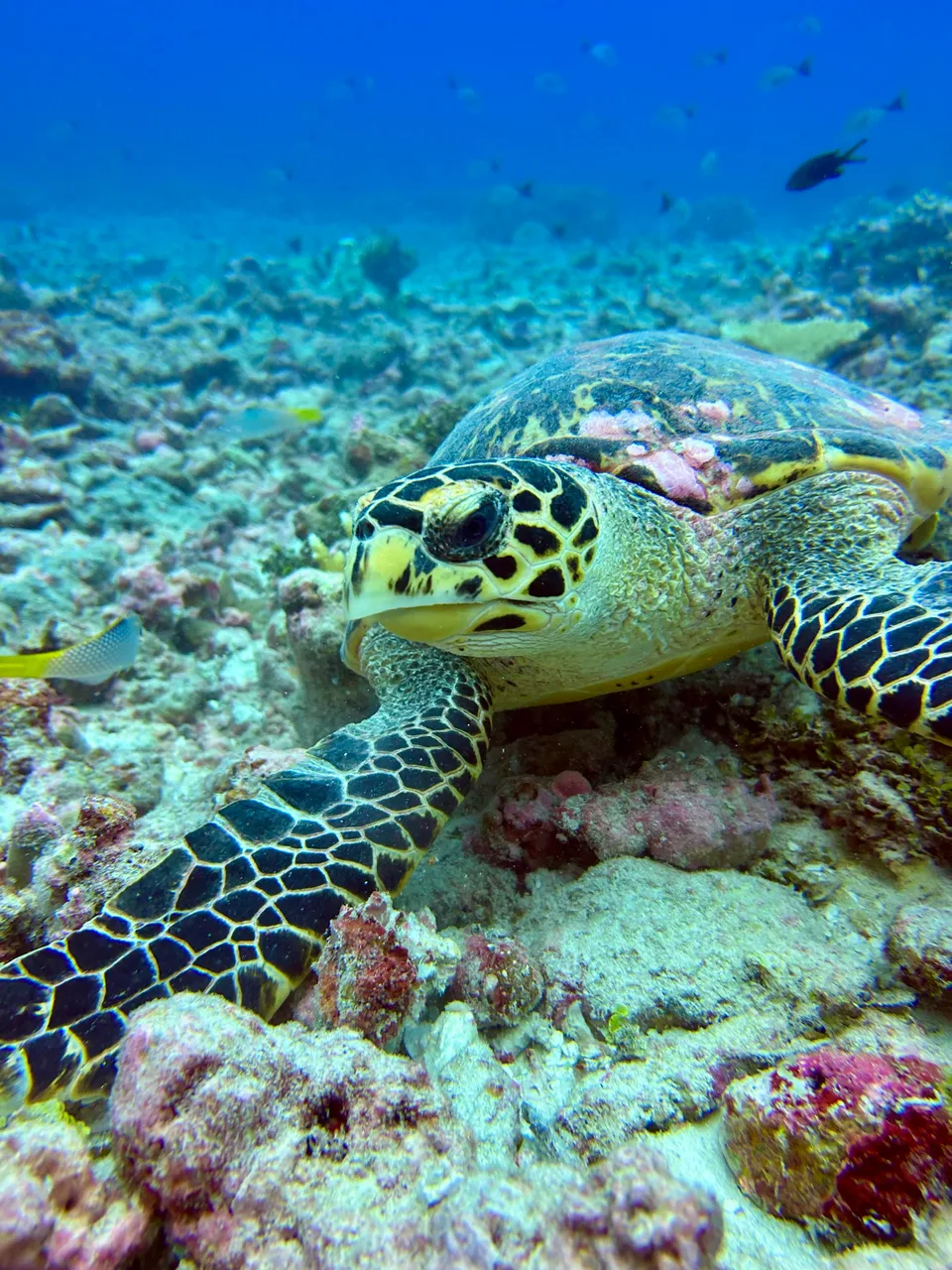
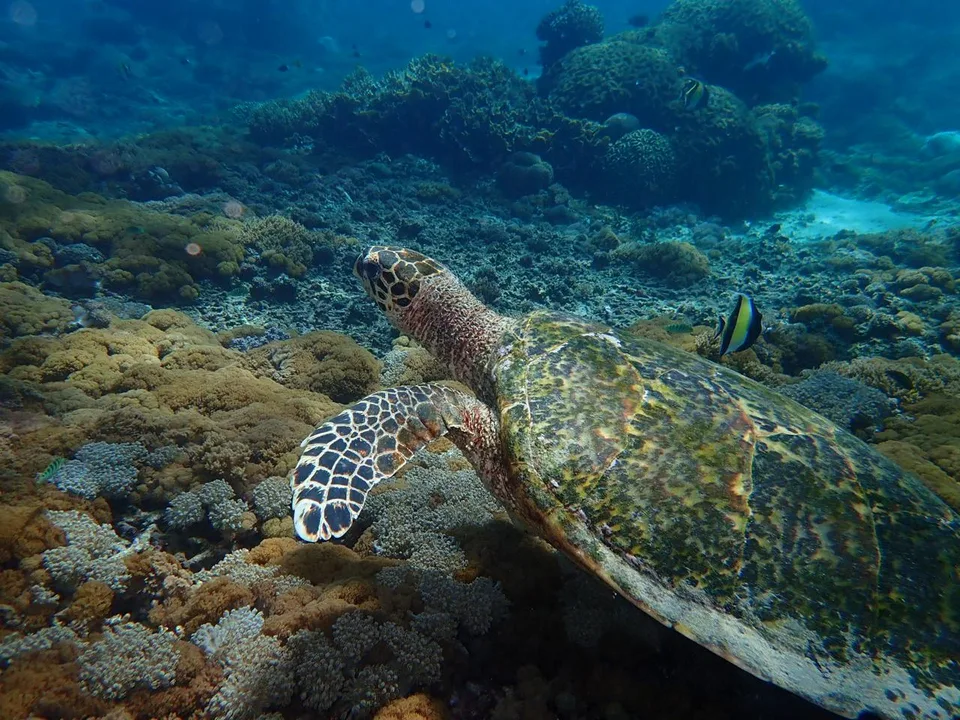
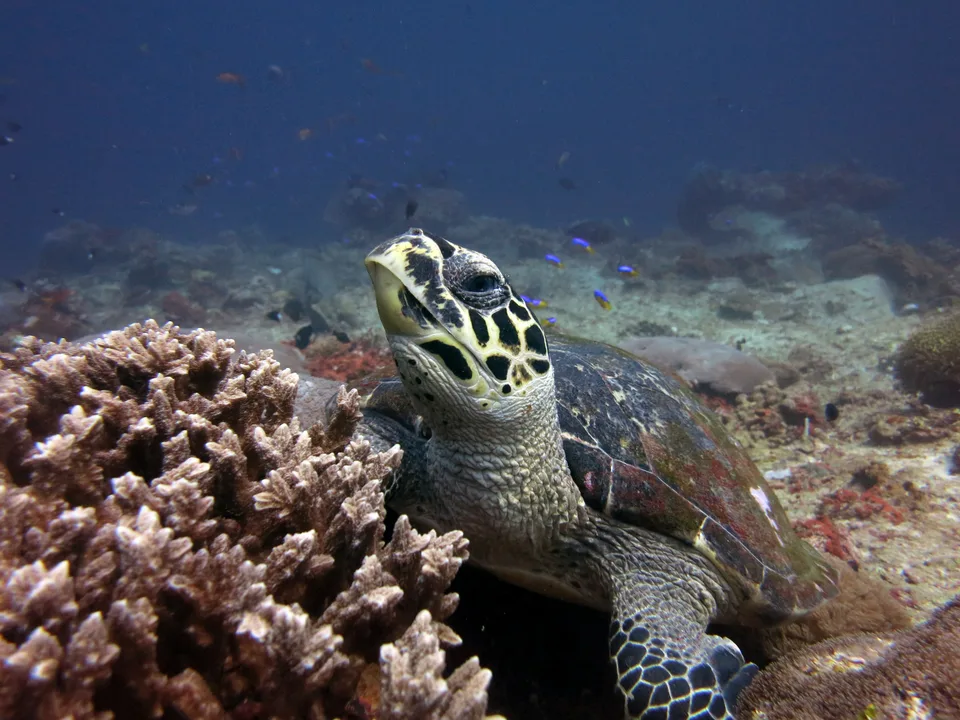
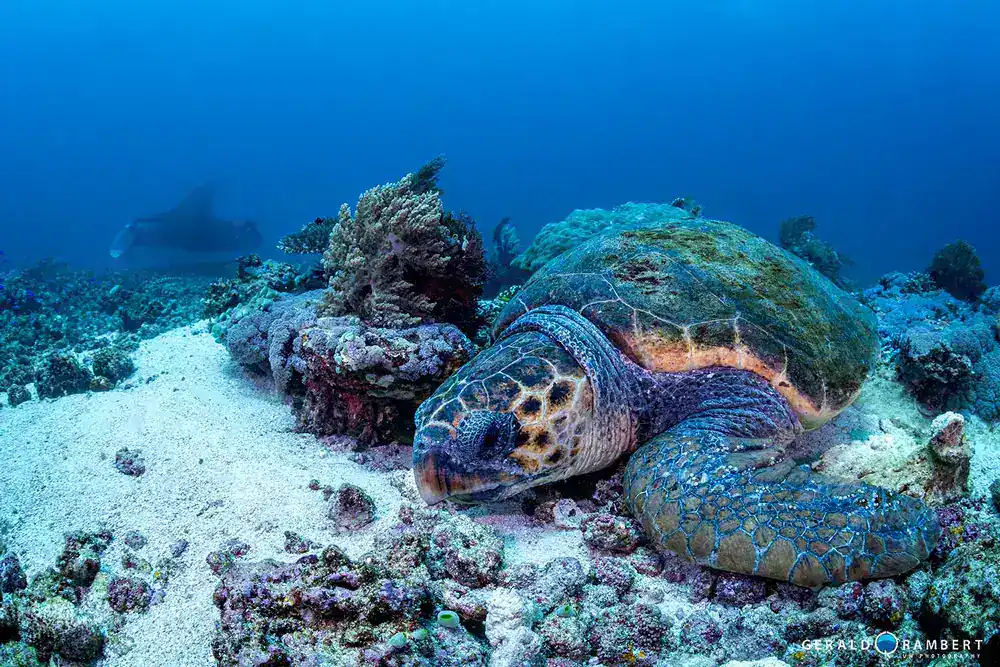
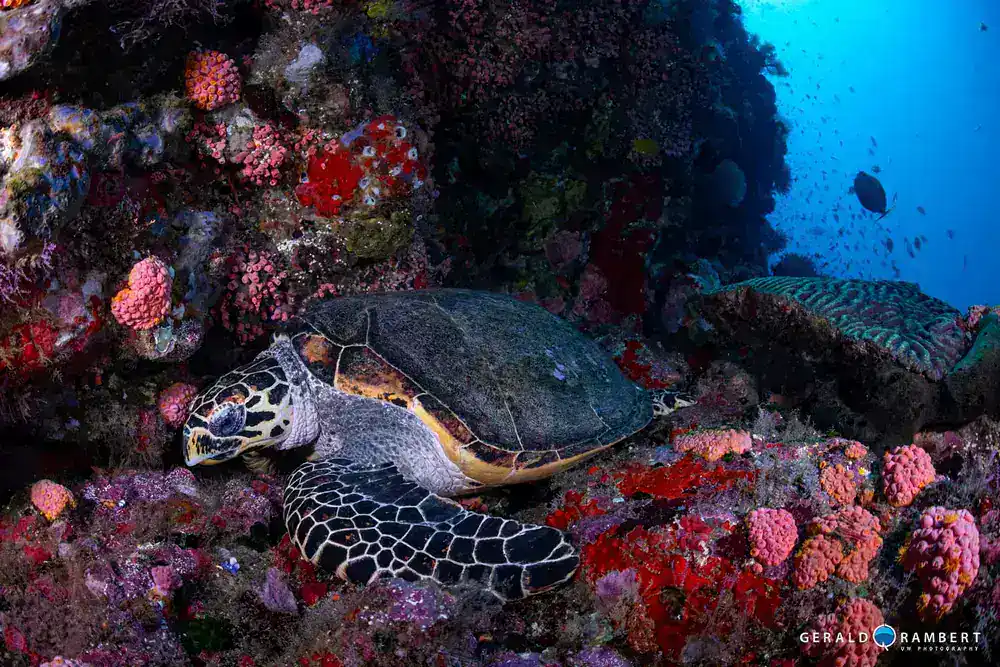
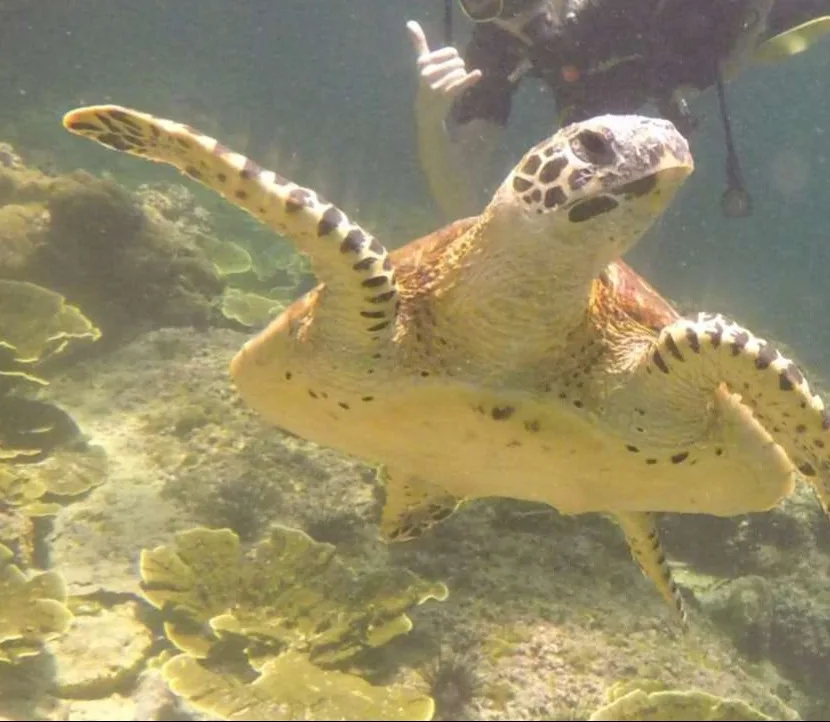
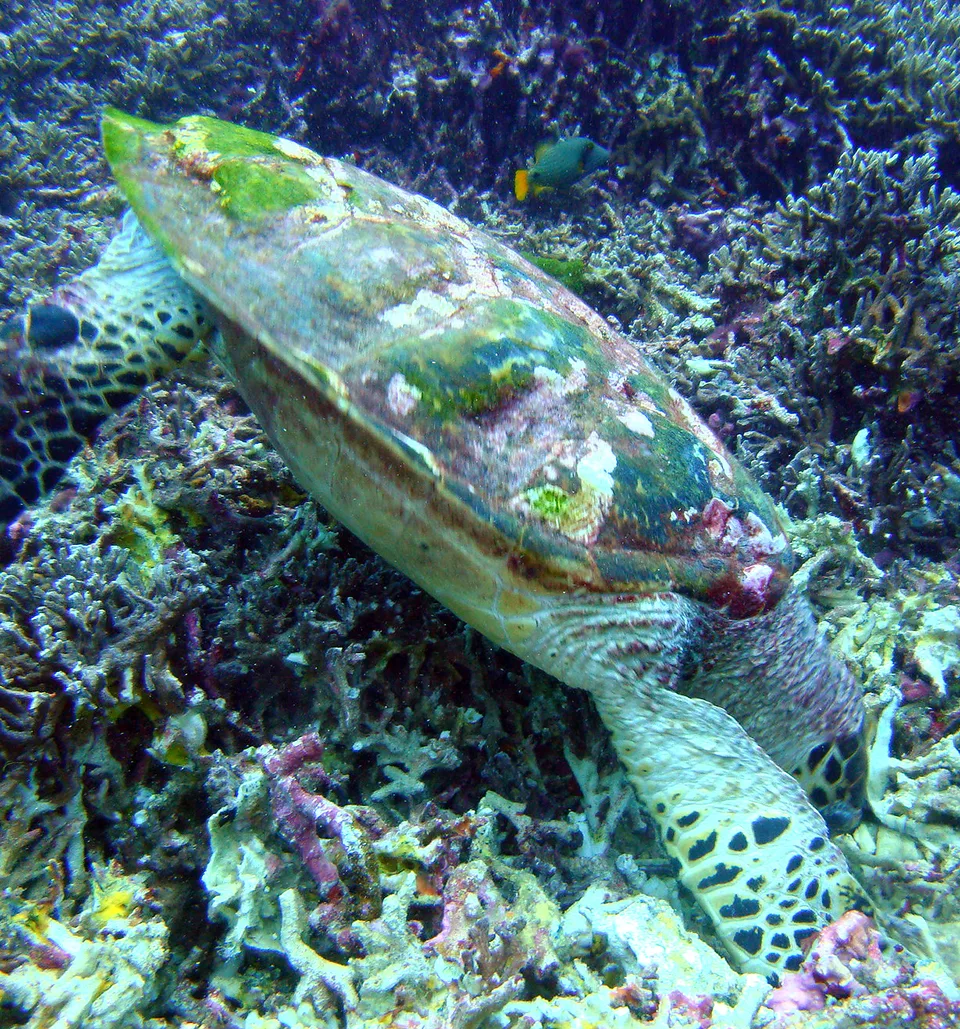
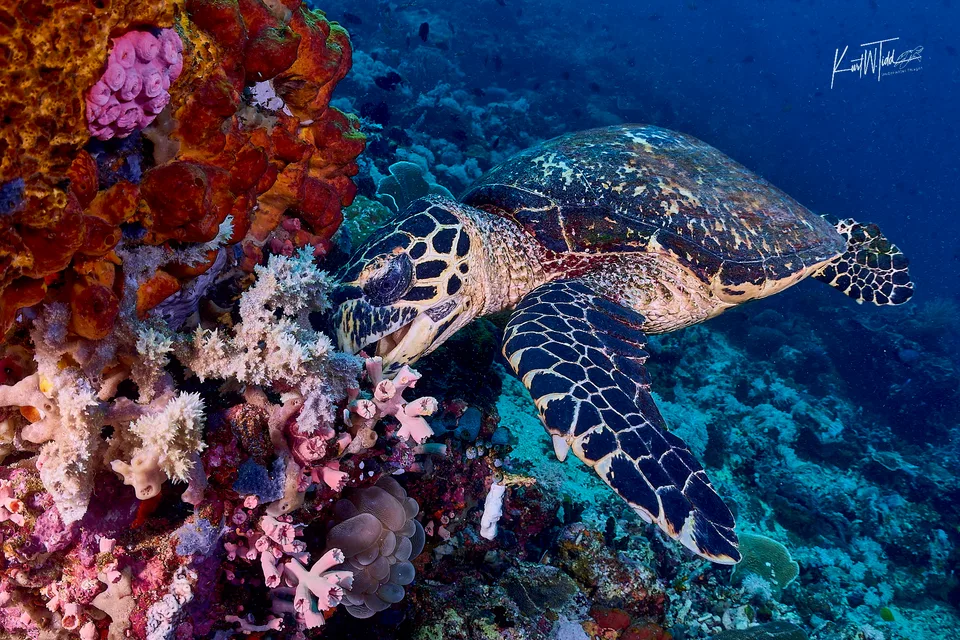
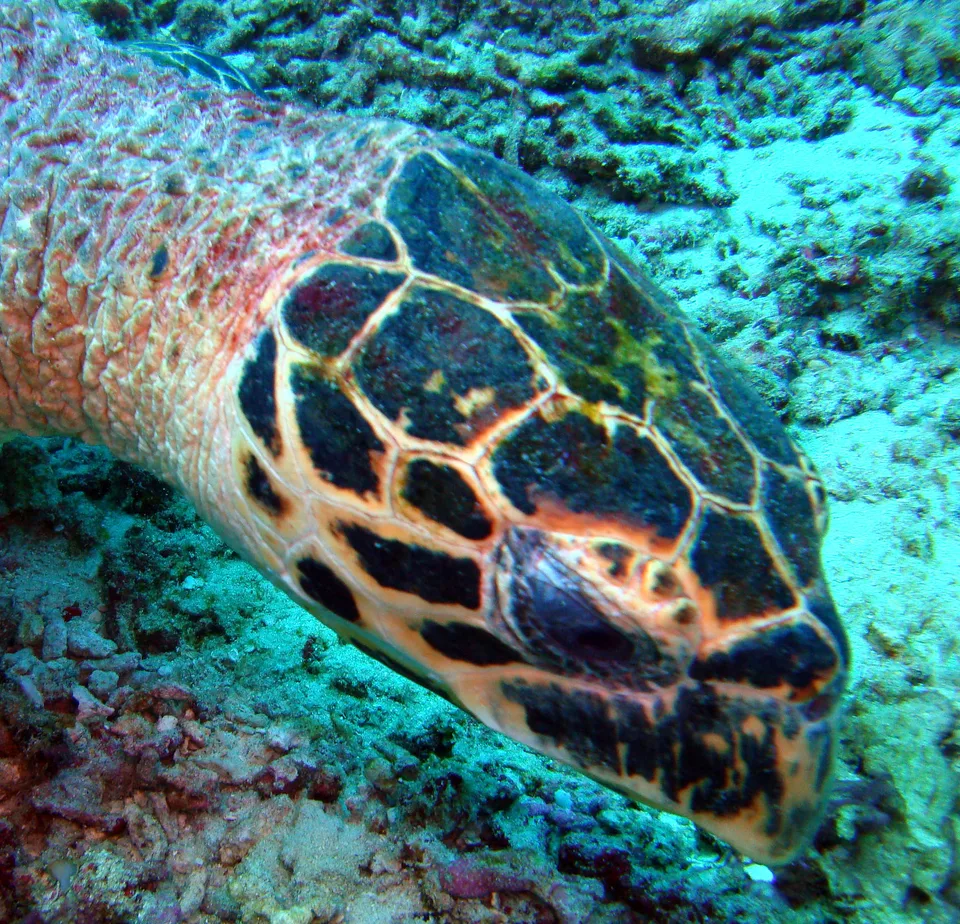
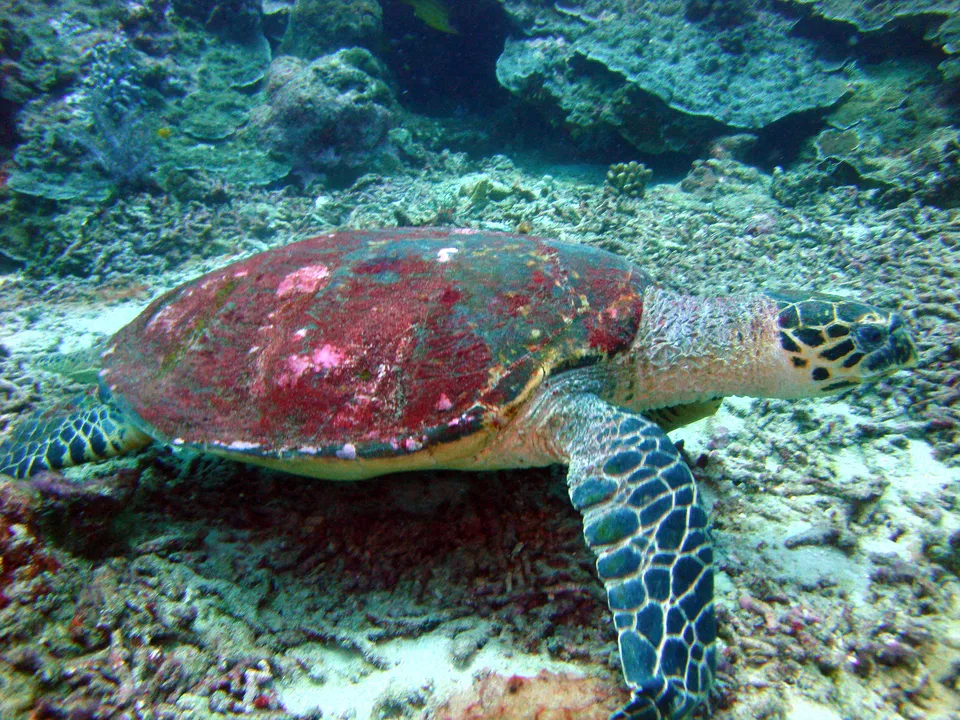
Narrow, pointed hawk-like beak; oval shell with overlapping (imbricate) rear scutes and a serrated posterior edge; two pairs of prefrontal scales; mottled amber, brown and black carapace.
Similar species
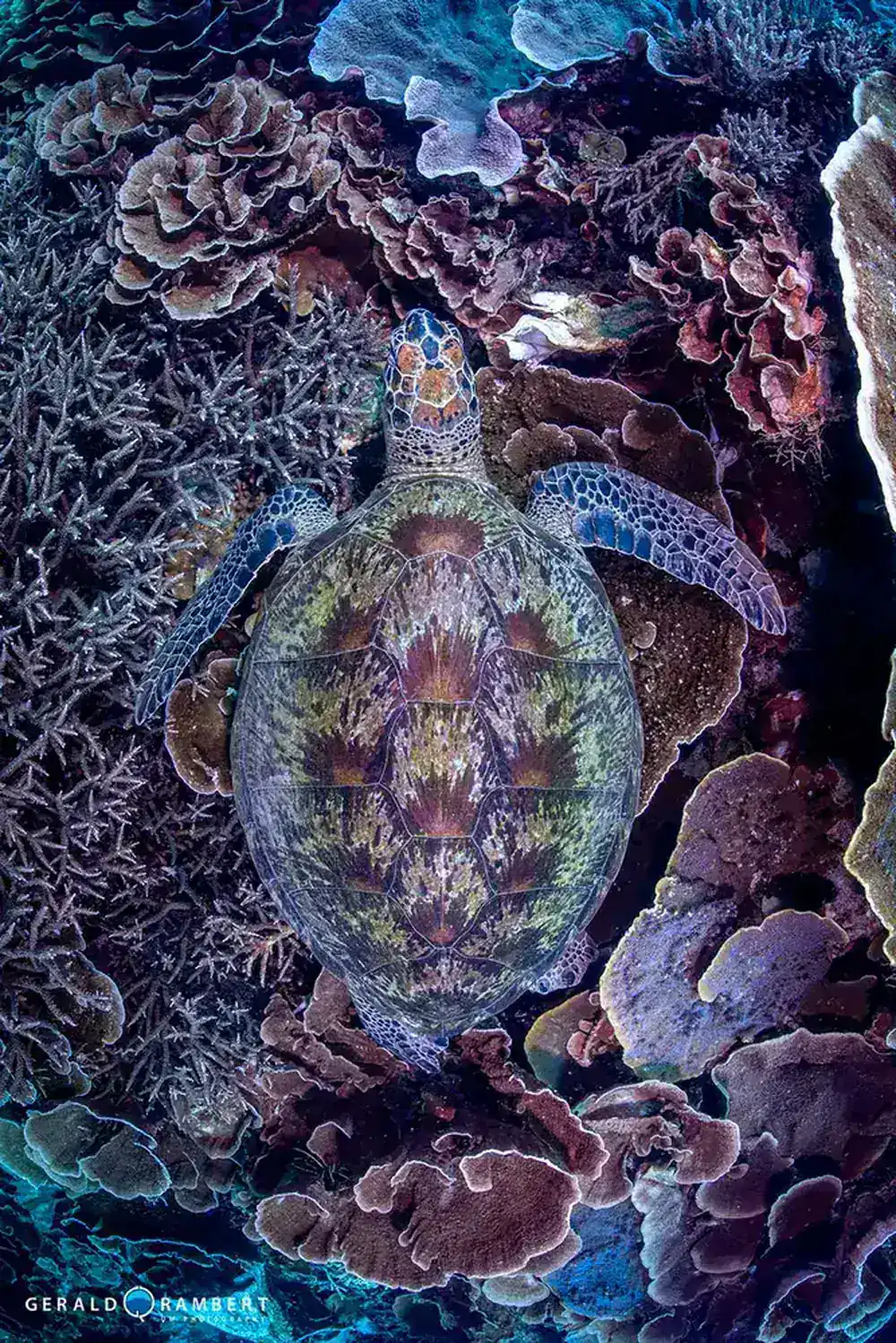
Often confused with the green turtle (Chelonia mydas). Hawksbills have a sharper beak, overlapping shell scutes, a serrated rear shell margin and two pairs of prefrontal scales; green turtles have a rounder head, non-overlapping scutes and one pair of prefrontal scales.
Approach rules
Observe quietly without touching, blocking its route, or surrounding it. Keep a respectful distance of at least 3 m, remain farther away if it changes behaviour, do not use flash, and never feed or chase it.
Protection
Critically Endangered on the IUCN Red List and listed in CITES Appendix I. International commercial trade is prohibited; protect nesting beaches and reef feeding habitats.