Coastal areas, including coral reefs, seagrass beds, and beaches.
Distribution
Tropical and subtropical oceans worldwide.
Conservation status
Endangered
Edibility
Historically consumed in some regions, but this is an Endangered species listed in CITES Appendix I. Consumption should be avoided; do not harvest, buy or trade turtle meat, eggs or other products.
Culinary quality / 5
3
Danger level
Harmless
Usual observation depth
1–30 m
Lifespan (years)
70
Behaviour
Generally solitary while feeding, but may gather at productive feeding sites, migratory corridors or nesting beaches. It is a strong long-distance migrant, often calm and observed resting under overhangs or on the bottom. It may feed by day or night.
Observation zones
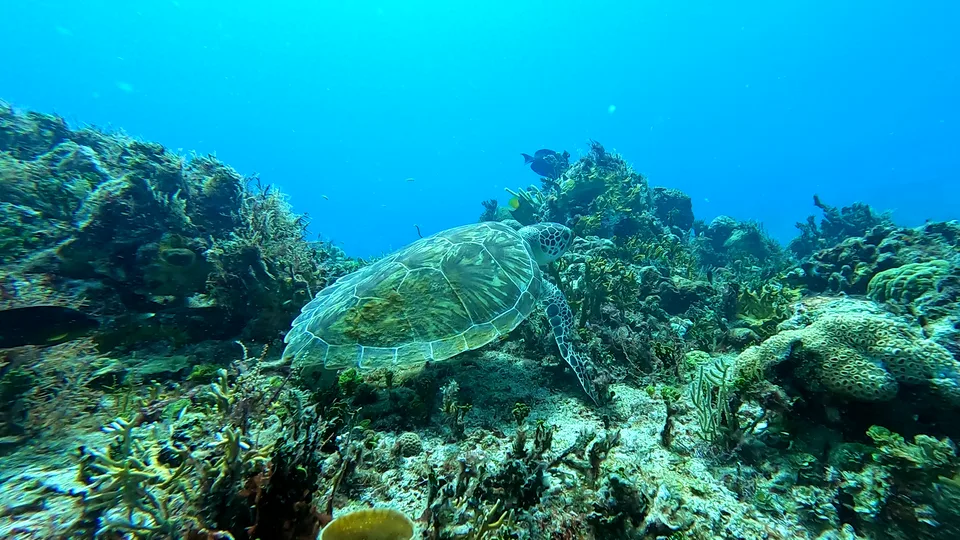
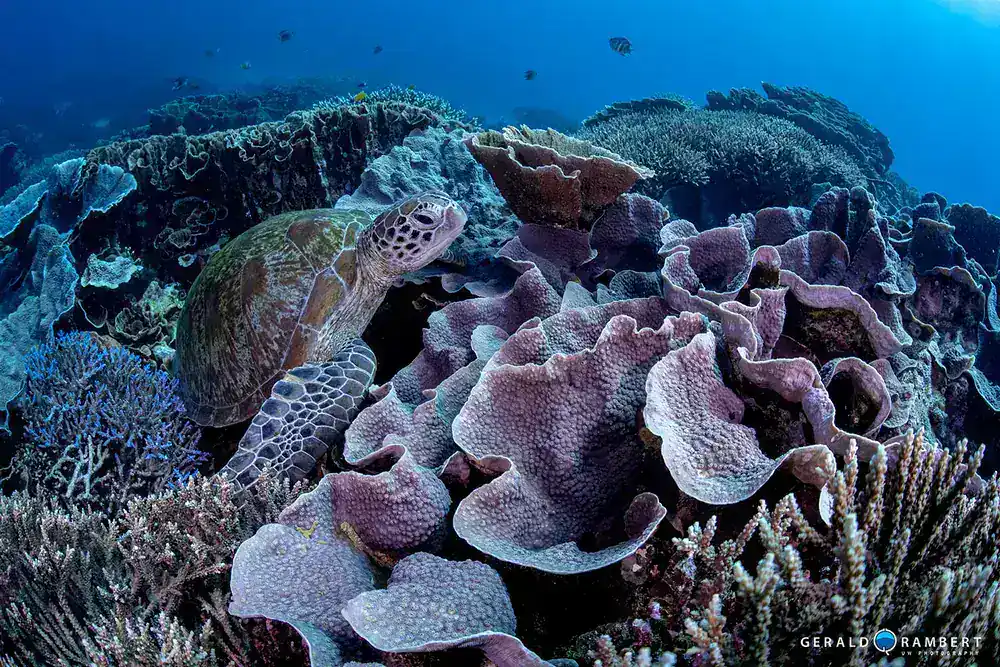
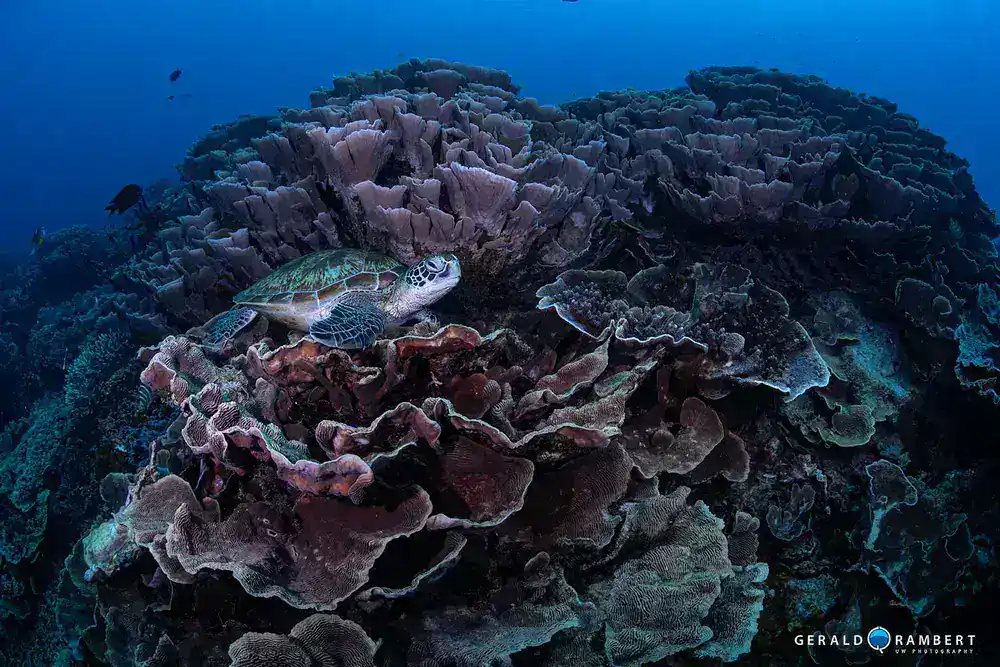
Seagrass beds, shallow reefs, reef flats, lagoons, sandy bottoms, bays, mangroves and coastal blue waters; occasionally in pelagic waters, especially juveniles.
Diet
Adults are primarily herbivorous and mainly consume seagrass and algae. Juveniles and some populations are more omnivorous and may also eat jellyfish, sponges, small invertebrates, and other animal matter.
Reproduction
Oviparous
Identification marks
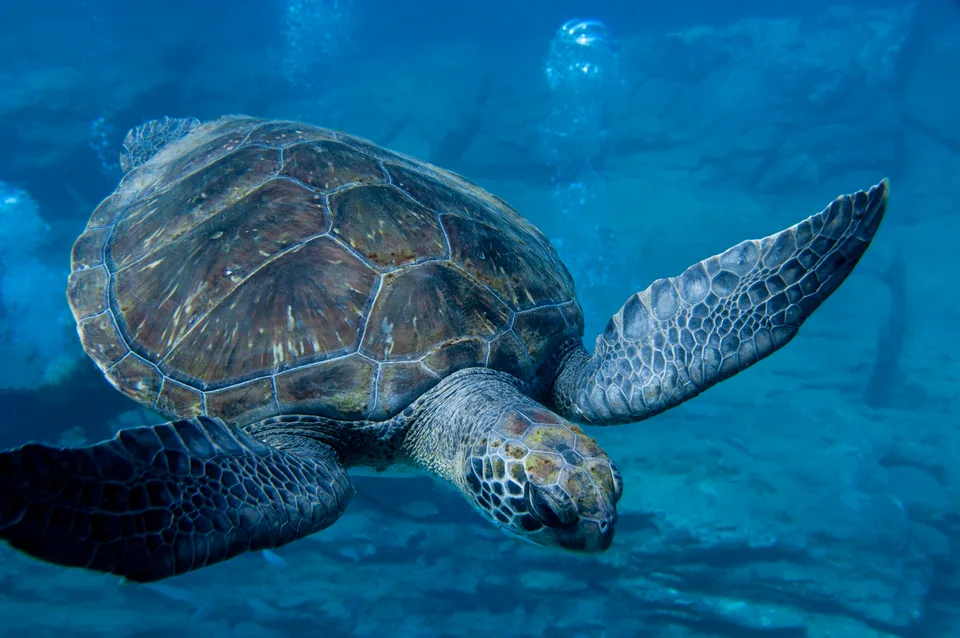
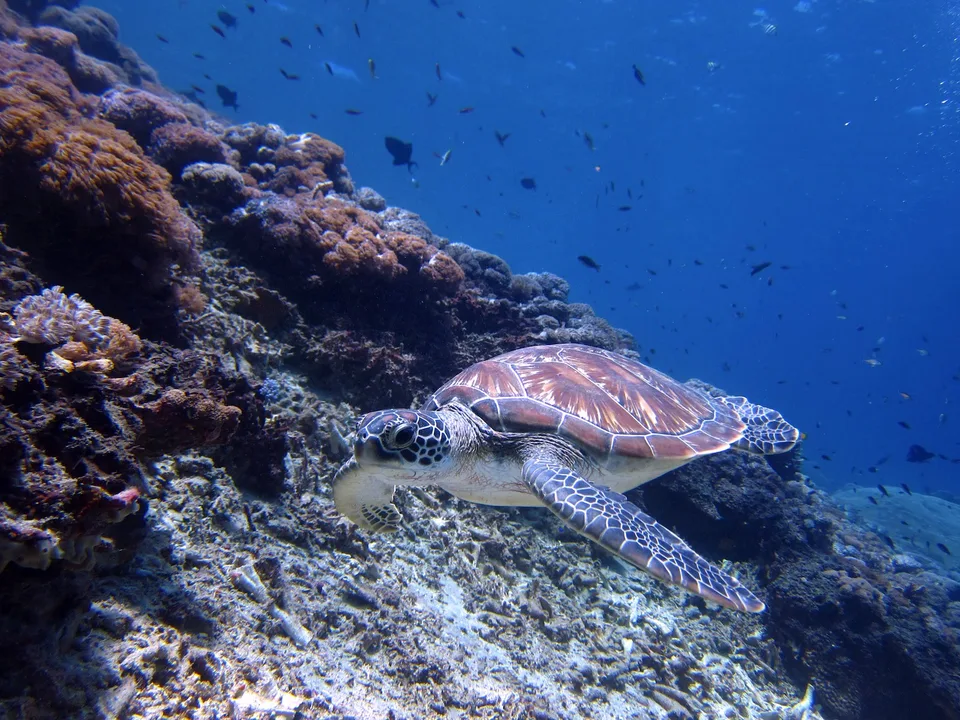
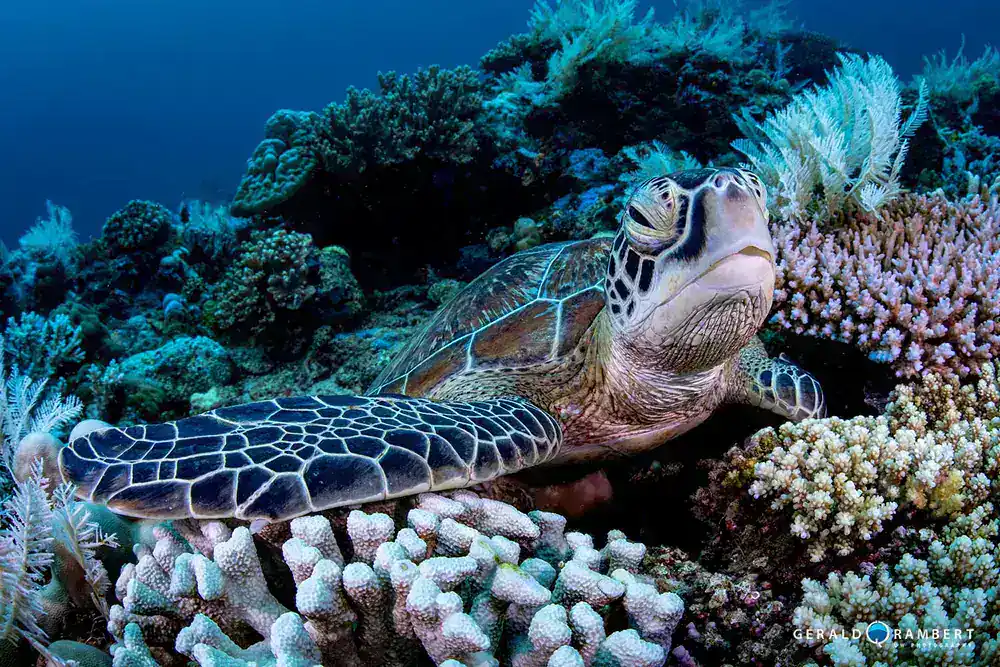
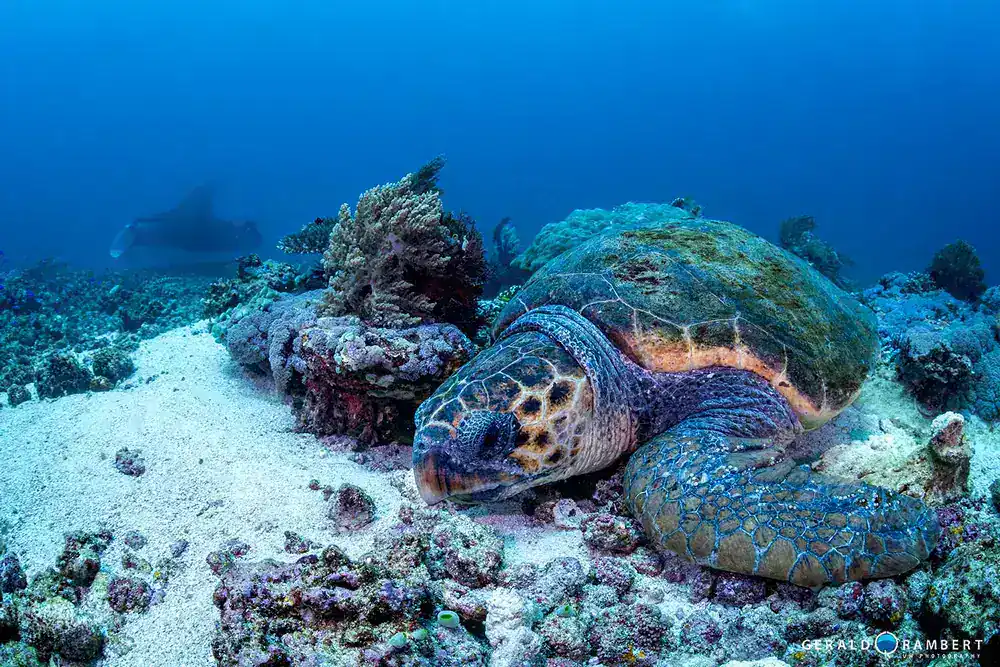
Large, smooth, oval carapace, generally olive to brownish with variable radiating patterns; pale yellowish underside; small, rounded head with a single pair of elongated prefrontal scales; typically four pairs of costal scutes; one claw on each foreflipper.
Similar species
Often confused with the hawksbill turtle (Eretmochelys imbricata), which has a narrow, hooked beak and overlapping, serrated carapace scutes. The loggerhead turtle (Caretta caretta) has a distinctly larger head and generally five pairs of costal scutes. The olive ridley turtle (Lepidochelys olivacea) is smaller and usually has five or more pairs of costal scutes.
Approach rules
Observe calmly from a respectful distance, ideally at least 3 m away. Do not touch, pursue, block its path to the surface, encircle, ride, or feed the animal. Avoid flash and strong lights, especially at night and near nesting beaches; never disturb nesting females, eggs, or hatchlings.
Protection
Assessed as Endangered on the IUCN Red List and listed in Appendix I of CITES. International trade for commercial purposes is prohibited by CITES; many populations also benefit from national or regional protection. Comply with applicable local regulations and wildlife management guidelines.