

Diving Levels Explained: From Beginner to Expert
Scuba diving is an exciting activity that allows you to explore the underwater world, but it requires appropriate training to ensure your safety and maximize your enjoyment. Diving certifications are organized into progressive levels, each corresponding to specific skills and limits in terms of depth and environment. Here is a comprehensive guide to better understand these levels.
1. The Diving Baptism
An Introduction to the Underwater World
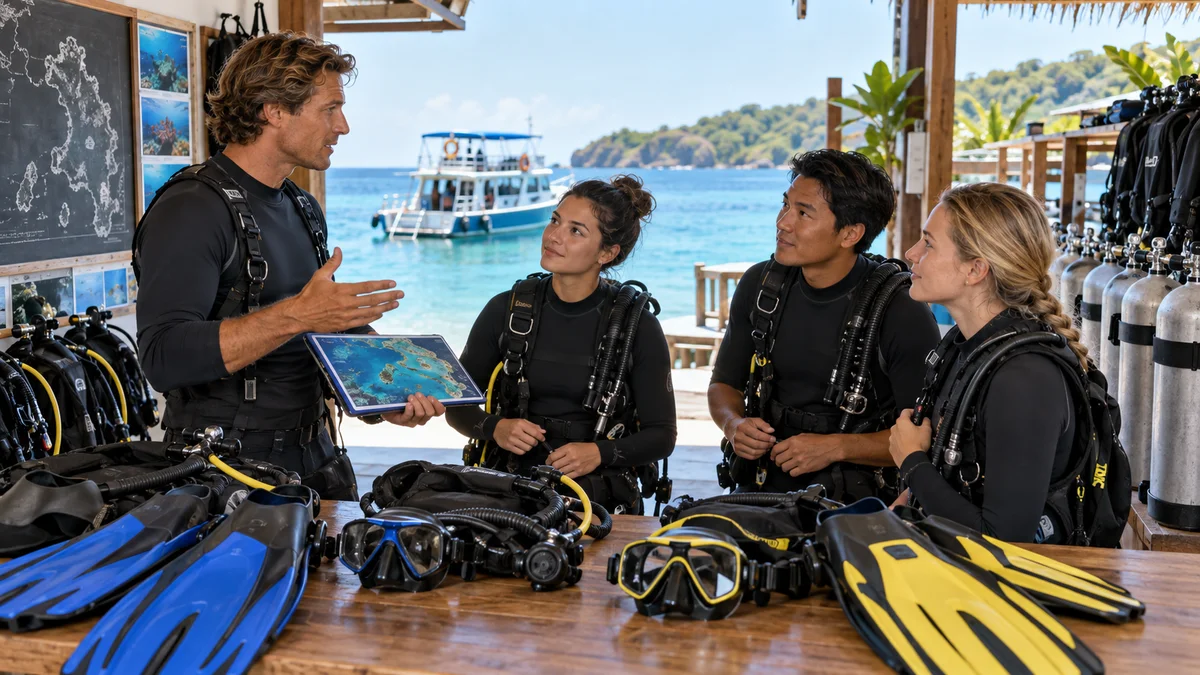
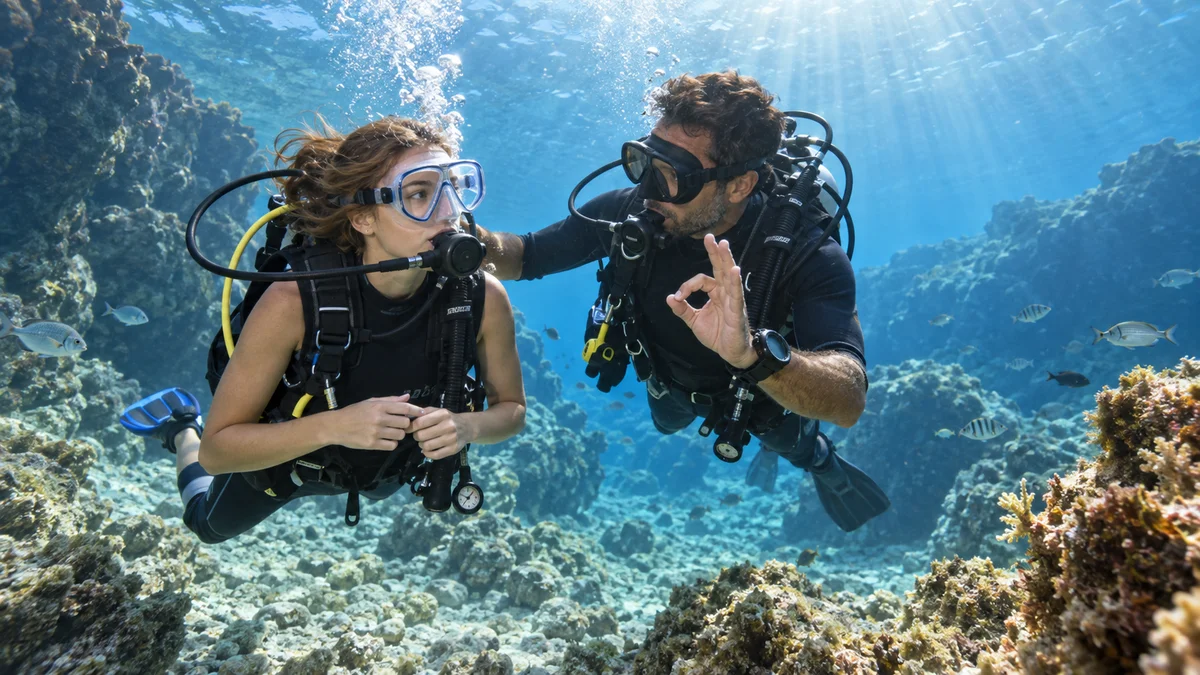
The diving baptism is an initiation for beginners who have never dived before. Under the direct supervision of an instructor, you discover the unique sensations of breathing underwater.
Duration: Approximately half a day.
Maximum depth: 6 meters.
No certification required: Ideal for testing before committing to training.


2 Beginner Level
Open Water Diver (PADI/SSI) or Level 1 (CMAS)
These courses are the starting point to become a certified diver.
Open Water Diver (PADI/SSI)
Maximum depth: 18 meters.
Content: Theory, pool practice, and dives in natural environments.
Duration: 3 to 4 days.
Benefits: Certification recognized worldwide.
Level 1 (CMAS)
Maximum depth: 20 meters, only accompanied by a guide or instructor.
Specificity: Training more focused on technical skills.
3 Advanced Level
Explore New Depths and Environments
Once the beginner level is validated, you can continue your learning with advanced training.
Advanced Open Water Diver (PADI/SSI)
Maximum depth: 30 meters.
Content: 5 specialized dives, such as deep diving, underwater navigation, or night diving.
Benefits: Ideal for exploring wrecks or deeper reefs.
Level 2 (CMAS)
Maximum depth: 40 meters, accompanied by a guide or instructor.
Specificity: More autonomy and technical skills, including advanced exercises.

4. Advanced Level
Autonomy and Technical Diving
For experienced divers seeking more autonomy or specializing in more demanding environments.
Rescue Diver (PADI/SSI)
Content: Learning rescue techniques and emergency management.
Prerequisites: Advanced Open Water and first aid course.
Level 3 (CMAS)
Maximum depth: 60 meters.
Specificity: Diving in complete autonomy with other experienced divers.
5 Technical Diving and Specialties
For those who want to go even further, specific certifications allow for the exploration of particular environments.
Nitrox Diver: Use of oxygen-enriched mixtures for extended dives.
Deep Diving: Exploration beyond 40 meters.
Wreck Diving: Techniques for safely penetrating sunken ships.


6. The Instructors Training to Teach Diving
Divemaster (PADI/SSI)
Role: Assist instructors and supervise certified divers.
Duration: Several weeks, including in-depth learning.
Dive Instructor
Content: Training to teach all levels, from beginners to advanced.
Prerequisites: Be a Divemaster and have accumulated several dozen dives.
Which Level to Choose
The choice of level depends on your experience, your goals, and the environment in which you wish to dive. Beginners can start with a baptism or an Open Water level, while experienced divers can aim for advanced certifications to explore new horizons.
By following these steps, you can gradually become an accomplished diver, ready to discover the underwater wonders of the world. And remember: every dive is an opportunity to learn something new!
Feel free to check our platform to find dive centers and read reviews from other divers.
Happy bubbles!
01 Comments
sophie
May 14, 2026Very good article on diving levels, clear and well-structured. It simply explains the diver's progression, from the introductory dive to advanced levels, detailing the skills, depths, and the evolution towards greater autonomy. One easily understands the different training stages and the importance of progressing gradually to dive safely. A very useful guide to better navigate the world of diving and know which level to aim for based on one's experience and goals.