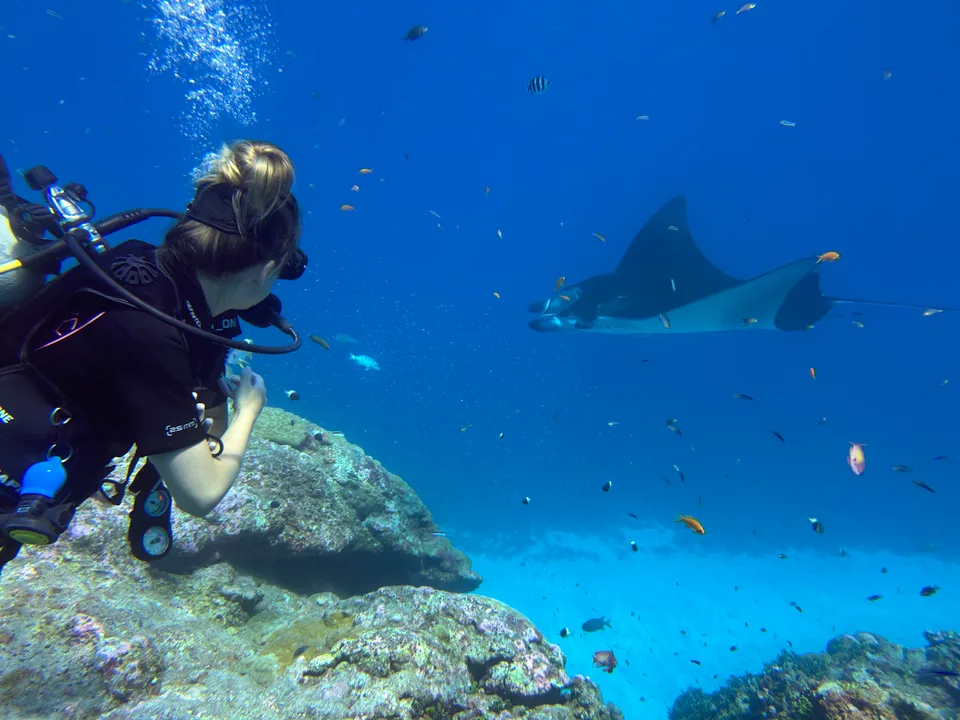
Tropical and subtropical coastal waters, especially coral reefs, channels, lagoons, seamounts and cleaning stations; also enters open water.
Distribution
Widespread in tropical and subtropical waters of the Indo-Pacific, from the Red Sea and East Africa across southern Asia and Southeast Asia to Japan, Australia and many Pacific islands; its range overlaps parts of the eastern Pacific.
Conservation status
Vulnerable
Edibility
Edible, but consumption is not recommended: this Vulnerable ray has low reproductive productivity and is subject to international trade controls. Do not consume or purchase its meat, gill plates or other products.
Culinary quality / 5
2
Danger level
Harmless
Usual observation depth
0–30 m
Lifespan (years)
40
Behaviour
Usually seen alone, in pairs, or in loose groups at feeding and cleaning sites. It is a daytime and crepuscular plankton feeder, often making seasonal movements linked to food availability. Generally calm and non-aggressive.
Observation zones
Reef slopes, cleaning stations, channels and passes, lagoons, seamounts and blue water near productive reefs.
Diet
Primarily zooplankton, including copepods, krill-like crustaceans, shrimp larvae and other small drifting animals, filtered from the water with its gill plates.
Reproduction
Ovoviviparous
Identification marks
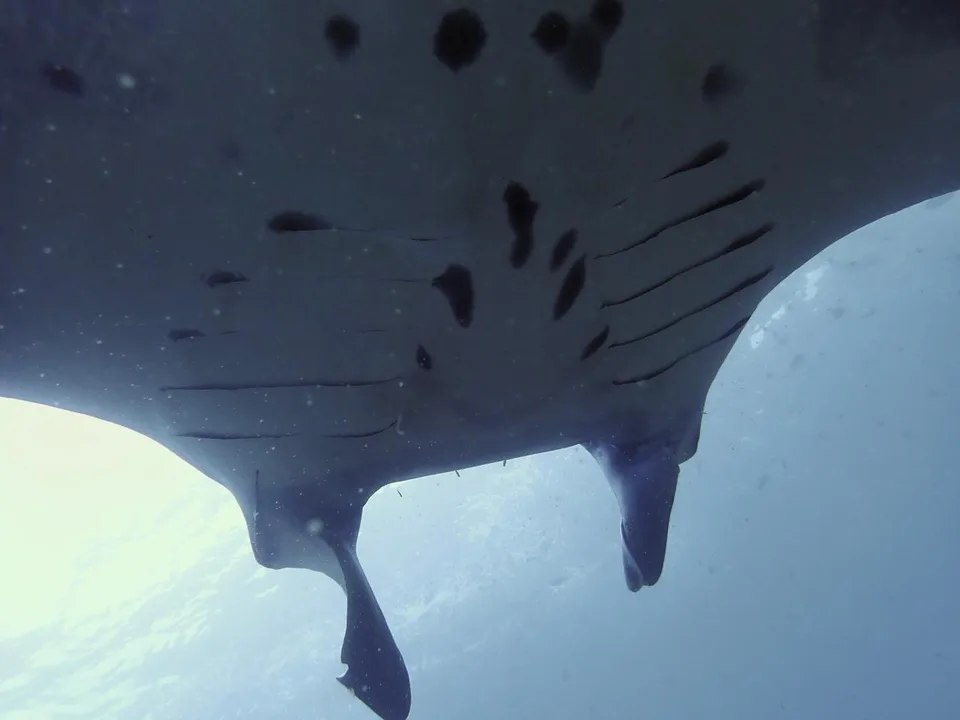
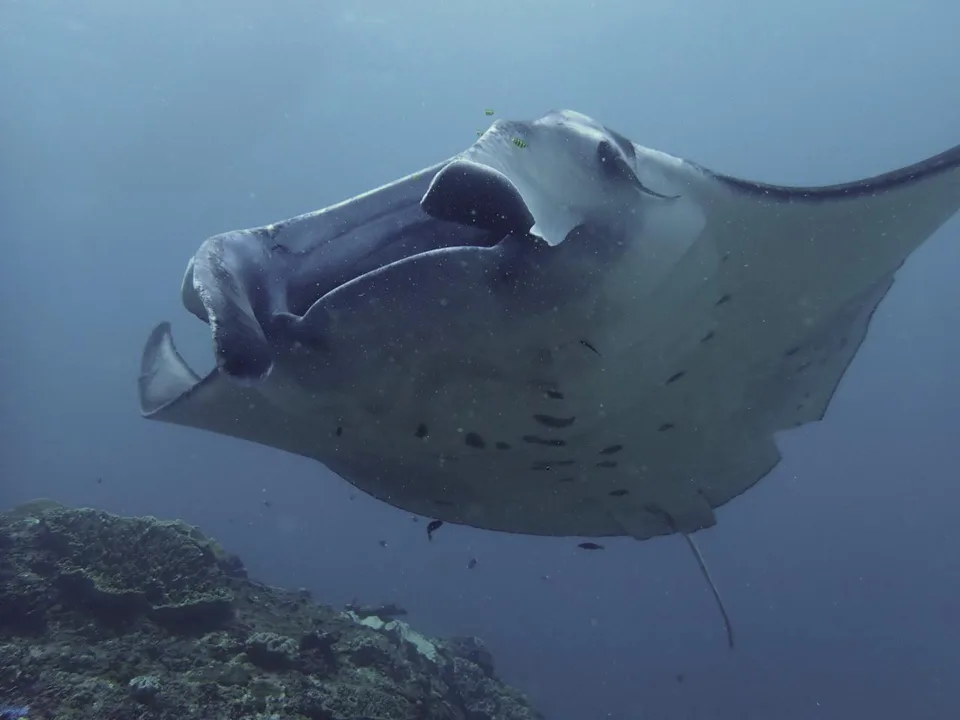
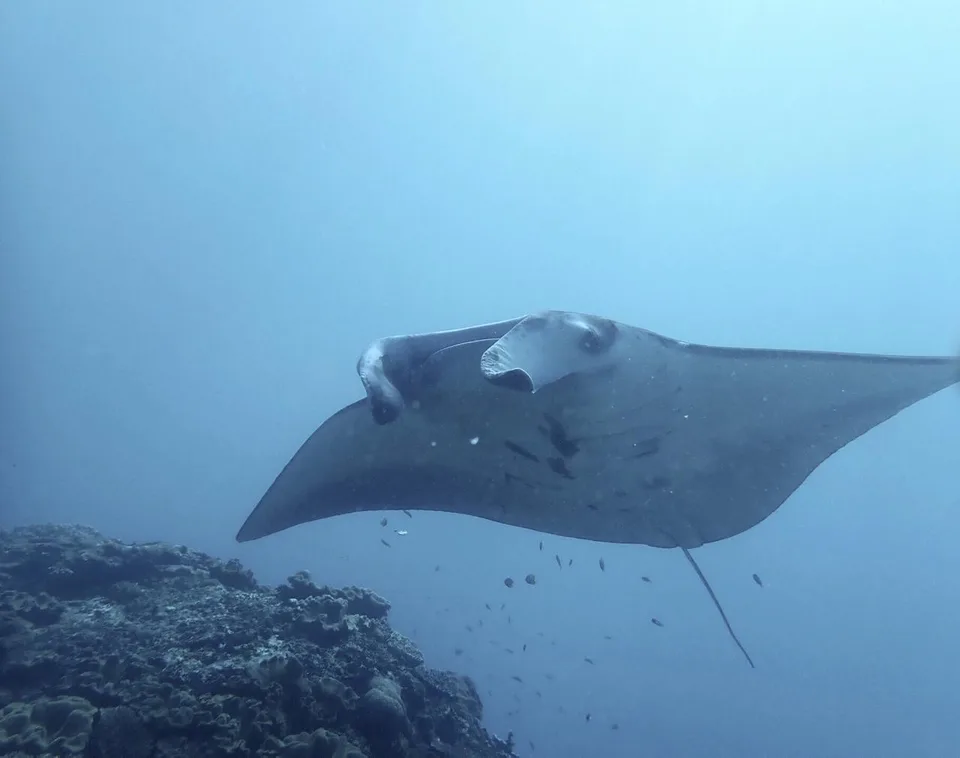
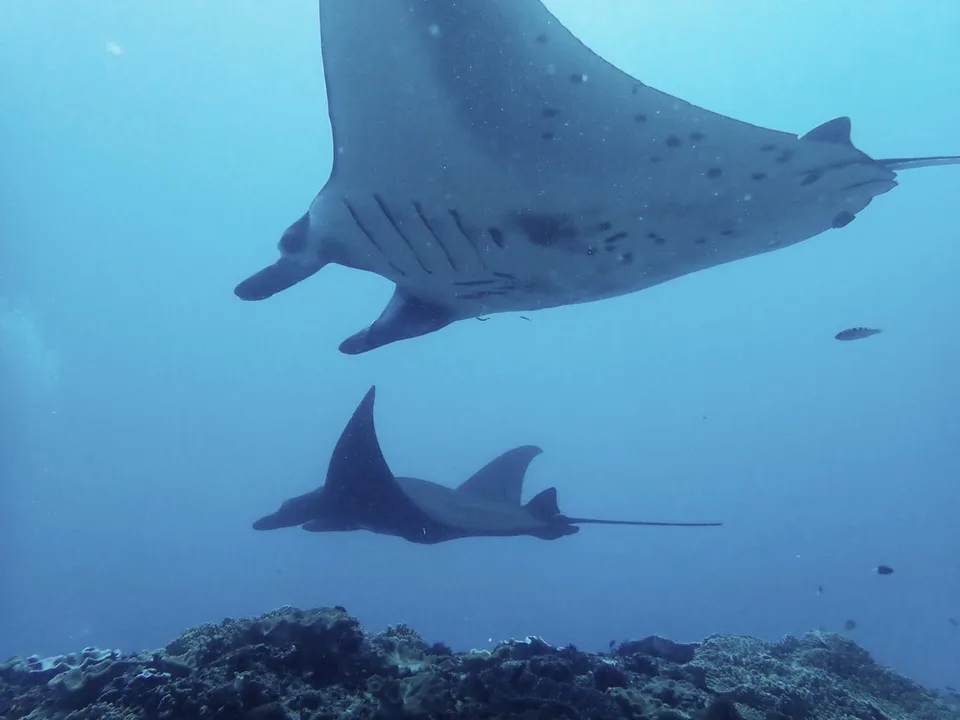
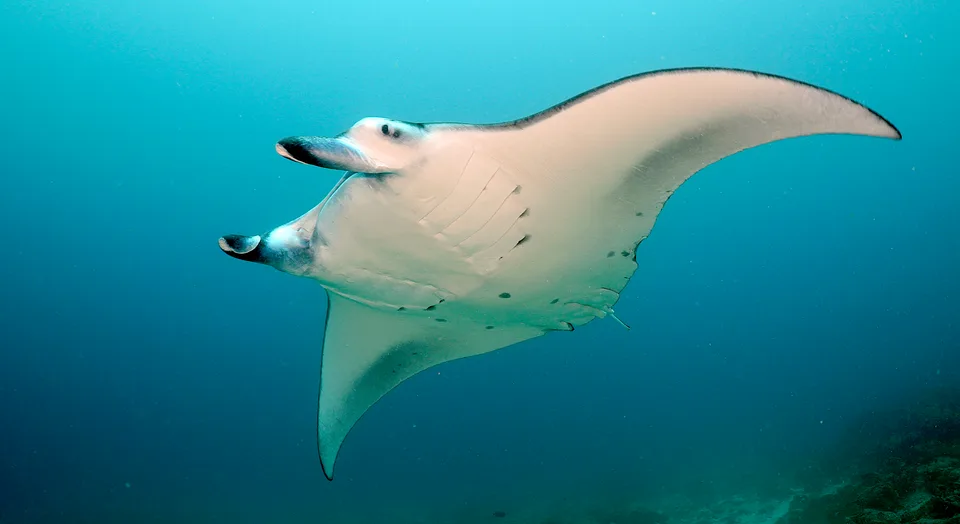
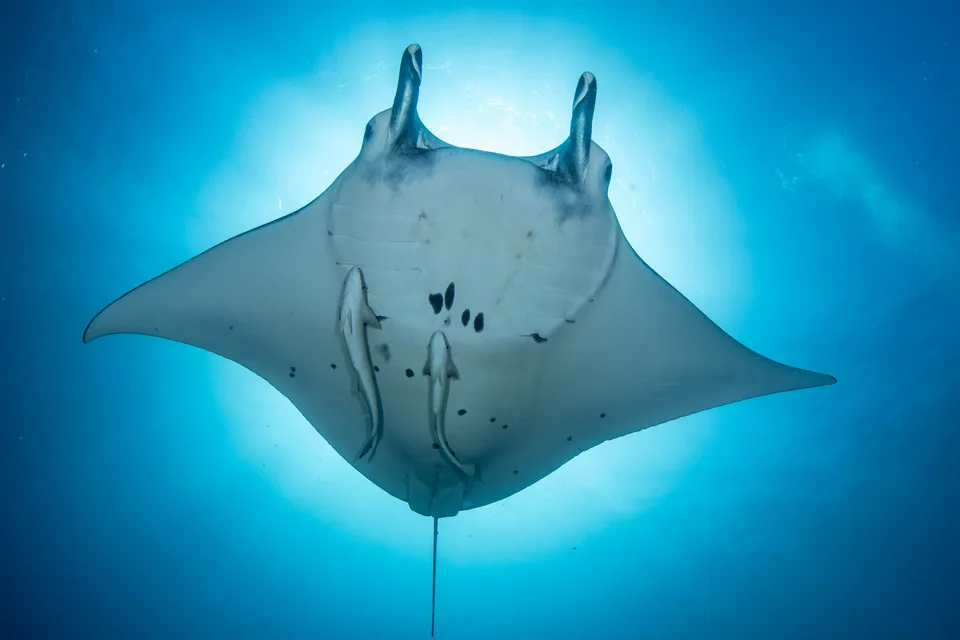
A very large ray with broad triangular pectoral fins, forward-facing cephalic lobes, a wide terminal mouth and no functional tail sting. Usually black or dark above and pale below; the underside has an individually unique pattern of dark spots. Compared with the oceanic manta, it usually has a smaller mouth, pale or greyish inner mouth area, and a generally reef-associated lifestyle.
Similar species
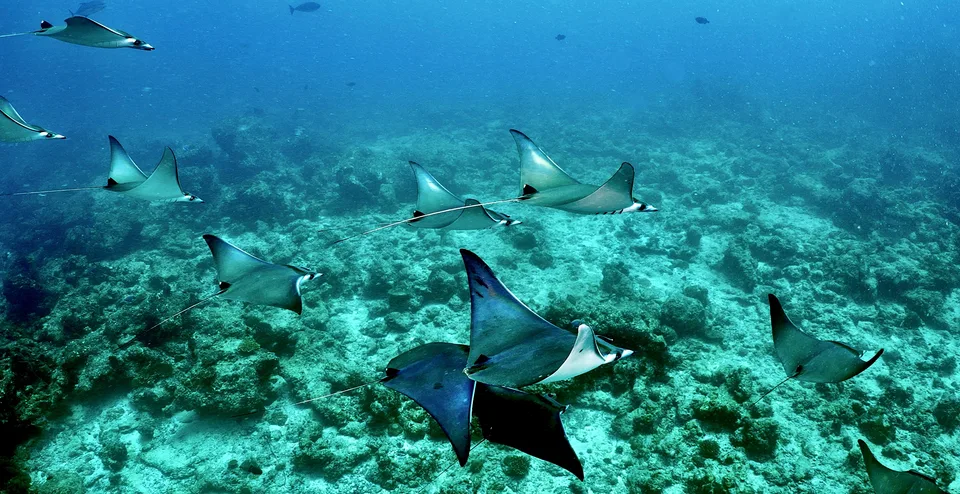
Most often confused with the oceanic manta ray, Mobula birostris. M. birostris is generally larger, more pelagic, has a relatively larger mouth that is often dark inside, and commonly shows darker coloration around the mouth. Other Mobula rays are typically much smaller and have different body proportions.
Approach rules
Observe quietly and let the ray choose its distance. Stay out of its path and above neither its back nor directly in front of its mouth; do not chase, touch, ride, block cleaning stations or surround it. Keep a respectful distance of at least 3 m, more where site rules require it. Avoid flash photography and never feed wildlife.
Protection
IUCN Red List: Vulnerable. Listed in CITES Appendix II as part of the genus Mobula; international trade is regulated. Protection and fishing rules vary by country and site.