Not a customary food species; culinary use is undocumented and collection should be avoided.
Danger level
Harmless
Usual observation depth
5–30 m
Behaviour
Generally solitary and moving slowly. It is active on the bottom, especially in low light and at night, and may remain hidden in crevices during the day.
Feeds mainly on encrusting sessile invertebrates, particularly sponges; it may also consume small benthic organisms and organic matter.
Reproduction
Oviparous
Identification marks
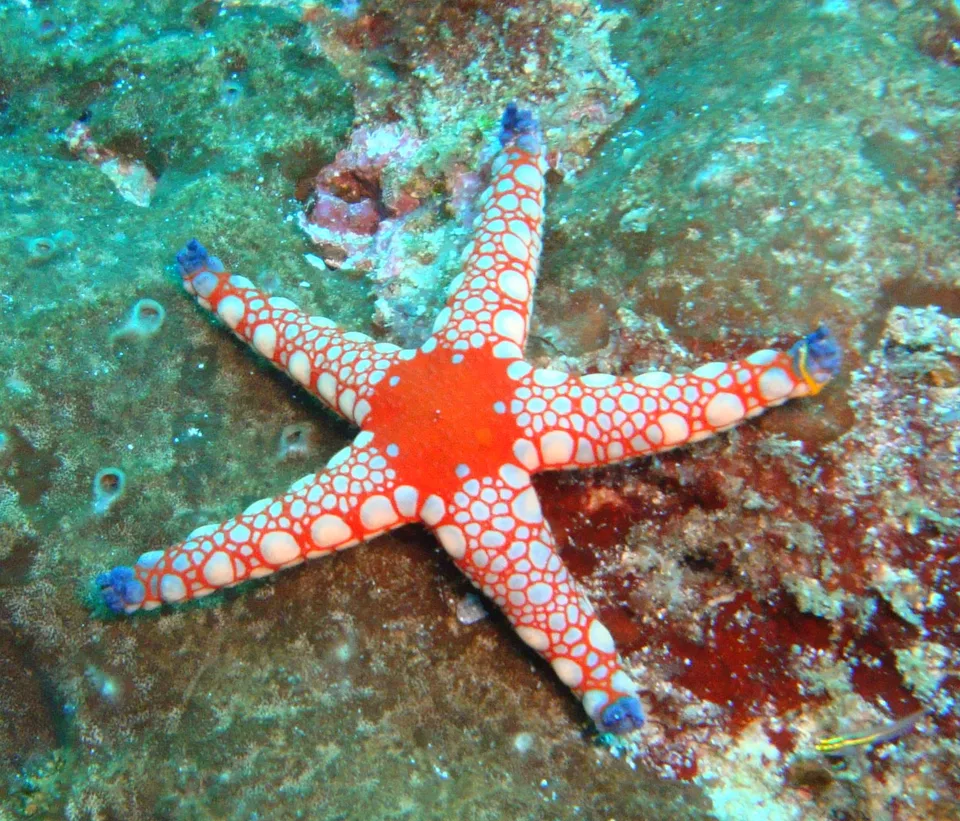
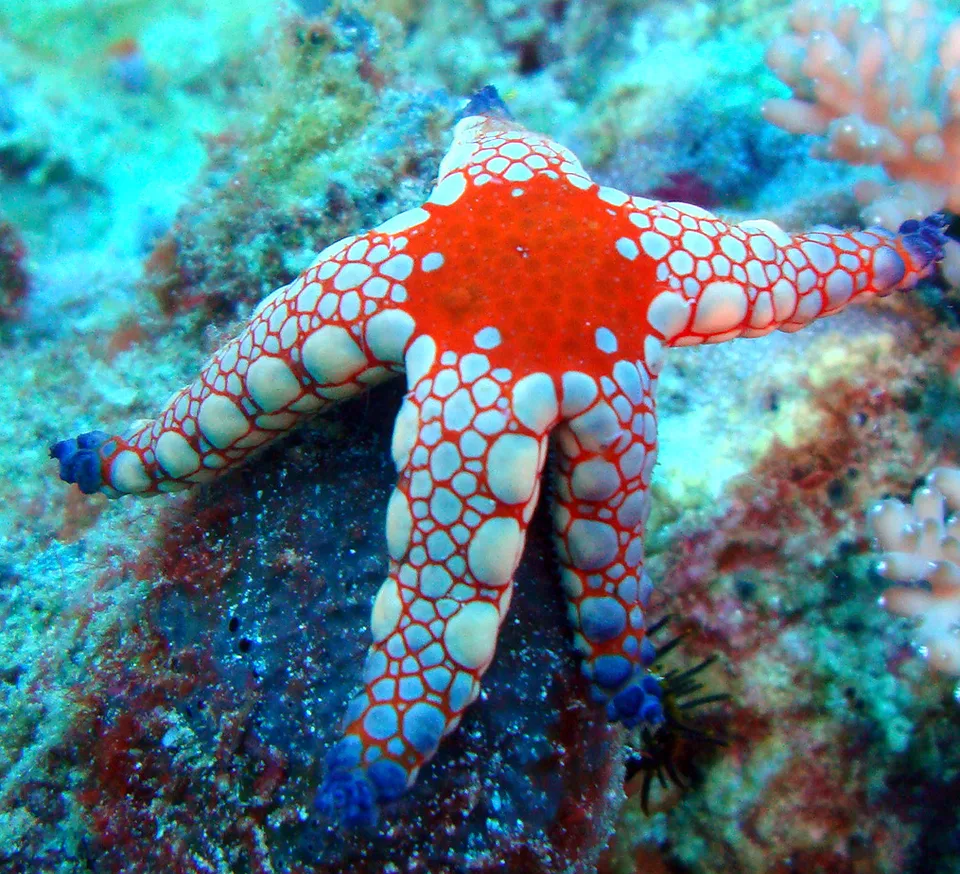
Large flattened starfish with five long, tapering arms. Its upper surface is generally orange-red to reddish-brown, with a clearly visible dark red reticulated or mesh-like pattern; the arms are relatively smooth and rounded.
Similar species
It can be confused with the red starfish Echinaster sepositus. E. sepositus is generally bright red and more uniform, with a rougher surface bearing small visible spines, whereas Ophidiaster ophidianus has smoother arms and a red mesh-like pattern.
Approach rules
Observe without touching, handling, moving, or collecting the animal. Maintain neutral buoyancy and avoid any contact with the substrate. Do not feed it; avoid using flash at very close range.
Protection
No CITES listing is known. Avoid collection and disturbance; echinoderms may be protected or regulated in certain marine protected areas and by local rules.