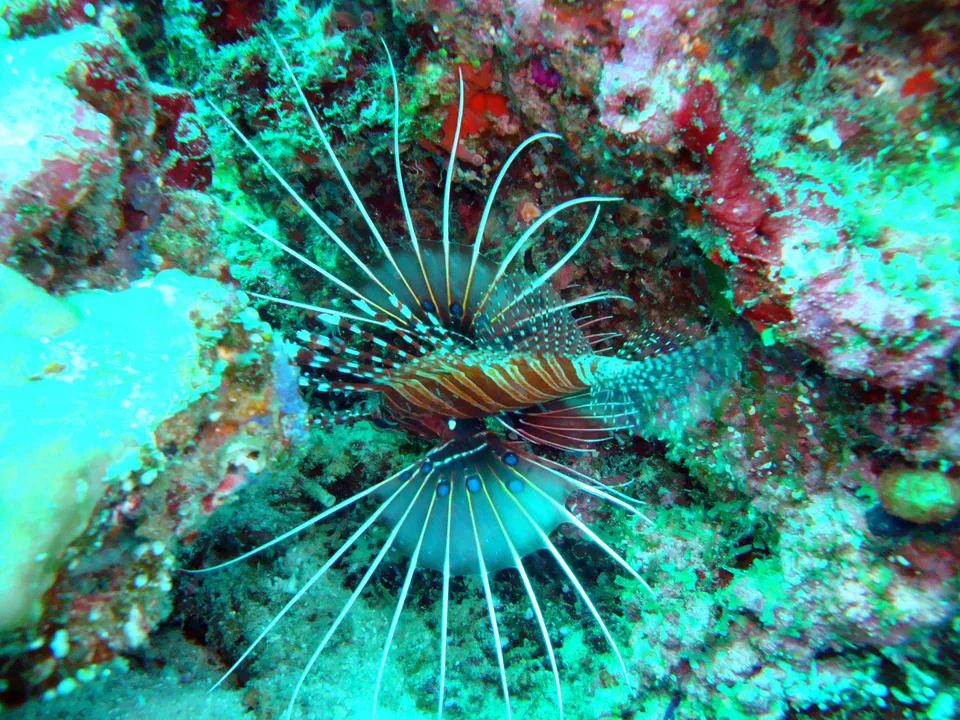
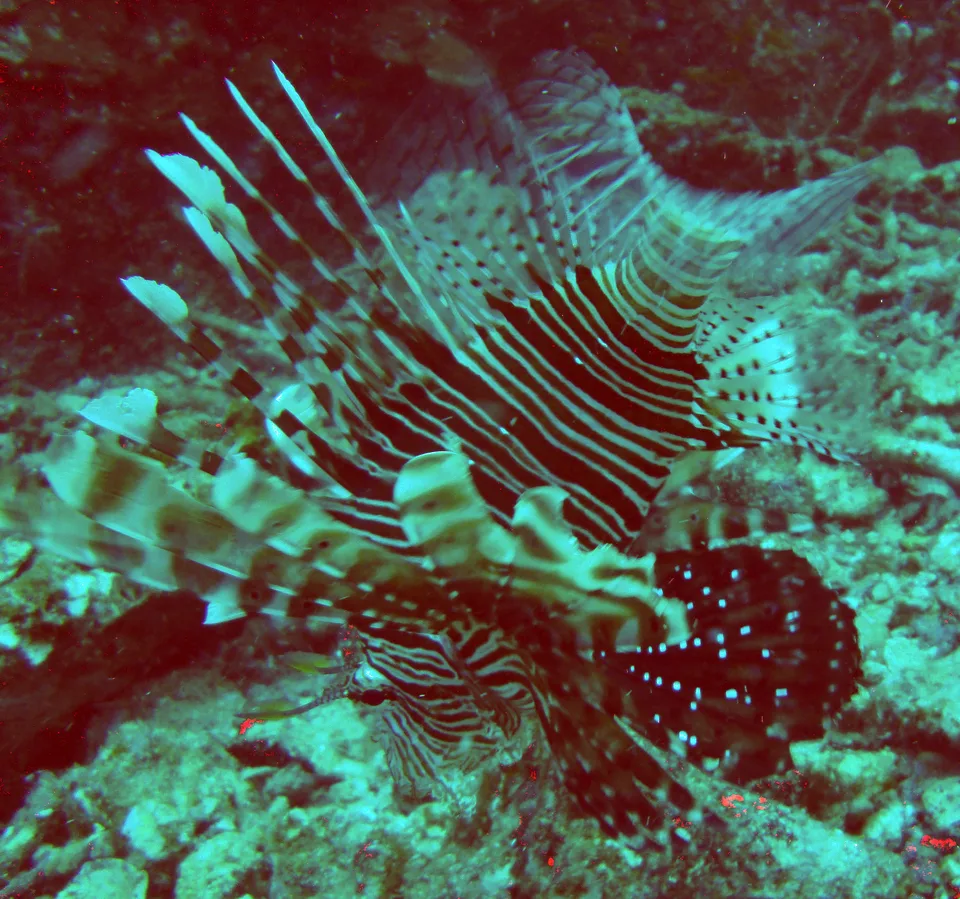
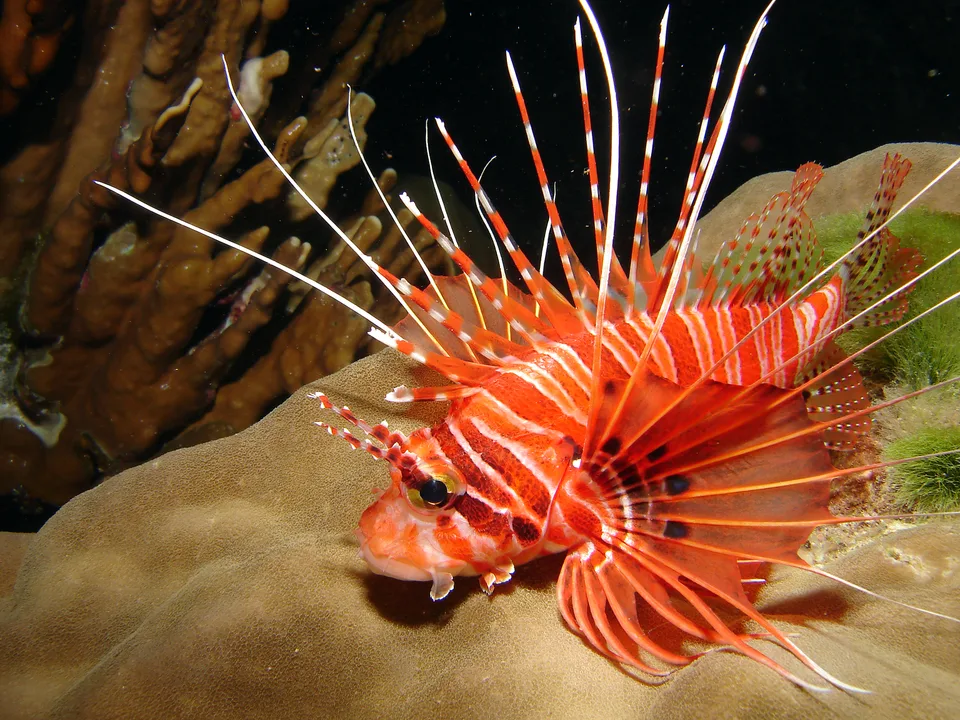
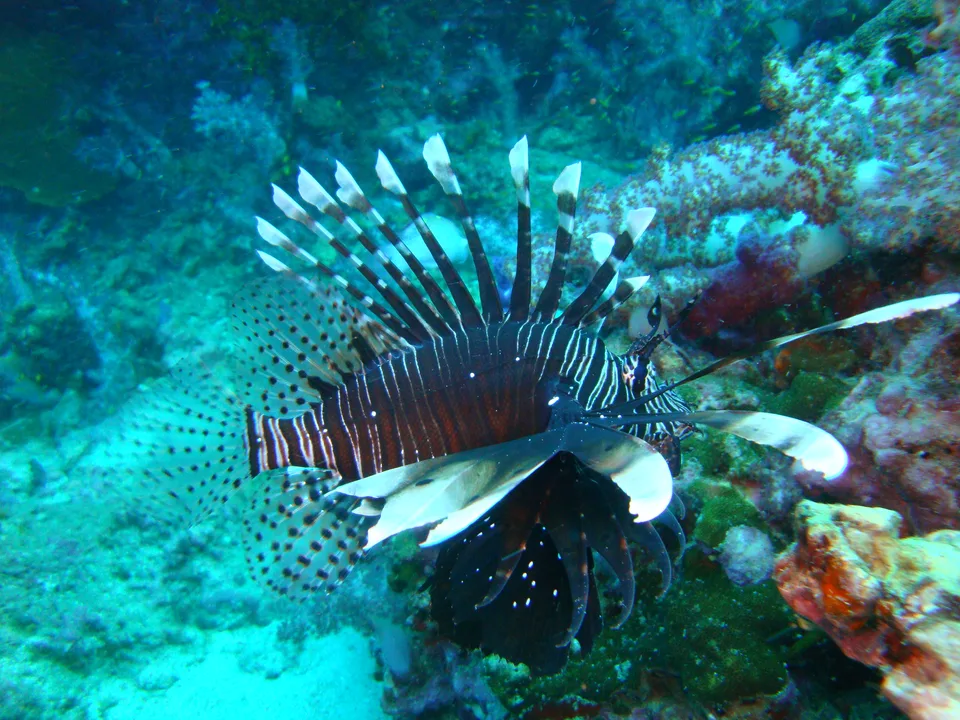
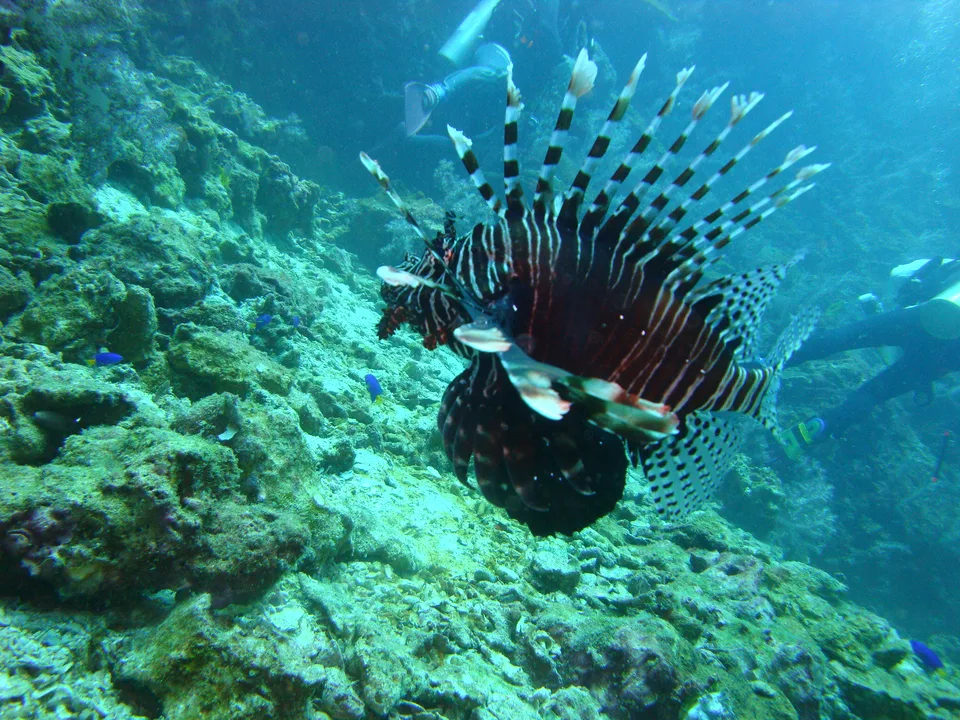
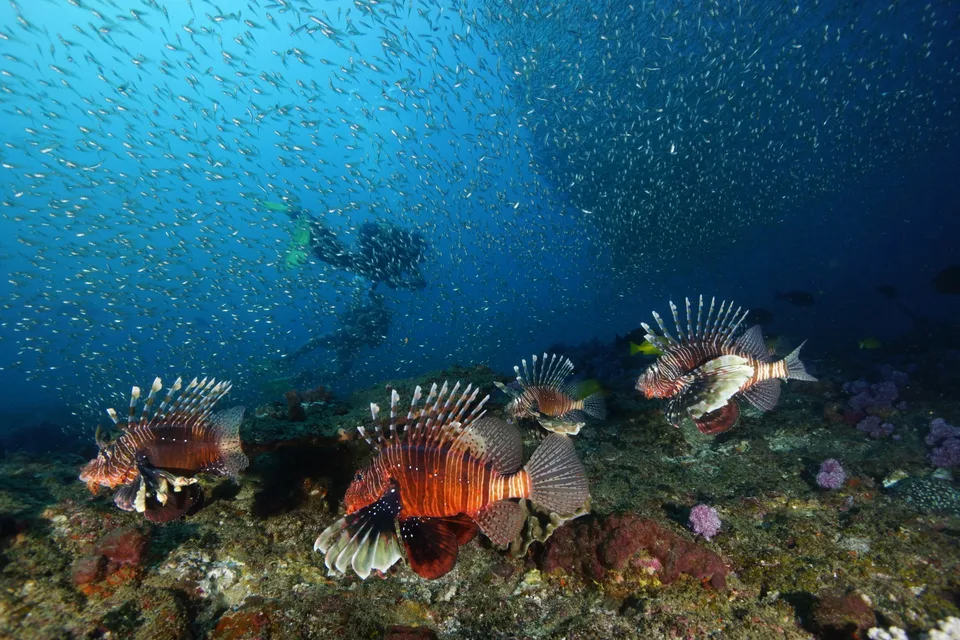
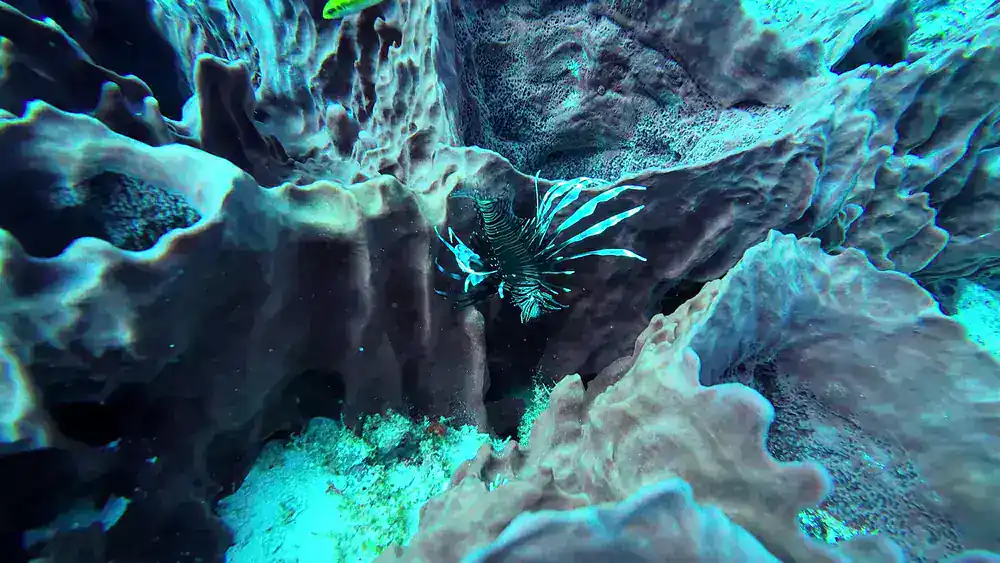
Coral and rocky reefs, lagoons, reef slopes, seagrass edges, mangroves, and artificial structures such as wrecks and jetties. Often shelters in crevices or beneath ledges during the day.
Distribution
Native to the tropical western Pacific, from southern Japan south to Australia and east to French Polynesia. Introduced and widely established in the western Atlantic, including the southeastern United States, Bermuda, the Caribbean, the Gulf of Mexico, and parts of the southwestern Atlantic.
Conservation status
Least Concern
Edibility
Edible and regarded as good eating when properly prepared. Venomous dorsal, anal, and pelvic spines must be removed carefully; cooking does not make handling the spines safe. As with other reef fish, ciguatera risk may occur in some areas.
Culinary quality / 5
4
Danger level
Dangerous
Usual observation depth
1–30 m
Lifespan (years)
0
Behaviour
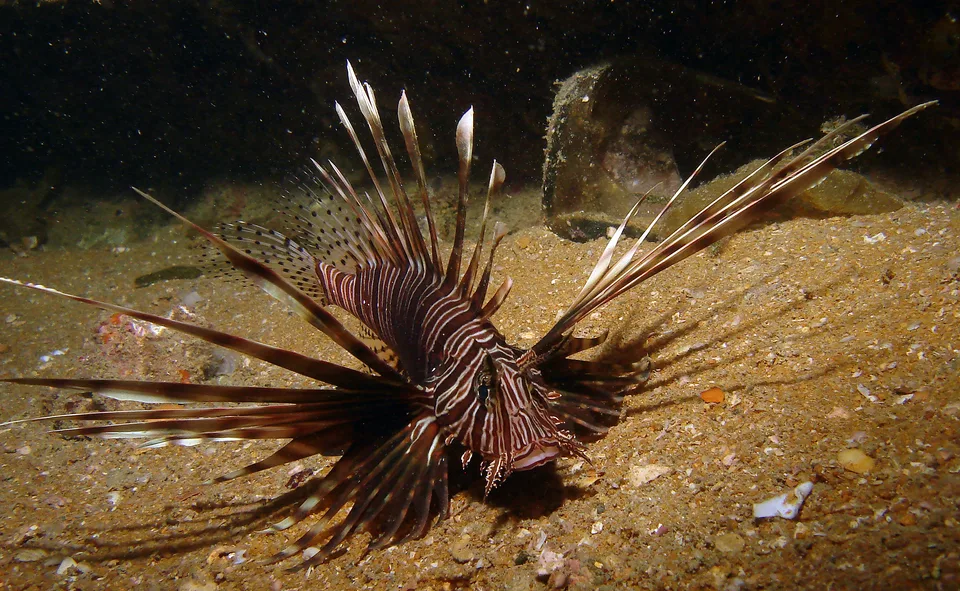
Usually solitary or in small loose groups. Primarily crepuscular and nocturnal, but often visible resting under cover by day. It is an ambush predator that slowly stalks prey and uses its large pectoral fins to corner it.
Observation zones
Reef, reef wall, lagoon, wreck, jetty, rocky structure, seagrass edge, and mangrove. Usually seen near shelter rather than in open blue water.
Diet
Mainly small fishes, especially juvenile reef fishes, and crustaceans such as shrimps and crabs. It can consume a broad variety of locally available prey.
Reproduction
Oviparous
Identification marks
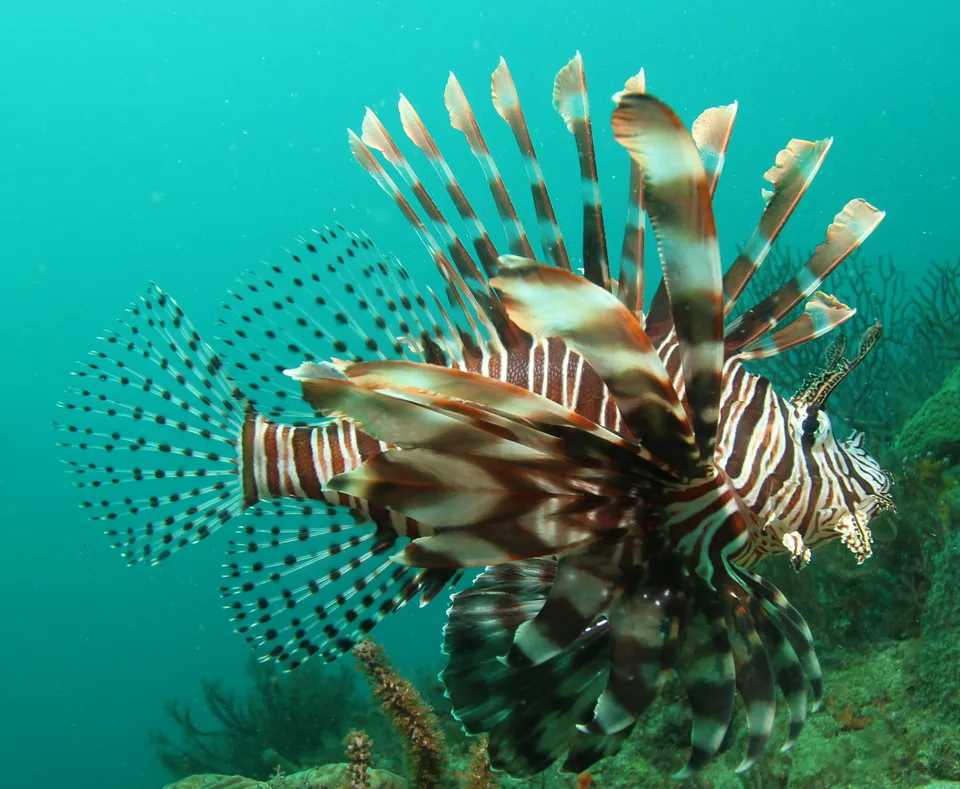
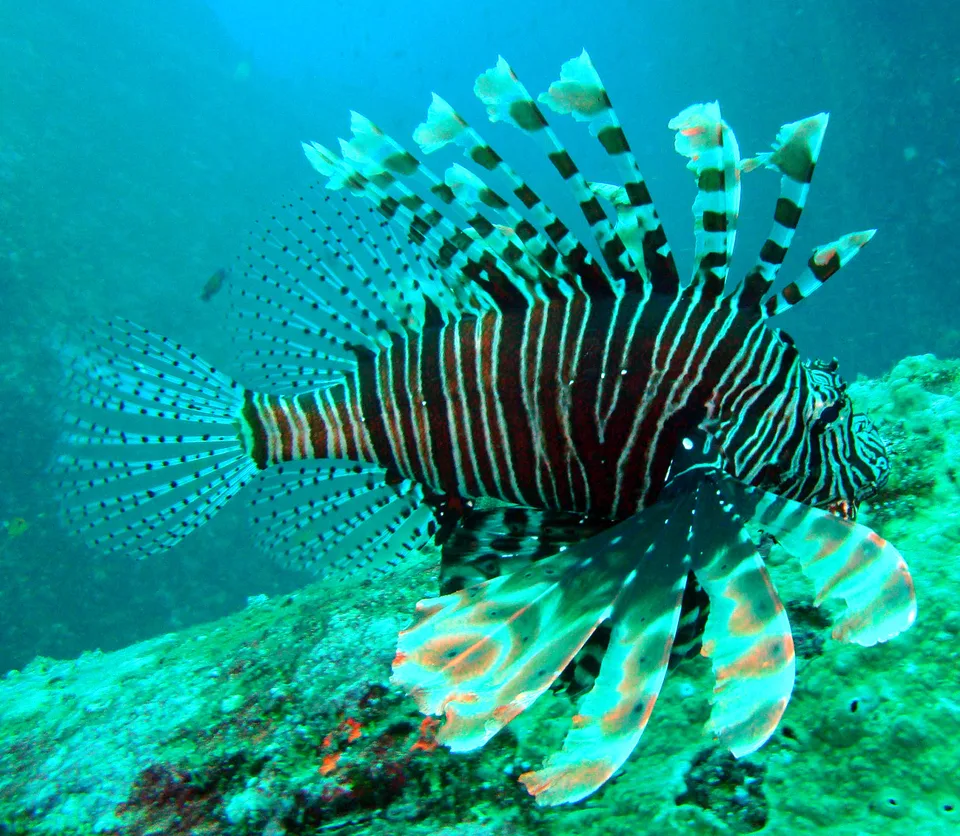
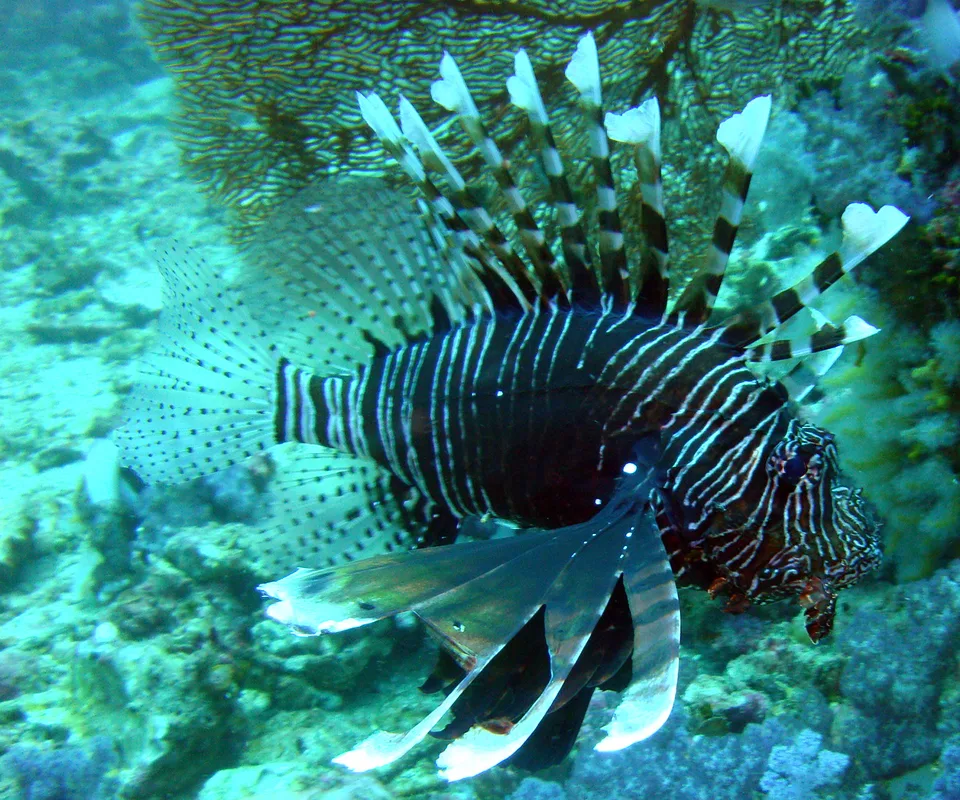
A conspicuous lionfish with alternating red, maroon, brown, and white vertical bands; very long separated dorsal spines; broad fan-like pectoral fins with banded rays; and a large head with skin flaps above the eyes and mouth. The spines are venomous.
Similar species
Most often confused with the devil firefish, Pterois miles. The two are extremely similar in appearance; P. volitans usually has 10-11 soft dorsal-fin rays and 6-7 soft anal-fin rays, whereas P. miles usually has 9-10 and 5-6, respectively. Accurate identification may require careful ray counts or genetic confirmation.
Approach rules
Observe without touching and keep hands, fins, and equipment well clear of all spines. Maintain a respectful distance, avoid cornering the fish or blocking its shelter, and do not feed it. Use flash only briefly and avoid repeated close flashes.
Protection
Globally assessed as Least Concern by the IUCN. It is not listed in the CITES Appendices. In introduced regions it can have substantial ecological impacts; follow applicable site-management and biosecurity guidance.