
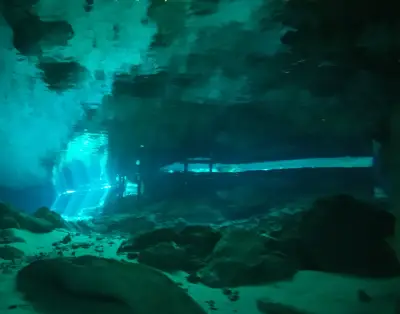
Diving in a cenote in Mexico: a fascinating underground journey
Mexico is famous for its paradisiacal beaches and coral reefs, but it also has a hidden treasure underground: the cenotes. These natural sinkholes, often filled with crystal-clear water, offer divers a unique experience between adventure and wonder.
What is a cenote?
A cenote is a geological formation characteristic of the Yucatán Peninsula. These are natural wells or underground cavities formed by the collapse of limestone, revealing groundwater. For the Mayans, cenotes were sacred places, considered portals to the underworld. Today, these cavities provide an exceptional playground for diving, combining freshwater, spectacular rock formations, and magical natural light.
Why dive into a cenote?
Cenote diving is very different from sea diving:
Incredible visibility: the freshwater filtered by limestone rocks offers transparency that can reach 40 meters or more.
Unique geological formations: stalactites, stalagmites, and other formations created over thousands of years.
Light effects: the sunlight entering through the cenote opening creates fascinating light effects, with rays penetrating the crystal-clear water.
Particular flora and fauna: although marine life is more limited, certain species like blind cave fish or transparent shrimp add to the wonder.
The most famous cenotes for diving
Dos Ojos
Located near Tulum, this cenote is renowned for its labyrinthine tunnels and exceptional clarity. Divers explore passages several hundred meters long with unforgettable light displays.
Gran Cenote
Perfect for beginners, it combines open areas and shallow caves. Ideal for admiring limestone formations and swimming among local fish.
Cenote Angelita
A mythical cenote for experienced divers. Its uniqueness: a layer of hydrogen sulfide that creates a "river in the sky" effect while diving.
Cenote Car Wash
Located near Tulum, this cenote is appreciated for its incredible light and crystal-clear water, as well as for moderate cave diving opportunities.
Tips for Diving into a Cenote
Required level: some dives require a minimum of Advanced Open Water certification or cave diving certification.
Equipment: thin wetsuit, headlamp, secondary tank for deep dives.
Safety: always dive with an experienced guide, follow cave rules, and check your air consumption.
Photography: cenotes offer unique opportunities, but be careful not to disturb the water's sediment, which reduces visibility.
An unforgettable experience
Diving into a cenote is to explore a world where light, water, and rock create an enchanting atmosphere. It is a contemplative and adventurous dive that will delight thrill-seekers as well as geology and underwater photography enthusiasts.
01 Comments
sophie
May 14, 2026Very nice article about cenote diving in Mexico! The cenotes are natural freshwater wells formed in the limestone of the Yucatán, offering incredibly clear water and unique underwater landscapes. You dive between caves, caverns, and submerged passages, with spectacular light plays that filter through the rock openings. The article explains well the magic of these places, with a mysterious atmosphere, impressive rock formations, and a totally different vibe from diving in the sea. A truly unique and fascinating experience!