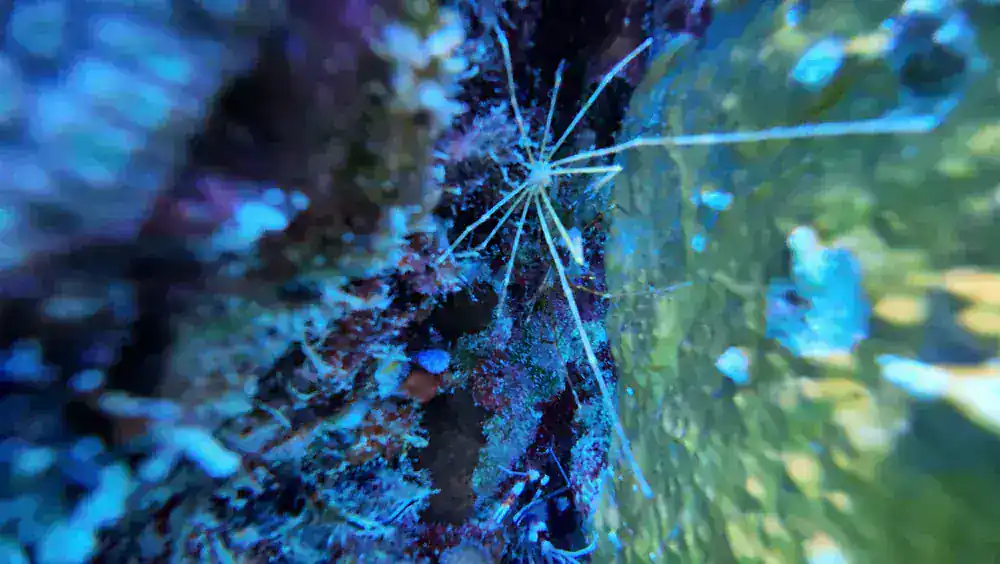
Found in estuarine and coastal waters, often in muddy or sandy substrates.
Distribution
Native to the western Atlantic, from New Jersey to Argentina.
Conservation status
Least Concern
Edibility
Edible and widely valued as seafood. Cook thoroughly; consume only specimens handled and stored safely, and avoid eating them if you have a crustacean or shellfish allergy.
Culinary quality / 5
4
Danger level
Harmless
Usual observation depth
?–30 m
Lifespan (years)
2
Behaviour
Mainly nocturnal and benthic. It buries itself in or often rests on soft sediment during the day and becomes more active at night. Juveniles are particularly associated with shallow estuarine nurseries; adults migrate offshore to reproduce.
Observation zones
Sand, mudflats, silty bottoms, seagrass beds, estuaries, marsh edges, mangroves and shallow coastal waters; it is not a reef or open-water species.
Diet
Omnivore feeding on the bottom: detritus, microalgae, organic particles, small worms, small crustaceans and other tiny benthic invertebrates.
Reproduction
Oviparous
Identification marks
Pale, translucent to whitish shrimp, often with a slight bluish or greenish tint. It has a long, slender, toothed rostrum and long antennae. The body lacks the clearly visible dark red lateral grooves typical of the brown shrimp.
Similar species
Often confused with the brown shrimp, Penaeus aztecus, and the pink shrimp, Farfantepenaeus duorarum. P. aztecus is generally darker and bears characteristic dark red lateral grooves; F. duorarum is usually pinker and more distinctly marked. Certain identification may require examination of the rostrum and reproductive structures.
Approach rules
Approach slowly and remain at a distance from the sediment to avoid burying or stressing the shrimp. Do not touch, collect, pursue, or feed the animal. Use minimal lighting and avoid repeated close-up flashes, especially at night.
Protection
Globally assessed as “Least Concern” by the IUCN. It is not listed under CITES. This global assessment does not replace regional measures for management, habitat protection, or harvesting.