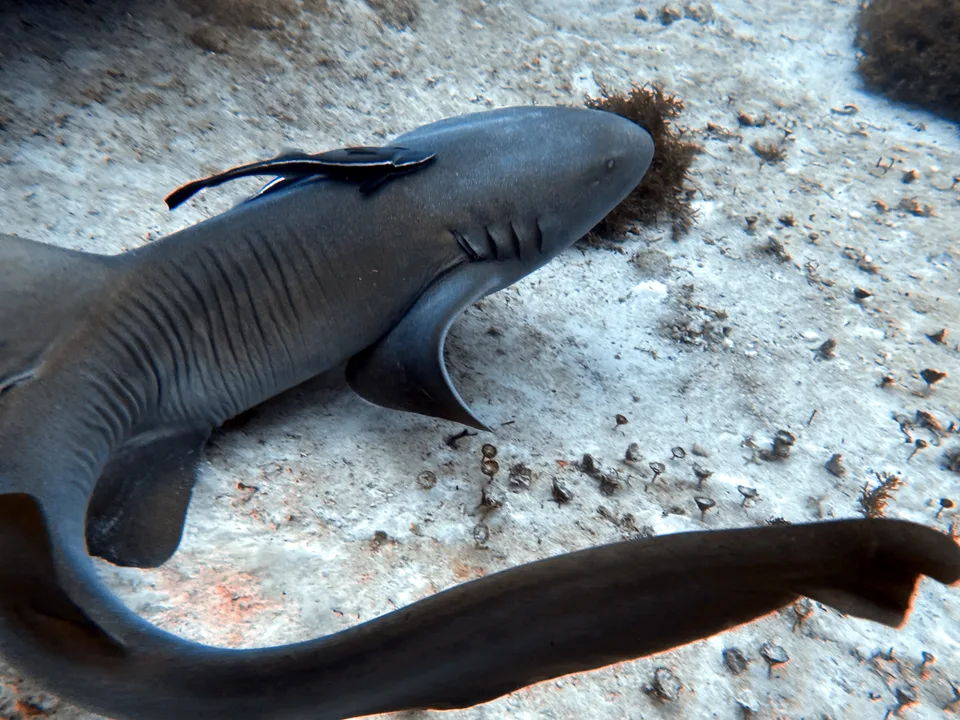
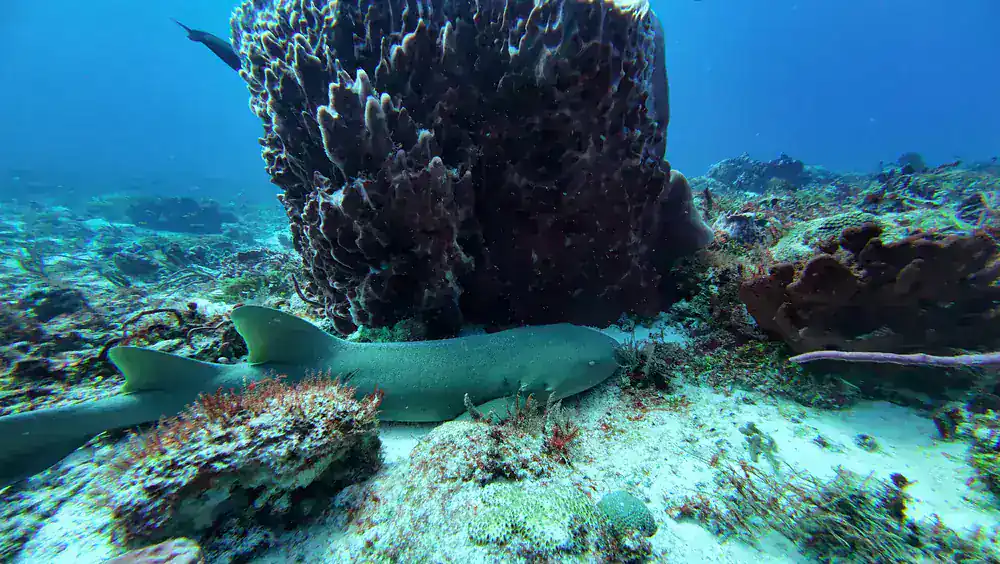
Shallow tropical waters on continental and insular shelves, especially lagoons, coral and rocky reefs, reef caves and crevices, and sandy areas near reefs and beaches.
Distribution
Tropical Indo-Pacific, from the Persian Gulf, Red Sea and East Africa to the Tuamotu Islands, north to southern Japan and south to Australia.
Conservation status
Vulnerable
Edibility
Edible, but it is a Vulnerable shark and its consumption is not recommended from a conservation perspective. Meat may also carry the usual food-safety concerns associated with shark products.
Culinary quality / 5
2
Danger level
Caution
Usual observation depth
5–30 m
Behaviour
Generally nocturnal and relatively sedentary during the day. Individuals rest on the bottom, often in caves or under overhangs, and may form daytime aggregations. They become more active at night to feed.
Feeds mainly on bottom-dwelling invertebrates and fish, particularly crustaceans, molluscs, cephalopods, sea urchins and small bony fish.
Reproduction
Ovoviviparous
Identification marks
Stocky brown to grayish-brown shark, with a broad, flattened head, short nasal barbels, very large oval spiracles behind the eyes, small eyes, and rounded dorsal and pectoral fins. Young individuals may exhibit dark spots or faint bands that fade with age.
Similar species
May be confused with other nurse sharks, particularly the common nurse shark (Ginglymostoma cirratum) where their ranges overlap. Confirm identification using distribution, uniform tawny coloration, large oval spiracles, and the shape and position of the nasal barbels; photos of the head are useful.
Approach rules
Observe calmly from at least 3 m away and leave the shark a clear escape route. Never touch, ride, restrain, or block a resting individual. Avoid flash photography or use it sparingly, especially in caves, and never feed or bait sharks. Although generally placid, it may bite if handled, cornered, or provoked.
Protection
IUCN Red List: Vulnerable (VU). The species is threatened by fishing pressure and degradation of coastal habitats. Minimize disturbance and avoid supporting the consumption of shark products. It is not listed in the CITES Appendices.