Edible, but large reef morays may accumulate ciguatera toxins. Consumption is therefore best avoided where ciguatera is a known risk.
Culinary quality / 5
3
Danger level
Dangerous
Usual observation depth
5–30 m
Behaviour
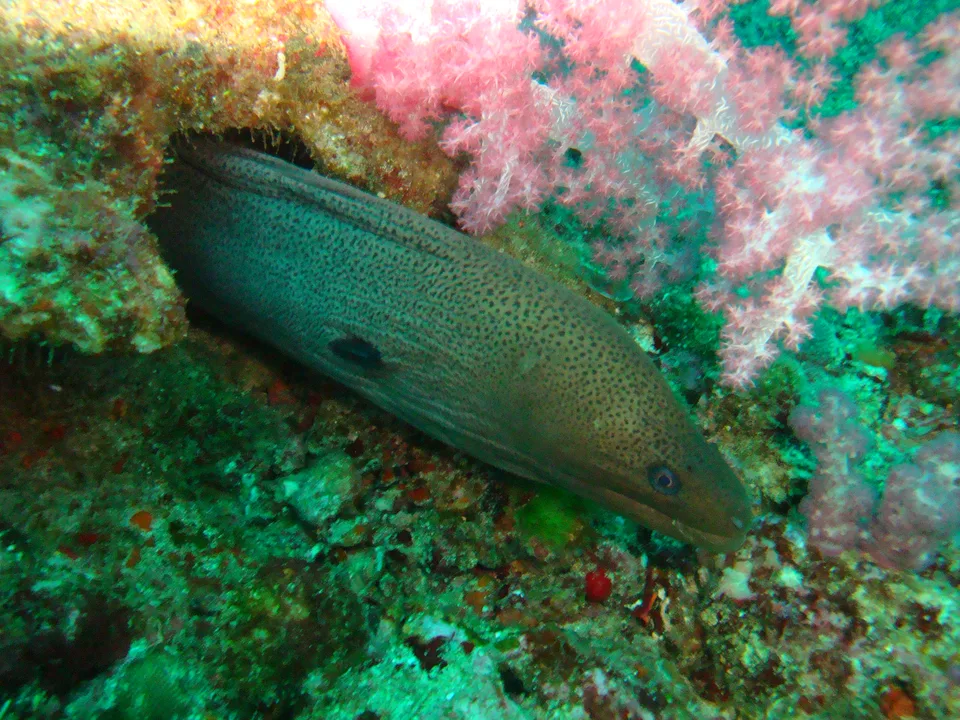
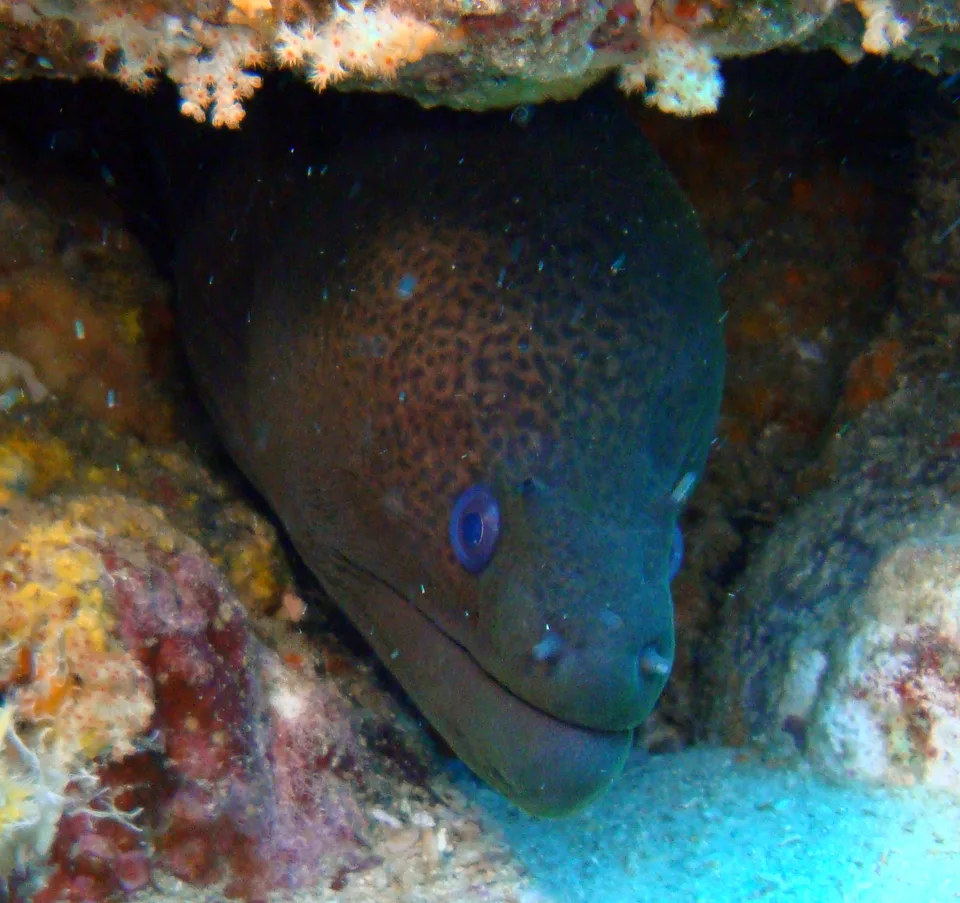
Generally solitary and primarily nocturnal. It rests during the day, with its head protruding from its shelter, and actively hunts at night; it may cooperate with groupers when hunting.
Observation zones
Reef, reef drop-off, lagoon, pass, coral rubble and crevices; sometimes observed near wrecks associated with a reef.
Diet
Predator feeding on fish, crustaceans and cephalopods.
Reproduction
Oviparous
Identification marks
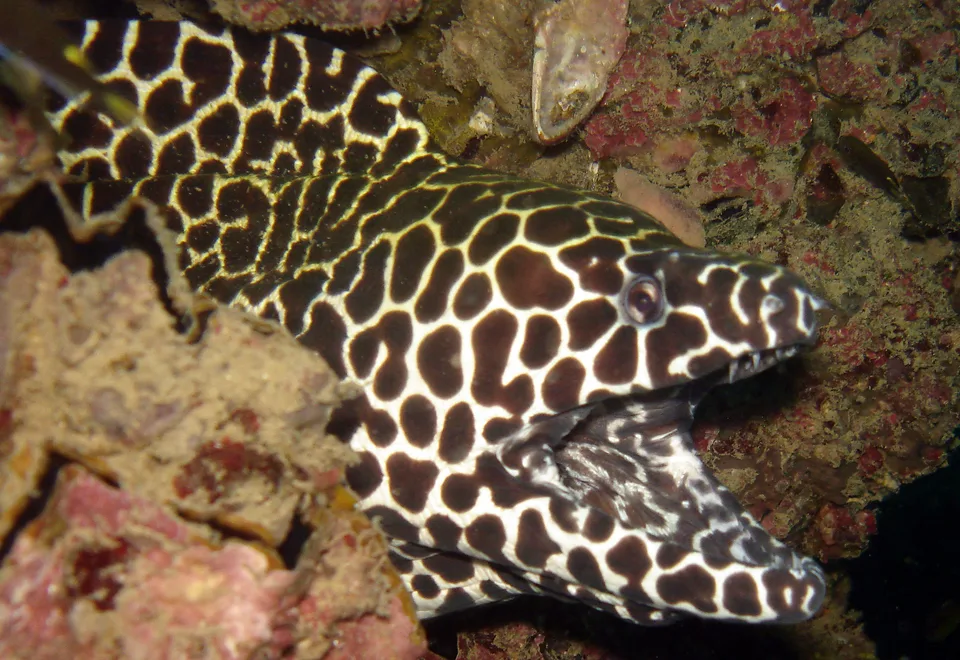
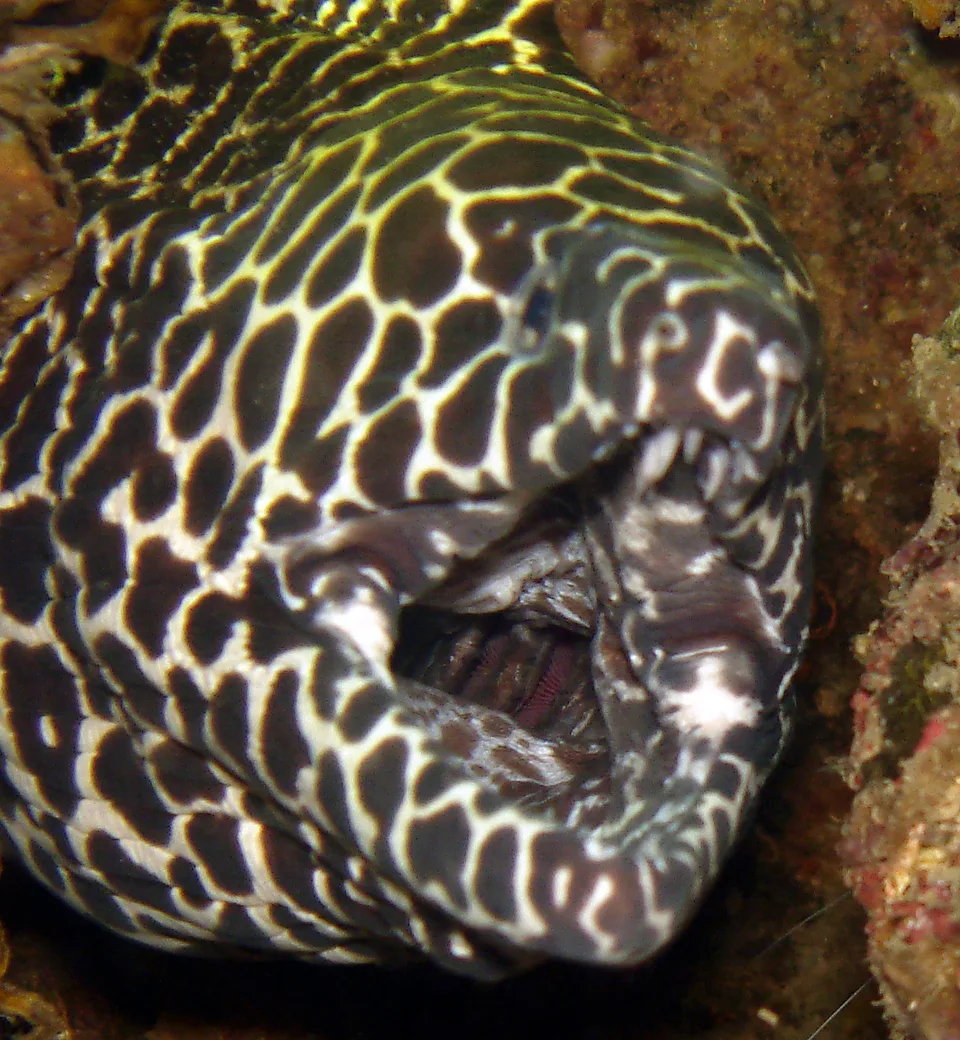
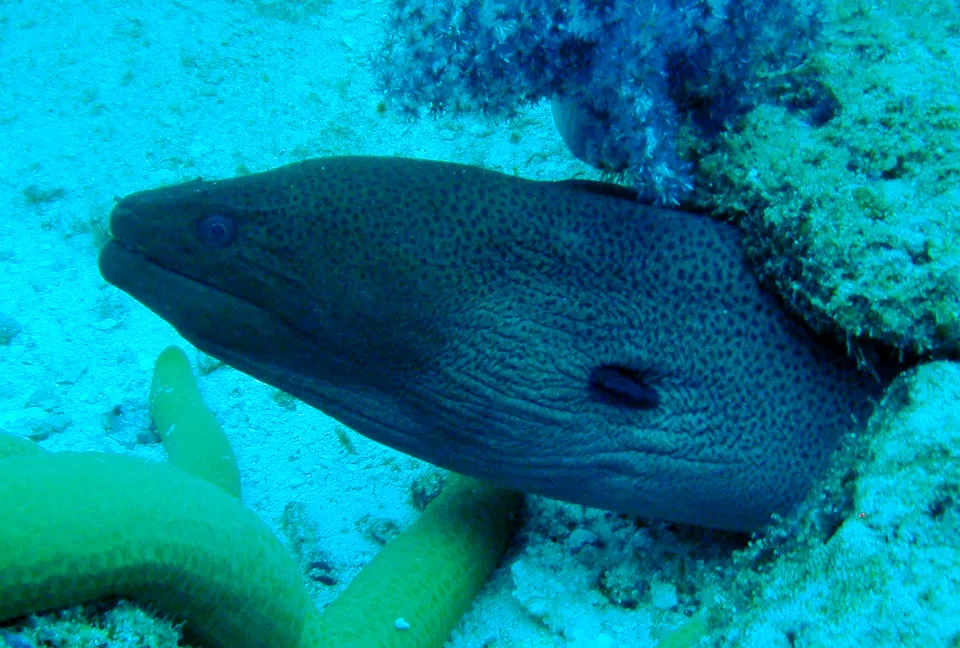
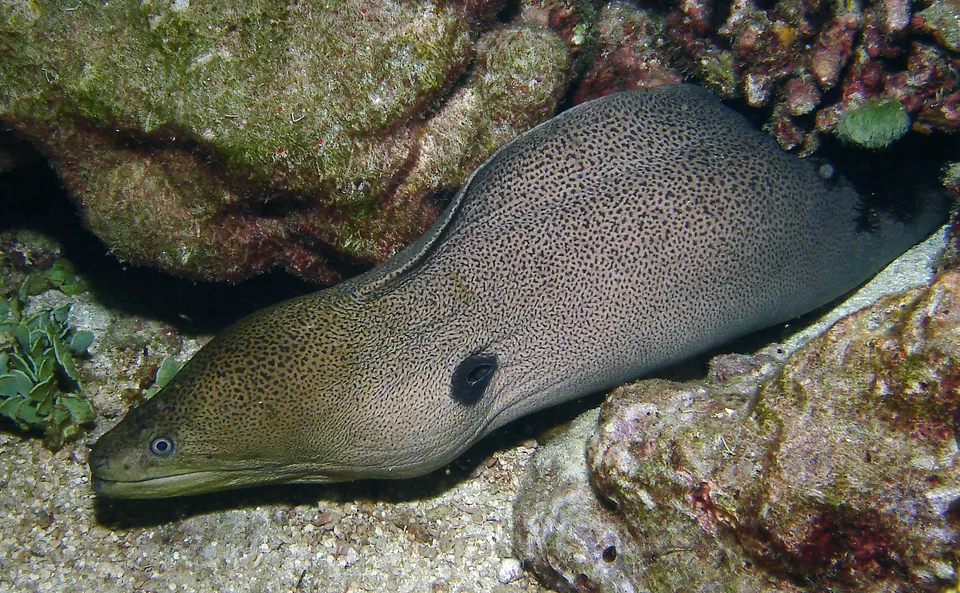
Very large robust moray eel, with a yellowish-brown to brown body densely covered with dark brown or black spots and marbling, giving a speckled or leopard-like appearance. The head is broad, with a large mouth and visible teeth.
Similar species
Often confused with the leopard moray or honeycomb moray (Gymnothorax favagineus). The latter generally has larger, more widely spaced, honeycomb-shaped dark spots on a lighter background; the giant moray is usually more finely and densely marbled.
Approach rules
Keep a respectful distance, ideally at least 2 to 3 m when possible. Never put your hands near the holes, block its retreat, touch it, or feed it. Avoid repeated flashes at close range; a bite from this large species can cause serious injuries.
Protection
Globally assessed as Least Concern on the IUCN Red List. It is not listed under CITES; avoid disturbing it and support the protection of reef habitats.