
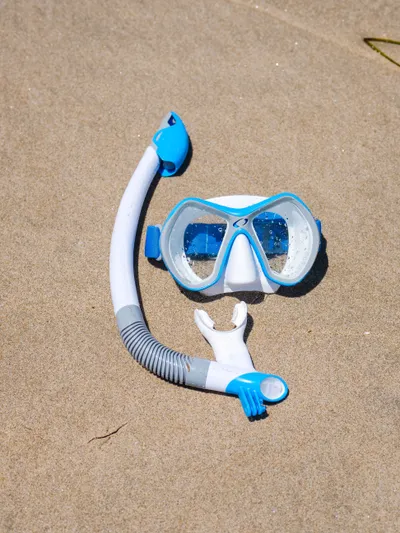
Illustration photo: Kindel Media / Pexels — Pexels licence.
A good mask is one you barely notice during a dive. Before considering looks, brand or price, look for a shape that suits your face, comfortable vision and easy adjustments. At ScubaSpotAdvisor, we focus on these practical criteria without recommending a particular brand or training agency.
Start with the fit
Try several models rather than relying on a photograph or an “adult size” label. Place the mask against your face without using the strap, then gently inhale through your nose. This gives an initial indication of fit; it does not guarantee a watertight seal underwater, particularly if you have a beard or moustache.
Check contact around the entire skirt, the absence of uncomfortable pressure and easy access to your nose, including with gloves if you wear them. Then adjust the strap comfortably. Ask the shop or your dive centre to check its position instead of trying to compensate for a poor fit by tightening it further.
Compare models, not universal winners
A mask that suits your buddy will not necessarily be the best one for you. Compare the field of vision, contact points and ease of using the buckles. If possible, try the equipment in a supervised setting before buying. Your experience with a rental mask already provides a useful basis for comparison.
If you need vision correction, check which solutions are compatible with the model before buying it. Also ask about replacement straps and buckles, and the availability of after-sales support.
Leaks and fogging are different problems
Water entering the mask concerns its fit or condition; fogged lenses require appropriate preparation. Have the equipment and its positioning checked if the problem keeps returning. Buying another mask or an accessory without identifying the cause may simply add an unnecessary expense.
For fogging, follow the instructions for your mask and a compatible anti-fog product. Some materials and surface treatments need particular care. Do not apply an online remedy to every model: avoid flames and abrasive products not specified by the manufacturer.
Care for and protect your mask
After use, rinse it in fresh water and let it dry away from direct sunlight. Store it somewhere cool, protected from impacts, without distorting the skirt. Regularly check the lenses, strap and buckles. Follow the manufacturer’s instructions for cleaning and replacing parts.
The ScubaSpotAdvisor checklist
- I have compared several shapes on my face.
- I can easily reach my nose and operate the adjustments.
- I have checked vision-correction options if needed.
- I know the preparation and care instructions.
- I know whom to ask if the mask leaks or fogs up.
Choosing equipment does not replace supervised instruction in its use and mask clearing. To prepare for your first outings, explore our beginner diving guide and the dive centres listed on ScubaSpotAdvisor.


00 Comments
No comments yet.