
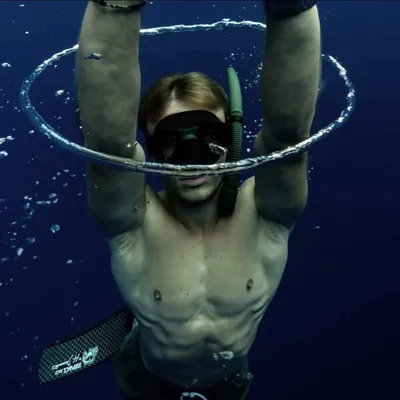
Antoine Diver: From His Beginnings in Greece to the Currents of Rangiroa
At only 25, Antoine has already dived and worked in destinations that make most divers dream: Greece, Martinique, Moorea, Fakarava, the Marquesas Islands, Papua, the Solomon Islands, New Caledonia, Indonesia and the Caribbean.
A diving instructor since the age of 18, holder of the DEJEPS and the supplementary certificate granting him E4-level qualifications, he also works as an instructor aboard cruise ships sailing through some of the most remote regions of the world.
Yet when he arrives in Rangiroa on July 1, 2026, Antoine does not present himself as an instructor simply looking to add a prestigious destination to his résumé. Above all, he has come to learn.
His goal is to gain an in-depth understanding of Tiputa Pass, a site that is as spectacular as it is technical, before leaving in mid-October for a new contract in French Polynesia. There, he will co-manage the diving operations aboard a vessel whose itinerary includes numerous dives in Rangiroa.
A Passion for Diving Born in Greece
Antoine’s story with diving begins at the age of 15, during a family holiday in Greece. Alongside his sister, he discovers the activity at a dive center run by a friend of his father.
Yet this first experience does not immediately trigger the expected revelation. At that point, diving remains, for him, just another holiday activity.
The real revelation comes the following summer. His parents suggest that Antoine and his sister take an Open Water course. His younger sister is enthusiastic, while Antoine hesitates. At the time, he feels he is not passionate enough to justify such an expense.
His parents insist nonetheless—a decision he will never regret. Once certified, he gradually spends all his holiday time at the center. While his family quietly enjoys their vacation, Antoine dives, observes how the club operates, and helps the team whenever he can.
He progresses quickly, sometimes even too quickly. He particularly remembers a dive to 40 meters carried out after only eight dives and without any real deep-diving training.
With the benefit of hindsight and his experience as an instructor, Antoine acknowledges that this dive was reckless. Feeling comfortable in the water is no substitute for proper training, reasonable progression, or an awareness of one’s own limits.
Divemaster and PADI Instructor at Just 18 Years Old
Antoine then returned to that same Greek center every year. He gradually completed his various levels there, becoming a Divemaster at the age of 18.
After graduating from high school, what was initially meant to be a gap year turned into the start of a real career. In December 2019, still only 18 years old, he became a PADI instructor.
He then imagined that he would be able to easily go abroad to work for a few months. But two obstacles upended his plans: the arrival of the Covid-19 pandemic and an English level that he himself felt was still insufficient to work confidently with an international clientele.
Rather than give up, Antoine decided to further his training through the French system. He worked temporary jobs to finance his courses and obtained his Level 4 certification at the end of 2020.
In 2021, he joined CREPS d’Antibes to prepare for the DEJEPS in underwater diving. At that time, Rangiroa already held a special place in his imagination.
He contacted The Six Passengers dive center to complete his professional internship there. The center accepted his request, but organizing the stay ultimately proved too complicated. Antoine therefore completed his internship in Nice, while keeping Rangiroa in the back of his mind.
From Martinique to French Polynesia
After obtaining his DEJEPS, Antoine went to Martinique for the 2021–2022 winter season. He then moved on to Greece in summer 2022, this time as an instructor at the centre where it had all begun.
The plan was for him to take over the establishment the following year. However, the owner cancelled the sale at the last moment, bringing the project to an end.
This disappointment ultimately opened the door to a new adventure. At the beginning of 2023, Antoine discovered French Polynesia by working a season in Moorea.
A few months later, he began working on cruise ships. In particular, he joined the Paul Gauguin at the beginning of 2024, a ship operating mainly in French Polynesia.
Antoine completed three four-month contracts on board. He thus discovered various Polynesian islands, including Fakarava and the Marquesas, and finally fulfilled his dream of diving in Rangiroa.
Further assignments then took him to Papua, the Solomon Islands, New Caledonia, Indonesia and the Caribbean. Since the end of 2023, his work as an instructor has therefore been divided between traditional diving centres and the particular demands of working aboard cruise ships.
In 2025, he further completed his training in Marseille by obtaining the additional certificate associated with the DEJEPS, granting him E4 teaching prerogatives.
Returning to Rangiroa to learn the Tiputa Pass
Although he has already led a few dives at Rangiroa from the Paul Gauguin, Antoine feels that these occasional visits are not enough to truly get to know Tiputa Pass.
He therefore arrives on the atoll on July 1, 2026, to spend a season with The Six Passengers, the dive center where he had already dreamed of doing his DEJEPS internship several years earlier.
At the beginning of his stay, Antoine notably dives as the rear diver. This position allows him to observe the guides’ choices, understand their routes, and learn to read the movements of the pass without immediately being responsible for leading a dive group.
This approach highlights an essential reality: knowing a site does not simply mean knowing where its main points of interest are. In a pass like Tiputa, it is necessary to understand the tides, changes in current, acceleration zones, countercurrents, and the behavior of the marine life.
Why is Tiputa Pass so special?
Rangiroa is one of the largest coral atolls in the world. Its immense lagoon connects with the ocean mainly through two passes: Avatoru and Tiputa.
Depending on the tides and ocean conditions, water flows into or out of the lagoon. These exchanges can generate powerful currents, whose direction and intensity directly influence the course of the dives.
During an incoming current, divers can let themselves be carried from the ocean into the lagoon. When the current is outgoing, the conditions and routes are different, and some dives may become more demanding.
This constant circulation of water encourages an exceptional concentration of marine life. Drift dives in Tiputa Pass are particularly renowned for encounters with dolphins, sharks, rays, and numerous pelagic fish.
Dolphins, Gray Sharks, and Unexpected Encounters
The bottlenose dolphins of Tiputa are probably Rangiroa’s most iconic animals. Some individuals can be particularly curious around divers, although every encounter remains wild and can never be guaranteed.
The pass also regularly offers sightings of schools of barracuda and numerous grey reef sharks. Depending on the season, conditions and an essential element of luck, other pelagic species may appear.
Antoine specifically mentions the possibility of encountering tiger sharks or the great hammerhead, Sphyrna mokarran, often simply called “mokarran” by divers.
Manta rays are also among the possible encounters, as are much more unexpected animals, such as sailfish.
It is this uncertainty that accounts for much of Rangiroa’s magic. A dive can already be exceptional with dozens of grey reef sharks and a school of barracuda, before an unexpected silhouette suddenly emerges in the blue.
What Level Do You Need to Dive in Rangiroa?
Antoine ideally recommends holding a French Level 2 certification or a PE40 qualification in order to enjoy a wider choice of dives.
Within the PADI system, an Advanced Open Water certification completed with deep-diving training is also suitable for accessing dives reaching 40 metres. An Advanced Open Water certification alone, however, does not systematically correspond to a qualification allowing divers to go to this depth.
Not all dives in Rangiroa take place at 40 metres. However, certain routes and encounters are genuinely interesting beyond 30 metres.
Depth should never become an objective in itself. The route is chosen by the dive centre according to the current, the conditions, the participants’ experience and their certifications.
Antoine also recommends arriving with recent experience of drift diving and good control of one’s buoyancy. A few refresher dives before Rangiroa can make a real difference.
Why get Nitrox training before your trip?
For a program comprising several successive dives between 25 and 40 metres, Antoine strongly recommends being Nitrox-certified.
Using an oxygen-enriched mixture can reduce nitrogen exposure and increase no-decompression limits for certain profiles, provided that the mixture’s maximum operating depth and the rules relating to oxygen exposure are respected.
Some centres in Rangiroa offer Nitrox directly, while others charge extra for it. It is therefore preferable to inquire before booking your dives.
Nitrox does not allow you to descend deeper, nor does it compensate for a lack of experience. Above all, it is a useful planning tool for repetitive dives.
Dive on another island before heading to Rangiroa
Antoine advises travelers planning several stops in Polynesia not to begin their trip directly in Rangiroa.
Making a few dives in Moorea, Tahiti, or on another island allows divers to regain their skills before facing the currents of Tiputa. It is also an opportunity to become familiar with the equipment used locally.
Aluminum tanks, in particular, can change buoyancy sensations and require different weighting from what is usually used with a steel tank.
An orientation dive allows divers to adjust their equipment and weighting in a simpler environment, rather than discovering these differences when entering a pass subject to a powerful current.
This preparation then allows them to fully enjoy Rangiroa, without spending their first dives finding their bearings again.
Antoine Diver: Sharing the Behind-the-Scenes of Diving
Alongside his work as an instructor, Antoine now wants to develop his social media content further.
In particular, he plans to publish vlogs and educational videos explaining how Tiputa Pass works: the formation of currents, the choice of dive sites, the organization of dive groups, and the observation of marine life.
He would also like to showcase his work aboard cruise ships. This is quite different from the traditional image of an instructor working for an entire season at the same dive center, since the teams must adapt to constantly changing itineraries, ports of call, guests, and diving areas.
From mid-October, Antoine will be returning to Polynesia for a new contract. His future vessel will carry out more dives in Rangiroa than the Paul Gauguin, and Antoine will take on a co-lead role there.
The season he spent with The Six Passengers therefore takes on its full meaning. It is not simply a matter of accumulating dives, but of gaining a sufficiently detailed knowledge of Tiputa to be able to supervise, organize, and share this experience under the best possible conditions.
Follow Antoine Diver
Discover Antoine Diver’s dives, travels, and future educational content on his various social media platforms:
Instagram: @antoinediver
TikTok: @antoinediver
Facebook: Antoine Diver
A YouTube channel should also launch soon, offering longer-form content dedicated to diving, Rangiroa, and behind the scenes of his work as an instructor aboard cruise ships.
00 Comments
No comments yet.