Pelagic and coastal tropical to warm-temperate waters; often near continental and island shelves, reef edges, upwellings, and areas with seasonal plankton concentrations.
Distribution
Circumglobal in tropical and warm-temperate seas, generally between about 30°N and 35°S; absent from the Mediterranean Sea except for rare records.
Conservation status
Endangered
Edibility
Edible in principle, but consumption should be avoided: this is an Endangered species and international trade is regulated. Do not infer local fishing or possession legality from this guidance.
Culinary quality / 5
3
Danger level
Harmless
Usual observation depth
0–100 m
Lifespan (years)
80
Behaviour
Usually solitary, but forms predictable seasonal feeding aggregations where plankton or fish eggs are abundant. It is a slow-moving, mainly daytime filter feeder that may travel long distances and dive deeply.
Observation zones
Blue water, surface waters, offshore reef edges, channels, and plankton-rich coastal aggregation sites; occasionally near sandy shallows.
Diet
A filter feeder consuming zooplankton, krill, copepods, fish eggs, small schooling fishes, and occasionally small squid. It feeds by ram filtration or suction feeding.
Reproduction
Ovoviviparous
Identification marks
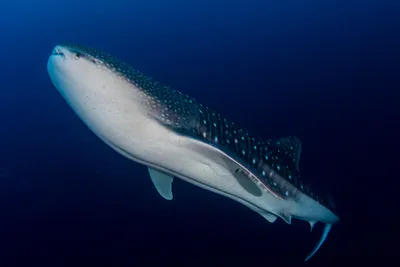
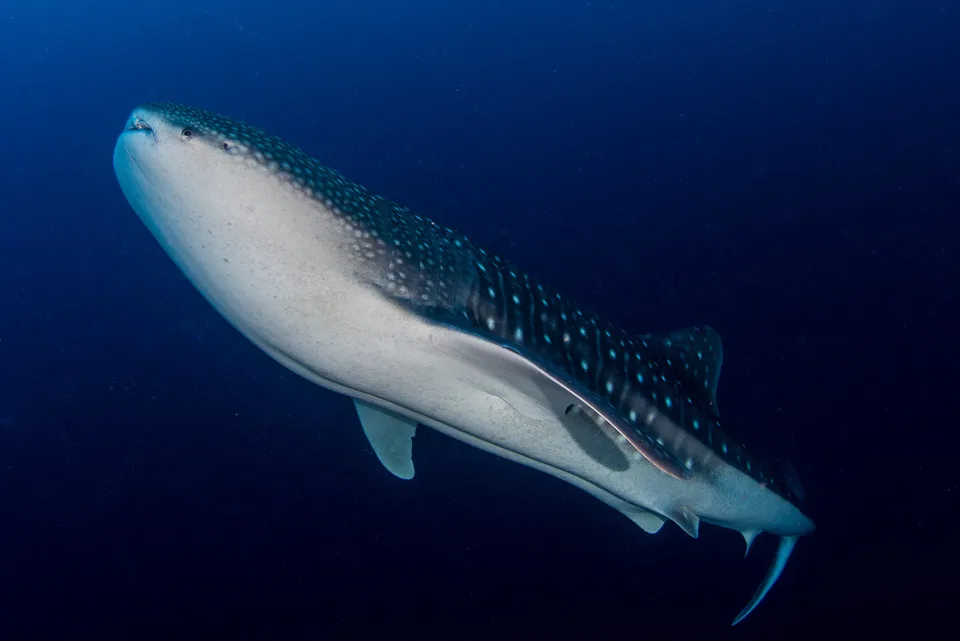
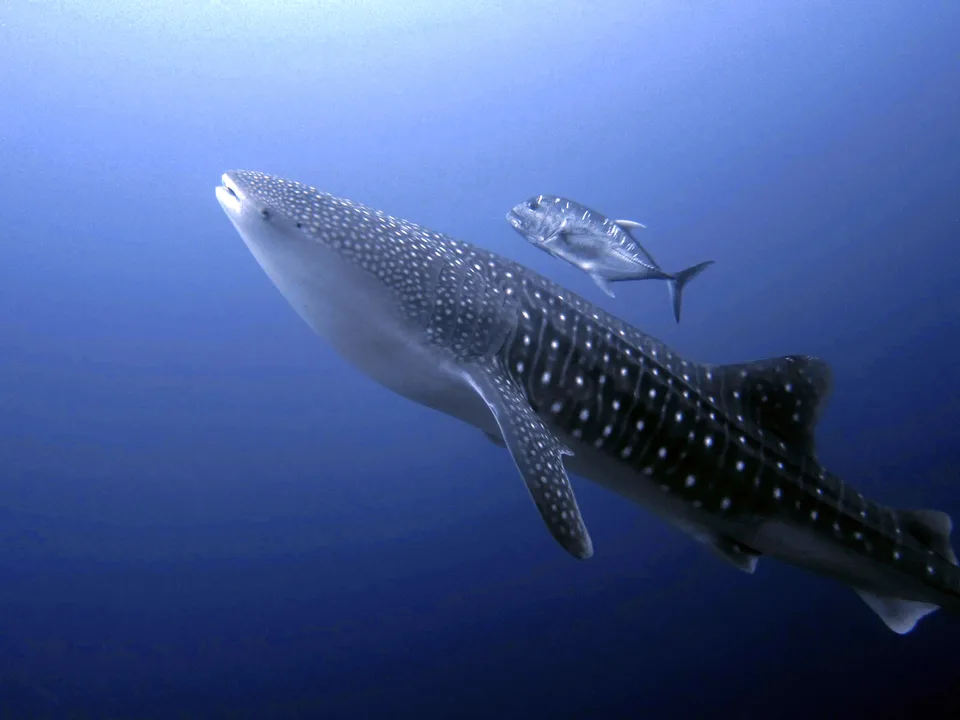
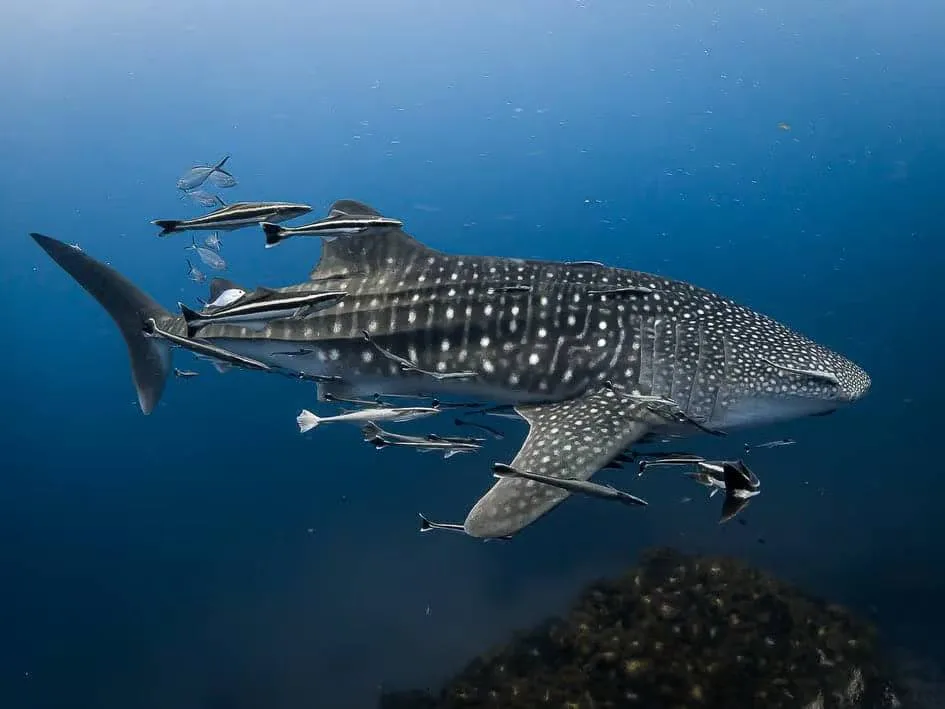
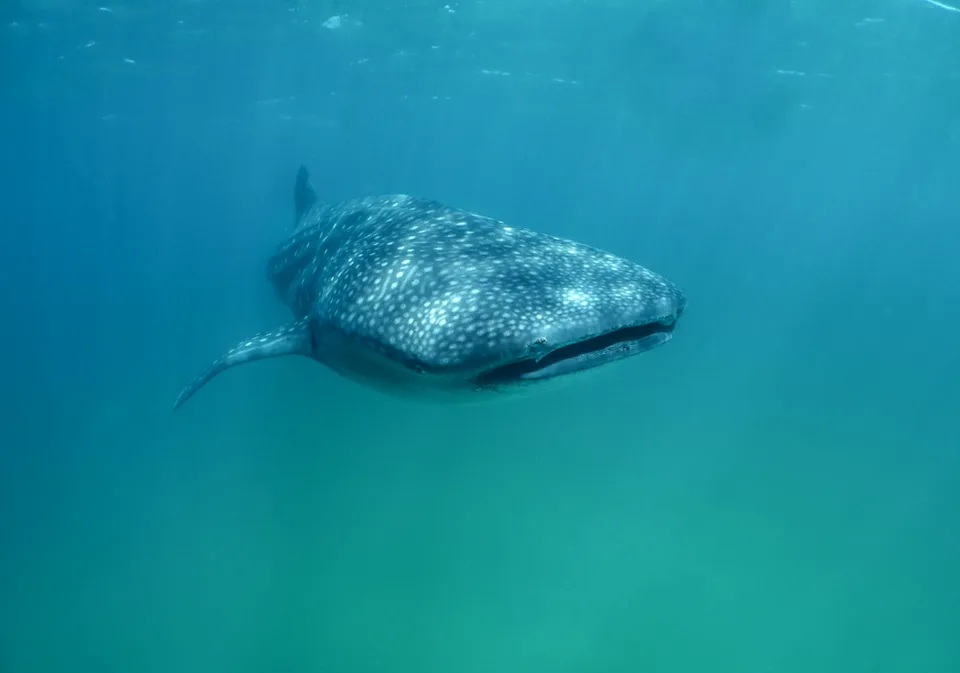
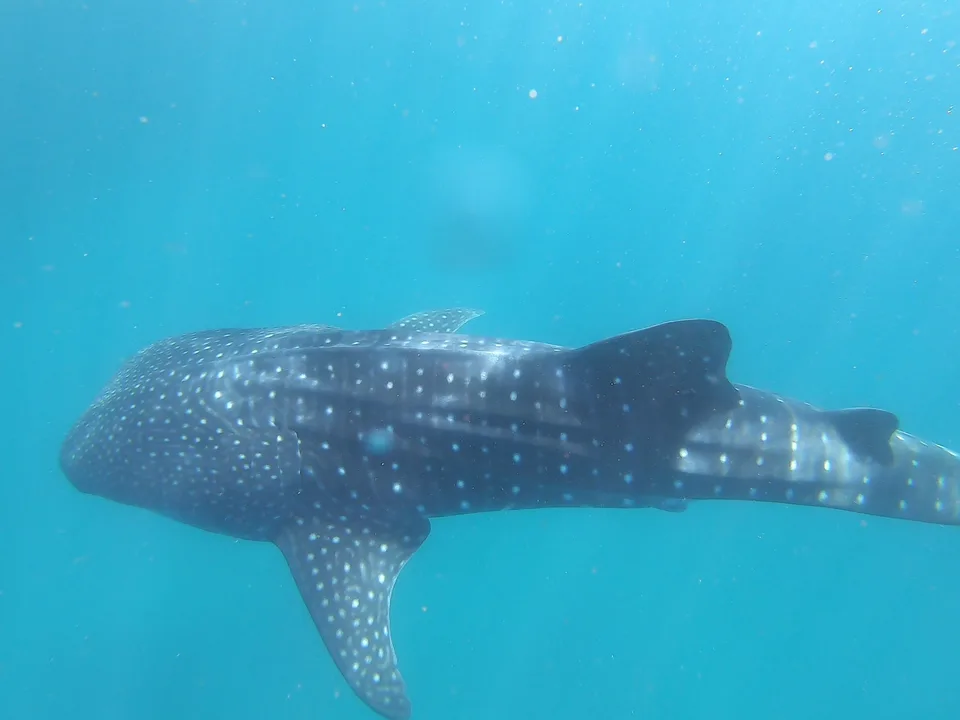
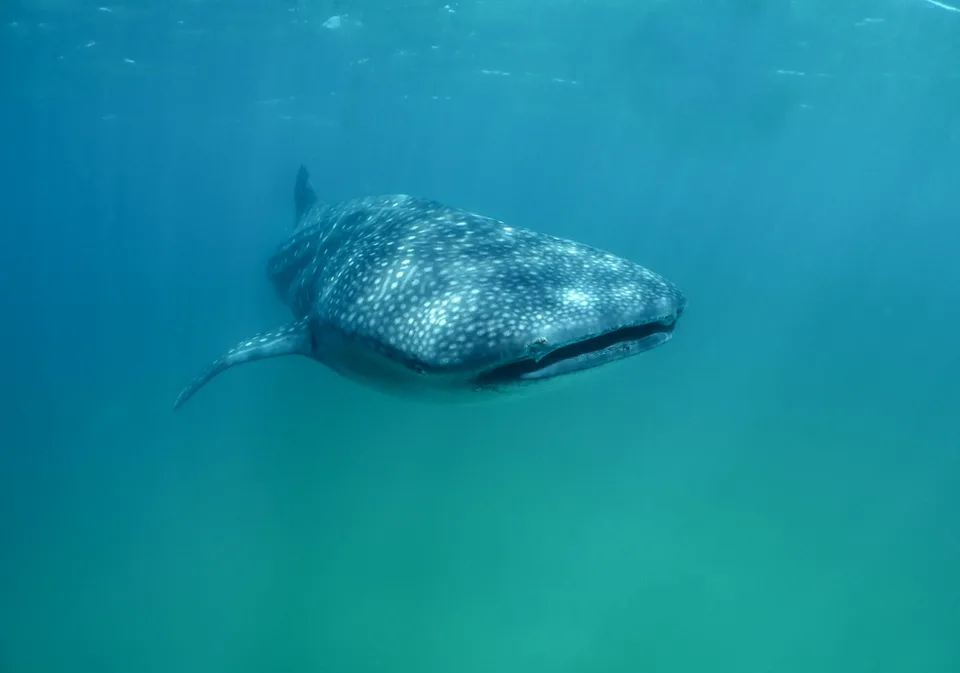
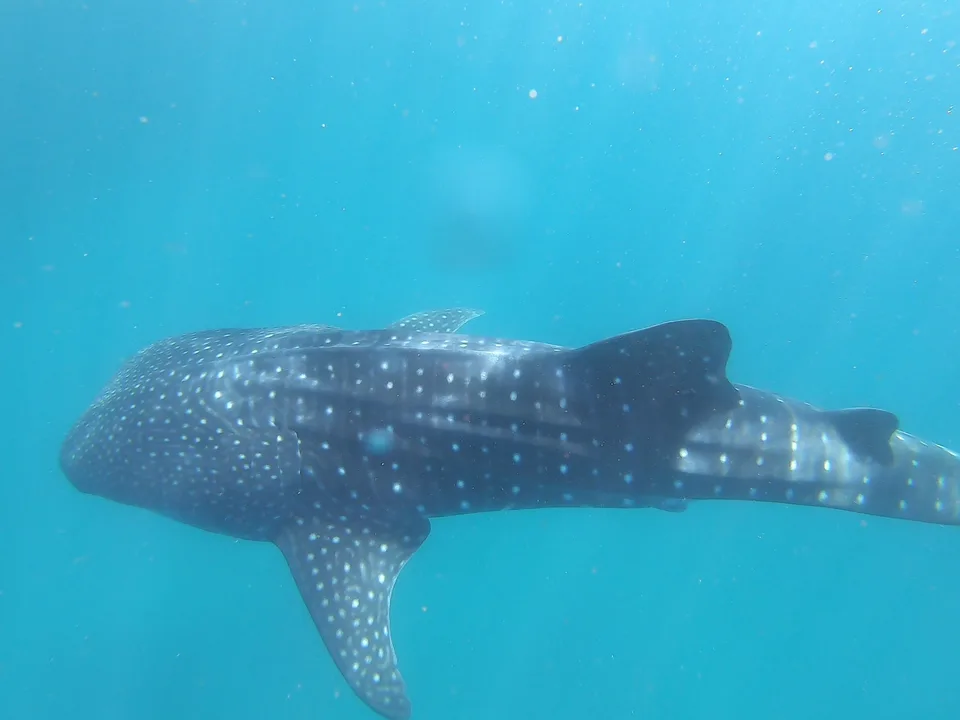
The world's largest fish; very broad, flattened head and terminal mouth; dark bluish-grey back covered with unique pale spots and horizontal-and-vertical stripe patterns; three prominent lateral ridges; large crescent-shaped tail in adults.
Similar species
May be confused at a distance with the basking shark or megamouth shark. Neither has the whale shark's conspicuous pale spot-and-stripe pattern. Basking sharks have exceptionally long gill slits; megamouth sharks are darker, with a bulbous head and a much smaller mouth relative to the head.
Approach rules
Observe passively and follow local codes of conduct. Do not touch, ride, chase, obstruct its path, surround it, or approach from in front. Keep at least 3 m away from the body and more space from the tail; avoid flash photography and never feed it.
Protection
IUCN Red List: Endangered. Listed in CITES Appendix II; international commercial trade is regulated. Additional protections may apply nationally or locally.