Coastal and offshore waters, often near reefs and in shallow areas.
Distribution
Found in tropical and subtropical waters worldwide.
Conservation status
Least Concern
Edibility
Edible and valued as food, but large reef-associated individuals can contain ciguatoxins and cause ciguatera poisoning. Avoid eating large specimens from areas where ciguatera occurs; cooking does not destroy the toxin.
Culinary quality / 5
3
Danger level
Caution
Usual observation depth
1–30 m
Lifespan (years)
14
Behaviour
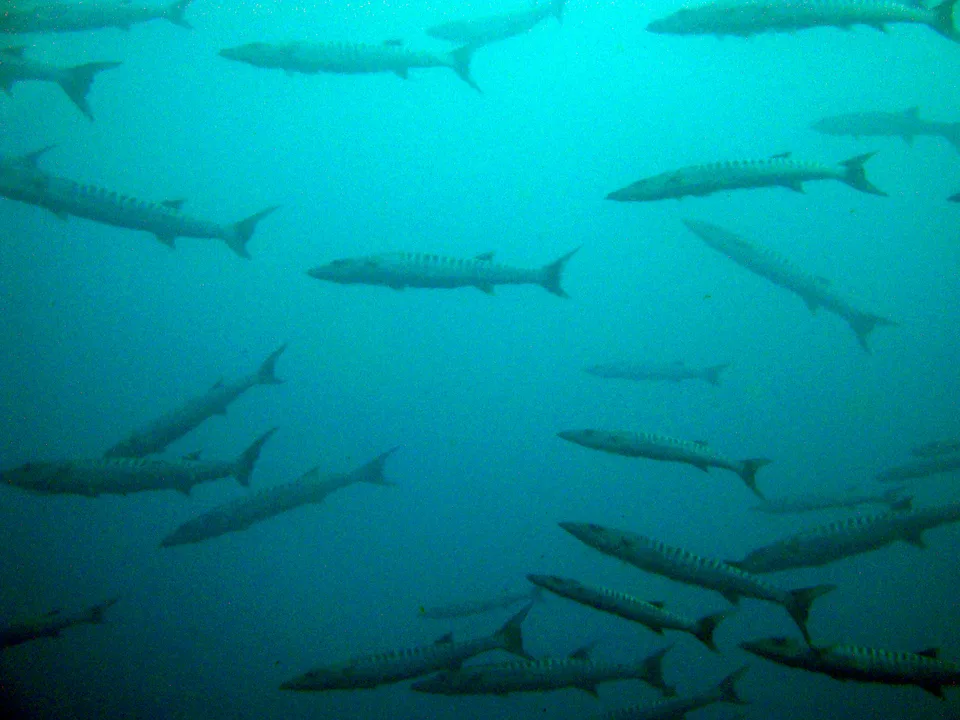
Generally solitary as an adult, although juveniles may form schools. An ambush predator, it often remains almost motionless before a very rapid attack. Mainly active during the day, it may also hunt at dusk or at night. Curious individuals may approach divers.
Observation zones
Reef, reef edge, lagoon, open water, seagrass beds, mangrove and wrecks near reefs.
Diet
Mainly fish, especially jacks, grunts, mullets, herrings and small reef fish. It also consumes cephalopods and occasionally crustaceans.
Reproduction
Oviparous
Identification marks
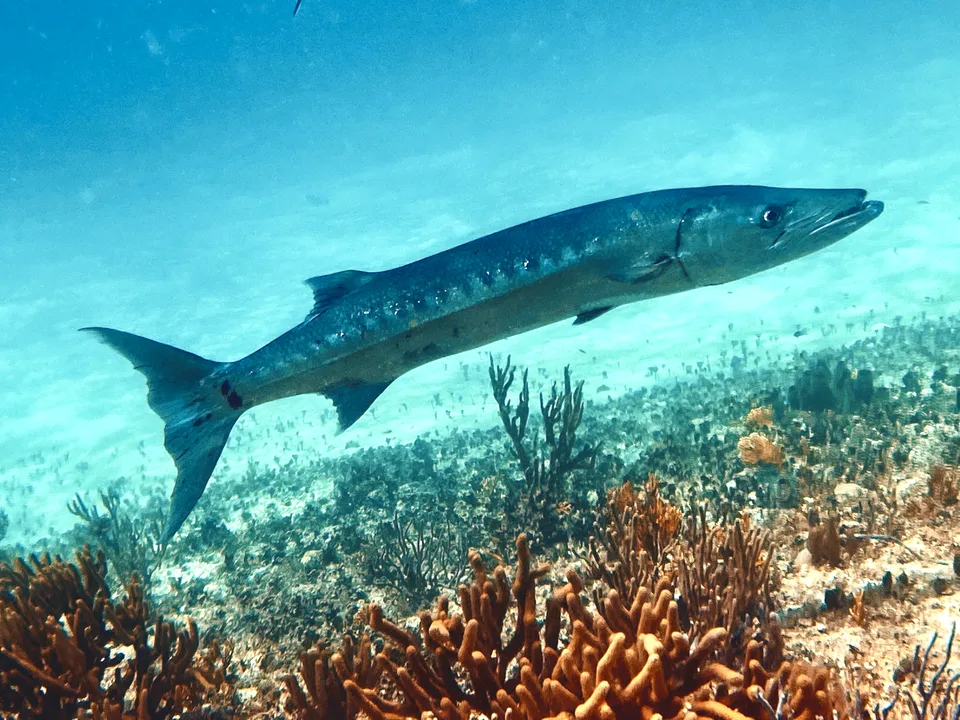
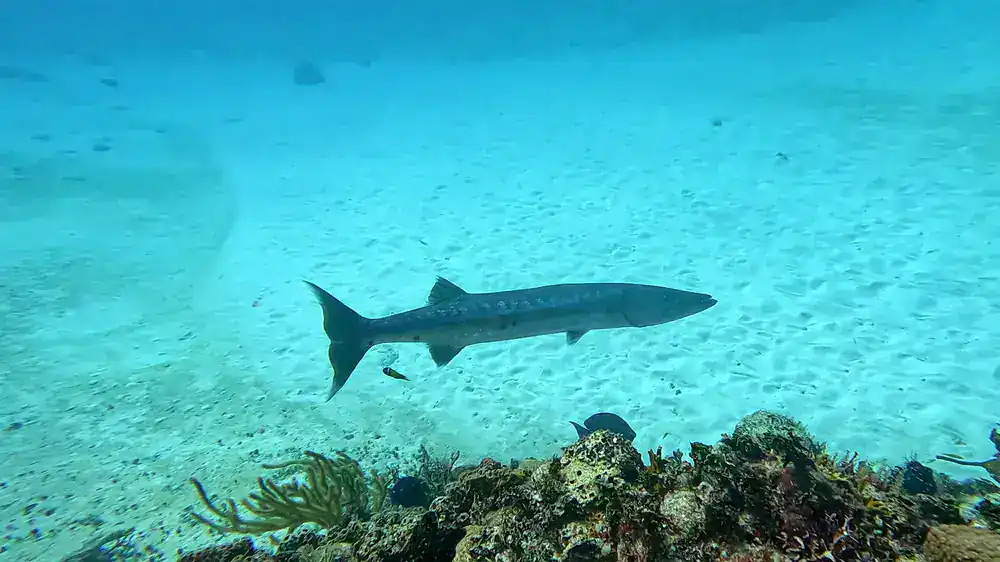
Large elongated, fusiform body; long pointed head with a prominent lower jaw and large fang-like teeth. Silvery sides, dark blue-gray back, two widely separated dorsal fins, forked tail, and irregular dark bars or black spots on the lower part of the sides.
Similar species
May be confused with other barracudas, notably the yellowmouth barracuda (Sphyraena viridensis) in the eastern Atlantic and Mediterranean. The great barracuda is generally much larger and bears irregular black spots or bars on the lower flanks; S. viridensis has a distinctly yellowish inside of the mouth. Confirm identification with a clear view of the body markings and mouth coloration.
Approach rules
Observe calmly while keeping several meters away, without blocking its path or cornering it. Do not touch, pursue, or feed the animal, do not spearfish nearby, and do not carry or handle shiny objects that could resemble prey. Avoid using flash at close range, remain attentive to its position, and give it space if it shows persistent interest.
Protection
Globally assessed as Least Concern on the IUCN Red List. It is not listed in the CITES Appendices. Fisheries management, catch limits, protected areas, and health advisories for consumption may vary by location.