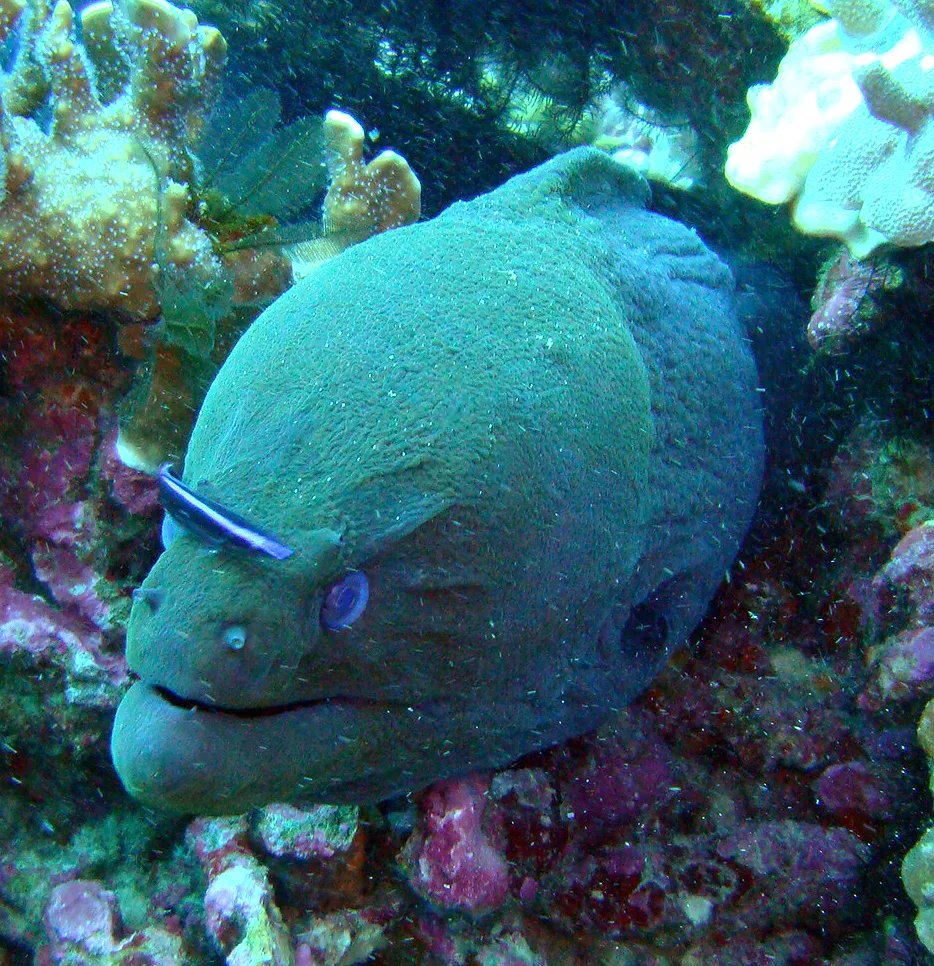
Indo-Pacific region, including the Red Sea and East Africa to the Hawaiian Islands and French Polynesia
Conservation status
Least Concern
Edibility
Edible, but large reef morays may accumulate ciguatoxins and can cause ciguatera poisoning. Consumption is best avoided where ciguatera is known or suspected.
Culinary quality / 5
3
Danger level
Dangerous
Usual observation depth
5–30 m
Behaviour
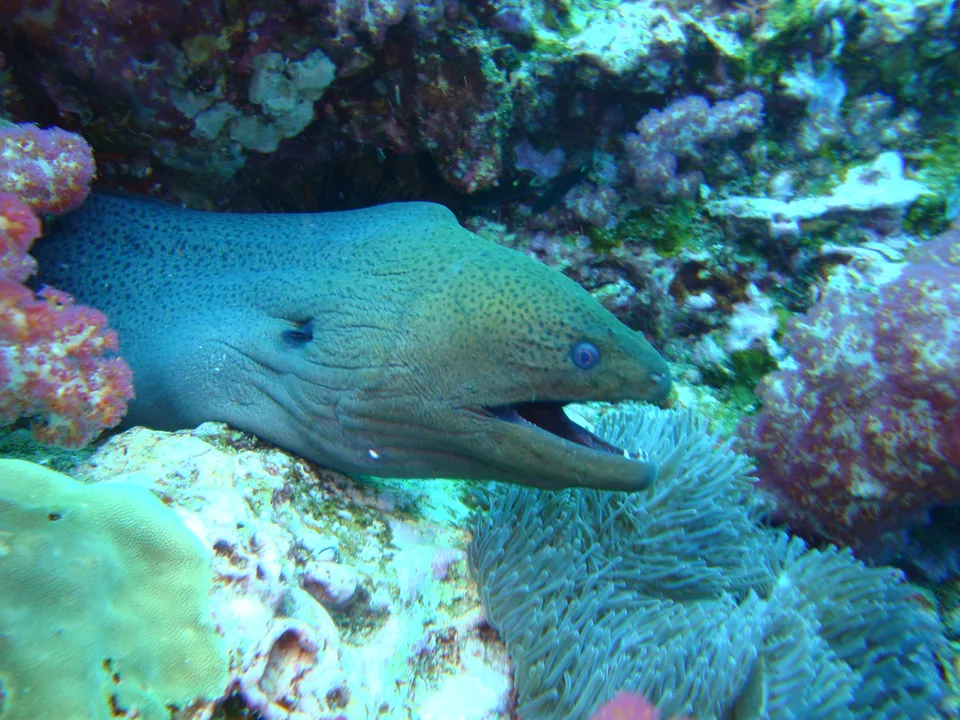
Generally solitary and territorial. Primarily nocturnal, it remains during the day with its head protruding from its shelter and actively hunts at night. It can share large reef structures with other moray eels.
Observation zones
Coral reef, reef slope, lagoon, channel, rocky crevice, cave and sometimes wreck structures.
Diet
Opportunistic predator feeding mainly on fish, crustaceans and cephalopods, particularly octopuses and squids.
Reproduction
Oviparous
Identification marks
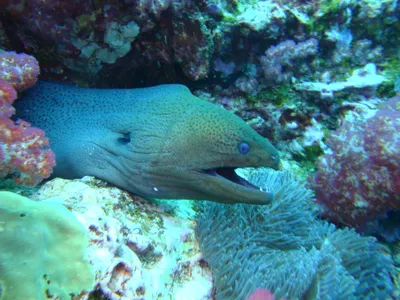
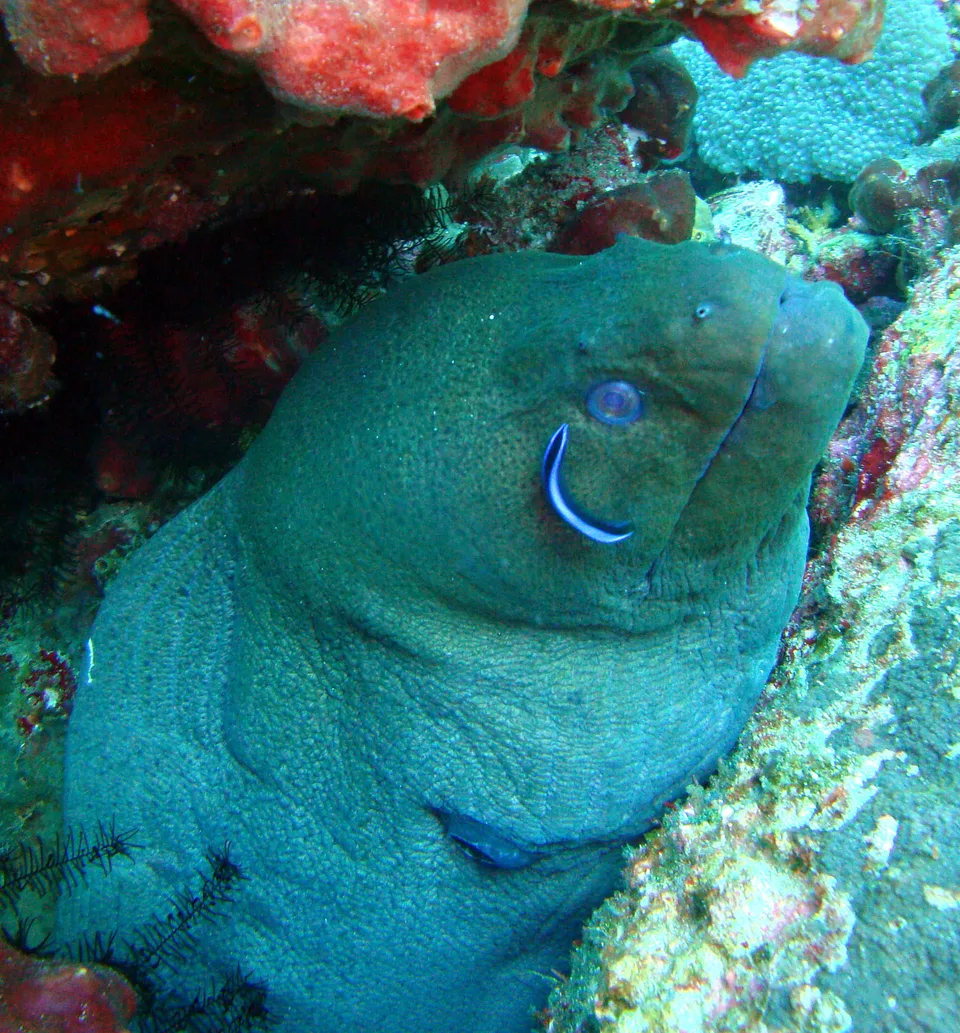
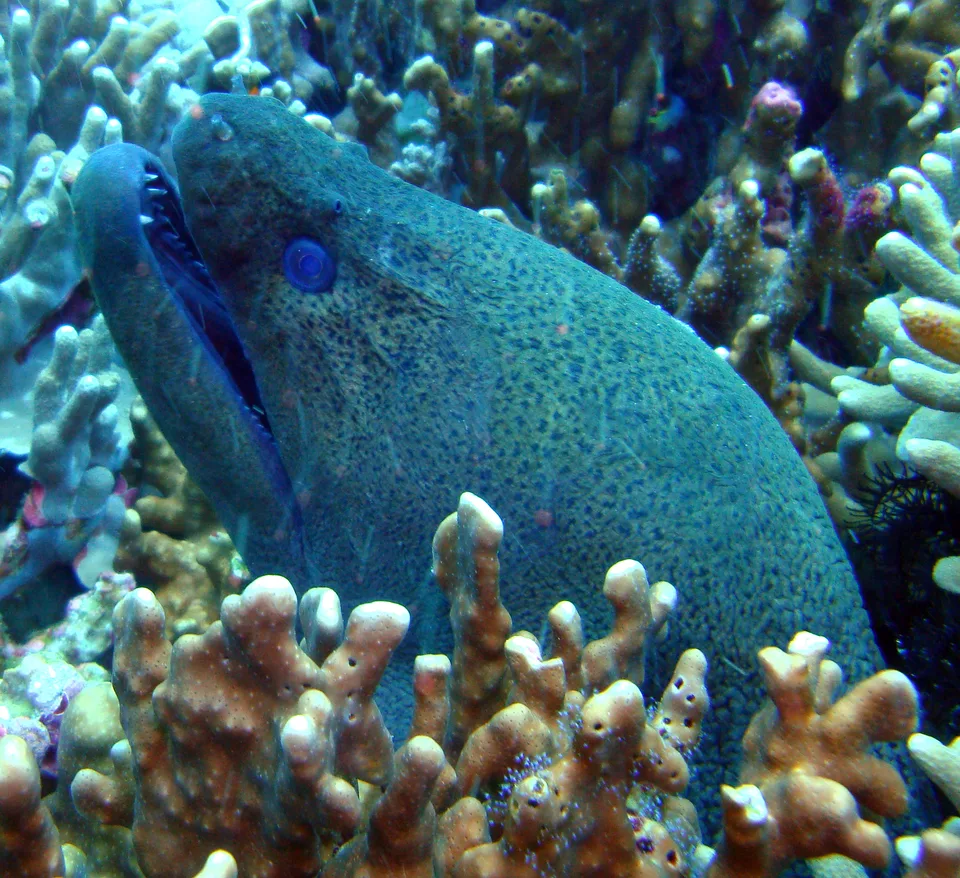
Very large moray eel with a robust body, often exceeding 1.5 m. The body, pale yellowish to brown, is covered with marbling and irregular dark brown or black spots; the head is broad and the jaws powerful.
Similar species
Often confused with the leopard moray or honeycomb moray (Gymnothorax favagineus). The latter generally has a broader and more regular dark network, honeycomb-shaped, on a light background; the giant moray has denser and more irregular marbling and a particularly massive silhouette.
Approach rules
Observe calmly from several meters away. Do not place hands, cameras, or other equipment near its shelter or mouth: moray eels may bite in self-defense. Never feed or bait it. Avoid repeated flashes at close range and leave it an escape route.
Protection
Assessed by the IUCN as Least Concern globally. It is not listed under CITES. Protect reef habitat and avoid capturing or disturbing animals, particularly in marine protected areas; local regulations may apply.