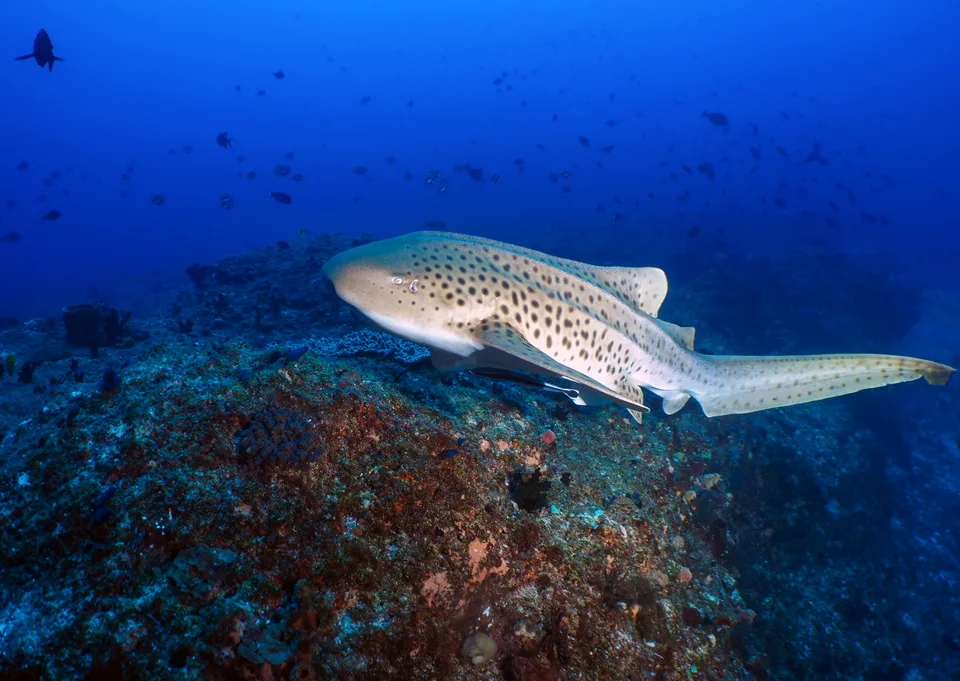
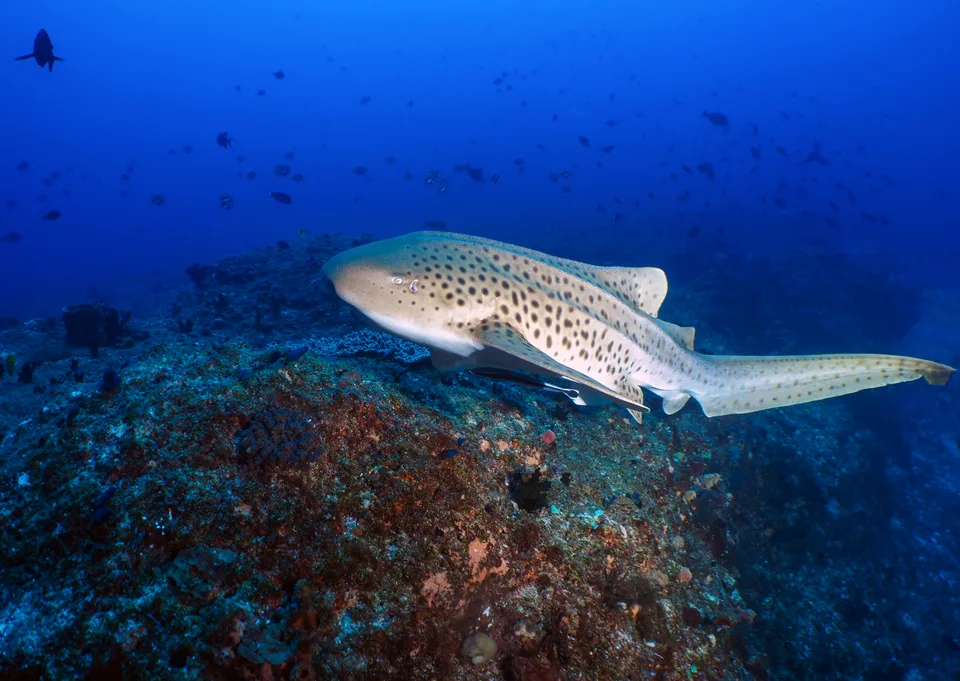
Shallow tropical coastal waters, especially coral reefs, reef flats, sandy bottoms, lagoons and rocky areas; juveniles may use sheltered shallow habitats.
Distribution
Indo-West Pacific: from the Red Sea and East Africa across South and Southeast Asia to northern Australia and the western Pacific islands.
Conservation status
Endangered
Edibility
Edible and taken in some fisheries, but this Endangered shark should not be consumed; choose sustainable alternatives. Consumption advice does not indicate local fishing legality.
Culinary quality / 5
3
Danger level
Harmless
Usual observation depth
5–30 m
Lifespan (years)
25
Behaviour
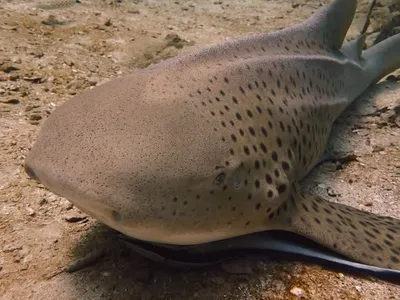
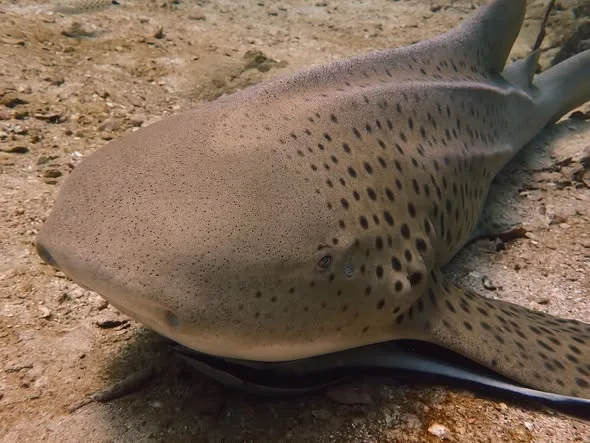
Usually solitary and mainly nocturnal. It often rests motionless on the bottom during the day and becomes more active at night while foraging. It is generally calm around divers.
Feeds mainly on benthic invertebrates, including molluscs and crustaceans, as well as small bony fishes.
Reproduction
Oviparous
Identification marks
A long, low-bodied shark with a very long tail nearly as long as the body. Adults are yellowish to tan with numerous dark spots; juveniles have distinctive dark vertical bands and spots.
Similar species
Adults may be mistaken for leopard sharks because of their spots, but zebra sharks have an exceptionally long tail and occur in the Indo-West Pacific. Juveniles can resemble banded sharks, but their long tail and later transformation into a spotted adult are distinctive.
Approach rules
Observe calmly from several metres away and allow the shark an unobstructed route to move away. Do not touch, ride, restrain, chase or feed it. Avoid flash photography, especially at night, and never block its path or corner it.
Protection
Globally assessed as Endangered on the IUCN Red List. Listed in CITES Appendix II; international commercial trade is regulated. Protect habitat, avoid disturbance and do not support consumption or trade.