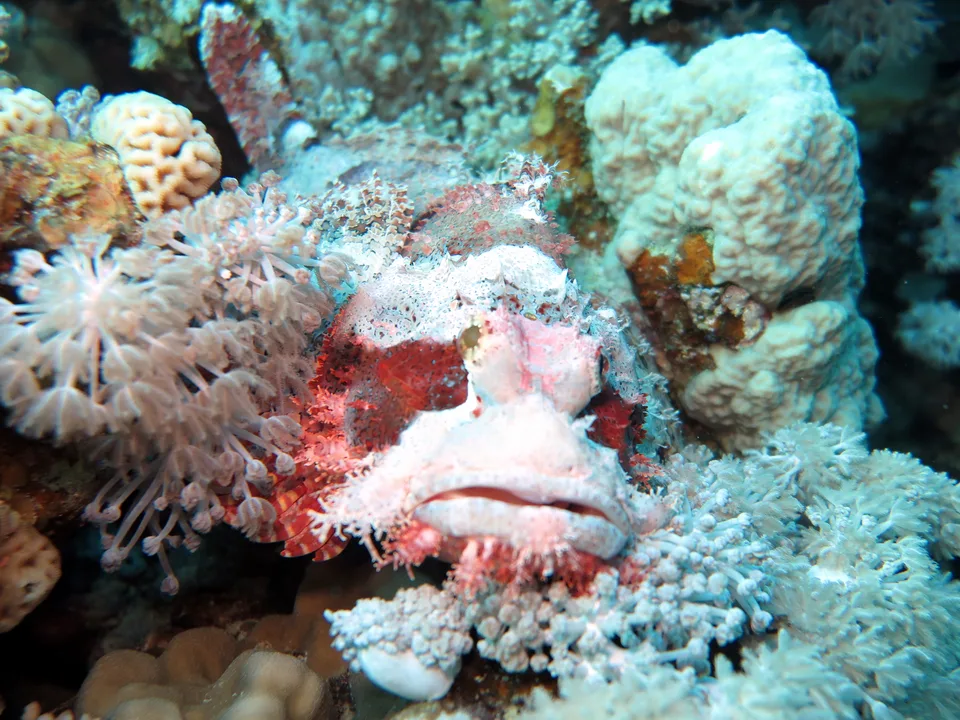
Typically found in rocky or coral reef environments.
Distribution
Found in the Indo-Pacific region.
Conservation status
Least Concern
Edibility
Potentially edible, but handling is hazardous because the dorsal, anal, and pelvic spines are venomous. Consume only when expertly identified and carefully prepared; culinary use is limited.
Culinary quality / 5
3
Danger level
Caution
Usual observation depth
5–30 m
Behaviour
Generally solitary and sedentary. It remains motionless and camouflaged during the day, hunts by ambush, and becomes more active at dusk and at night.
Observation zones
Coral reef, rocky reef, reef rubble, overhangs, crevices and algae-covered hard bottoms.
Diet
Carnivorous ambush predator, feeding primarily on small fish and crustaceans.
Reproduction
Oviparous
Identification marks
Stocky, large-headed scorpionfish with highly variable brown, cream, greenish or reddish camouflage; skin flaps and tuft-like cirri around the head and eyes; large mouth and clearly visible venomous fin spines.
Similar species
Often confused with other Indo-Pacific Scorpaenopsis, notably the devil scorpionfish (Scorpaenopsis diabolus) and ragged scorpionfish (Scorpaenopsis venosa). Color alone is not reliable; identification requires careful examination of the head cirri, skin flaps, fin markings and other diagnostic features.
Approach rules
Observe without touching and do not place hands near the fish or on the surrounding substrate. Keep a respectful distance, do not corner it, use flash sparingly, and never feed it. Its venomous spines can cause very painful injuries, even when it is motionless.
Protection
Assessed as “Least Concern” by the IUCN. No CITES listing is known. General recommendation: avoid collection or disturbance and respect site-specific conservation rules.