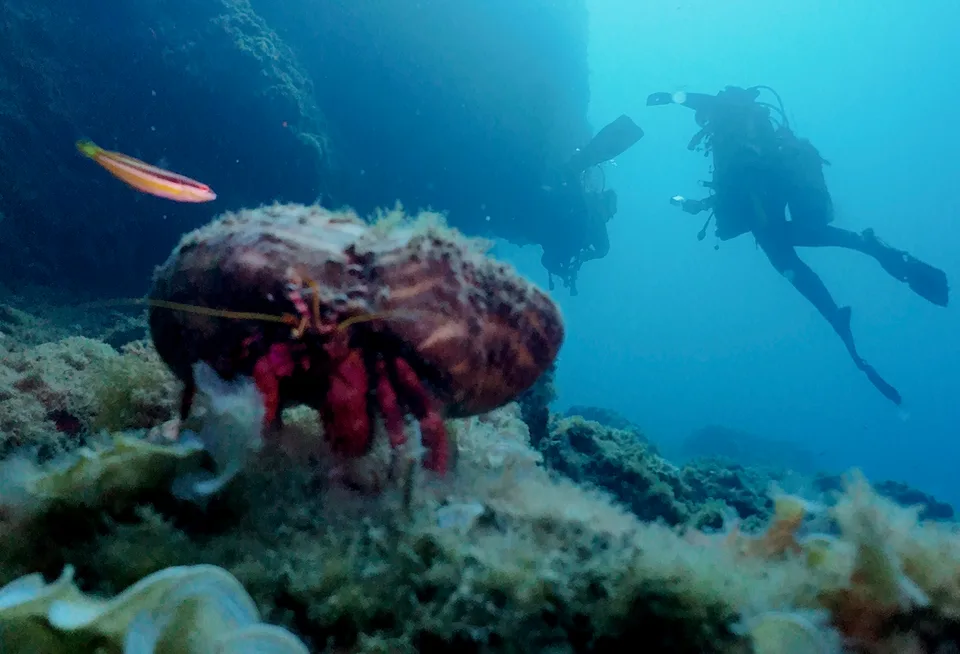
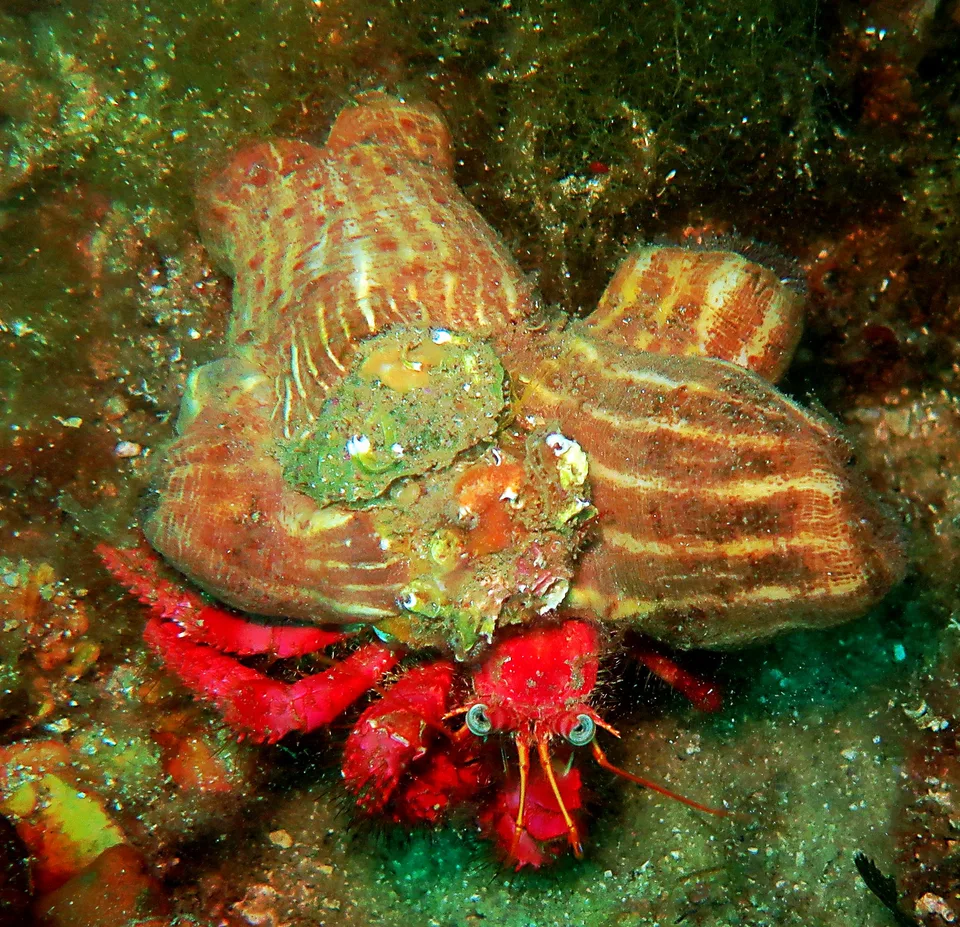
Bottom-dwelling species on sandy, muddy, gravelly and rocky seabeds, including seagrass areas and reef margins. It lives in empty gastropod shells, often with sea anemones attached.
Distribution
Northeastern Atlantic and the Mediterranean Sea, including nearby Atlantic island groups and coastal waters of southern Europe and northwestern Africa.
Conservation status
Not Evaluated
Edibility
Technically edible, but it yields little meat and has no well-established culinary reputation. Consume only if correctly identified, collected from safe approved waters, and thoroughly cooked.
Danger level
Harmless
Usual observation depth
5–50 m
Lifespan (years)
0
Behaviour
Usually solitary and mainly active at night or in low light. A mobile scavenger that searches the seabed for food and periodically changes shells as it grows; it may carry symbiotic sea anemones on its shell.
Observation zones
Sand, mud, gravel, seagrass beds, rocky reef edges and rocky bottoms; also around shells and rubble on coastal dives.
Diet
Omnivorous scavenger. Feeds on carrion, detritus, algae, organic particles and small bottom-dwelling invertebrates.
Reproduction
Oviparous
Identification marks
A large hermit crab with a reddish to orange body, long walking legs and strongly unequal claws. The enlarged left claw is broad and conspicuously granular or tuberculate. The soft abdomen remains hidden inside a borrowed gastropod shell.
Similar species
Can be confused with other Dardanus hermit crabs, especially Dardanus calidus in the Mediterranean and eastern Atlantic. Shell type and colour are variable; identification should rely on the broad, strongly granular enlarged left claw and detailed body pattern, preferably using regional identification references.
Approach rules
Observe without touching, lifting, turning over, feeding or removing the shell. Keep a respectful distance, move slowly and avoid blocking its path. Use minimal light at night; avoid flash when possible and never manipulate attached anemones.
Protection
Not listed in the CITES Appendices. No global IUCN assessment is currently known for this species; follow applicable site, regional and national wildlife-collection rules.