Typically found in shallow tropical and subtropical waters, often in coral reefs.
Distribution
Found in the Indo-Pacific region, including the Red Sea and parts of the Caribbean.
Conservation status
Least Concern
Edibility
Not a food species. Do not collect or consume; this coral is vulnerable and internationally regulated.
Danger level
Harmless
Usual observation depth
1–25 m
Behaviour
Sessile colonial coral. Its polyps extend mainly to capture suspended food and may retract when disturbed.
Observation zones
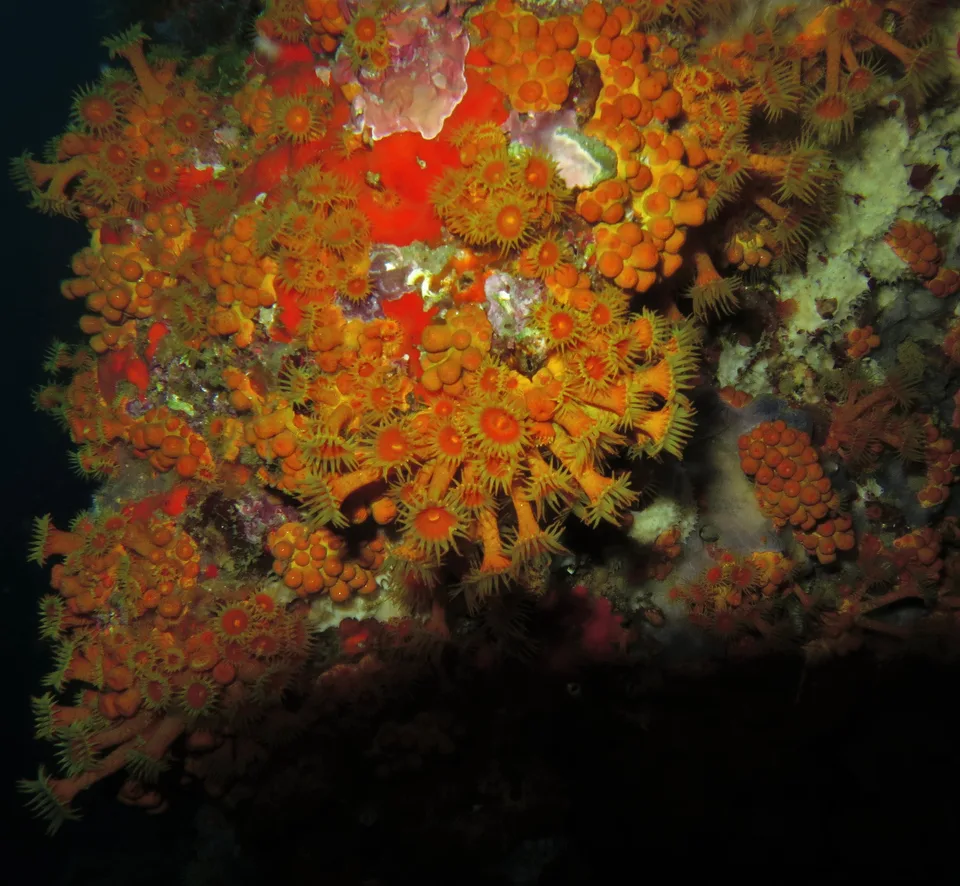
Rocky reef, shaded wall, overhang, crevice and cave entrance.
Diet
Suspension feeder; captures zooplankton and other small organic particles from the water column.
Reproduction
Oviparous
Identification marks
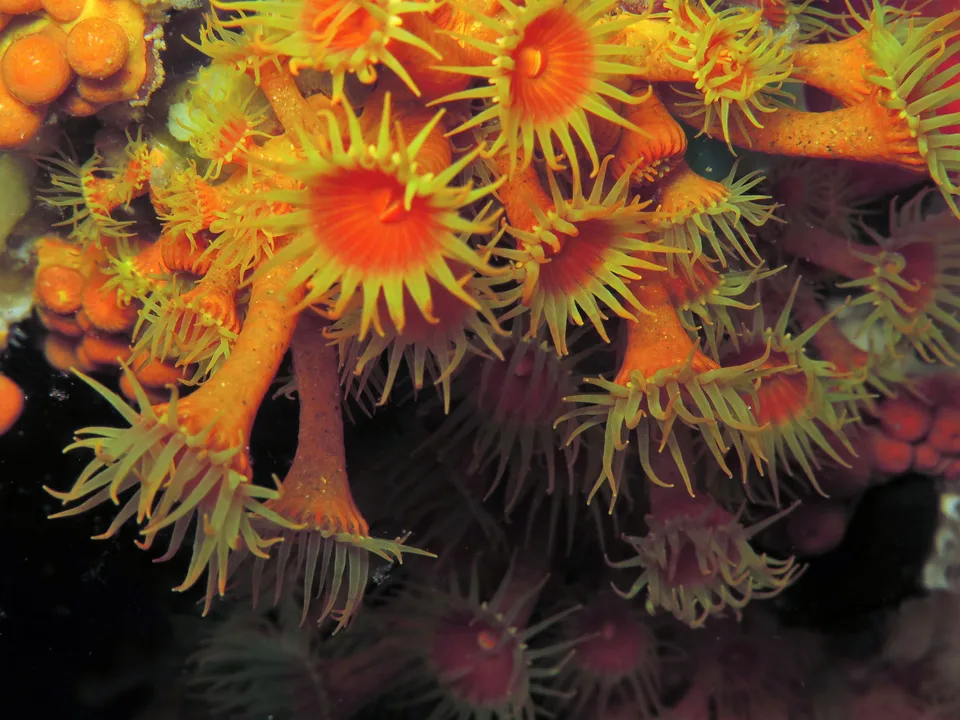
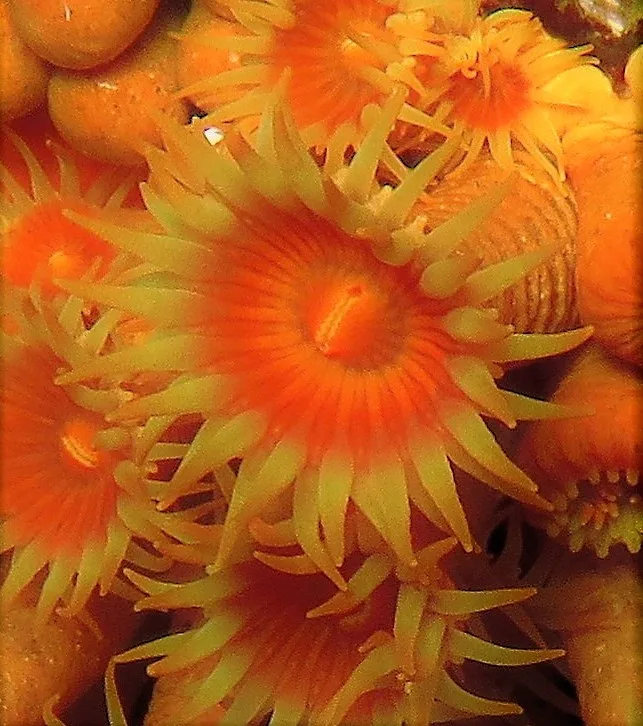
Dense colonies of bright orange to orange-red cup-shaped polyps. Each large polyp has numerous pale to orange tentacles, giving colonies a conspicuous flower-like appearance.
Similar species
May be confused with other Mediterranean cup corals. The solitary coral Balanophyllia europaea is not colonial; Astroides calycularis forms dense, bright-orange colonies of larger cup-like polyps.
Approach rules
Observe without touching, holding onto nearby rock, or stirring sediment. Keep a respectful distance, do not feed or collect it, and avoid repeated close-range flash photography.
Protection
IUCN Vulnerable. Listed in CITES Appendix II as a stony coral; collection and trade are internationally controlled. Follow applicable site and national conservation rules.