Open ocean and coastal waters, often near coral reefs.
Distribution
Tropical and subtropical waters worldwide.
Conservation status
Vulnerable
Edibility
Its meat has been consumed in some fisheries, but this Endangered species is unsuitable for consumption from a conservation perspective. Avoid purchasing or eating manta-ray products and follow applicable regulations.
Culinary quality / 5
2
Danger level
Harmless
Usual observation depth
?–40 m
Lifespan (years)
40
Behaviour
Generally solitary or observed in small groups, but it can form large seasonal aggregations to feed. Highly mobile, it visits cleaning stations, filters plankton and can make deep dives. Mainly active during the day, it may also feed at night when plankton is concentrated.
Observation zones
Open water, oceanic islands, seamounts, current-swept passes, reef slopes and cleaning stations; sometimes near the surface.
Diet
Filter feeder feeding on zooplankton, notably small crustaceans such as copepods, euphausiids and plankton resembling small shrimp, as well as fish eggs and larvae.
Reproduction
Ovoviviparous
Identification marks
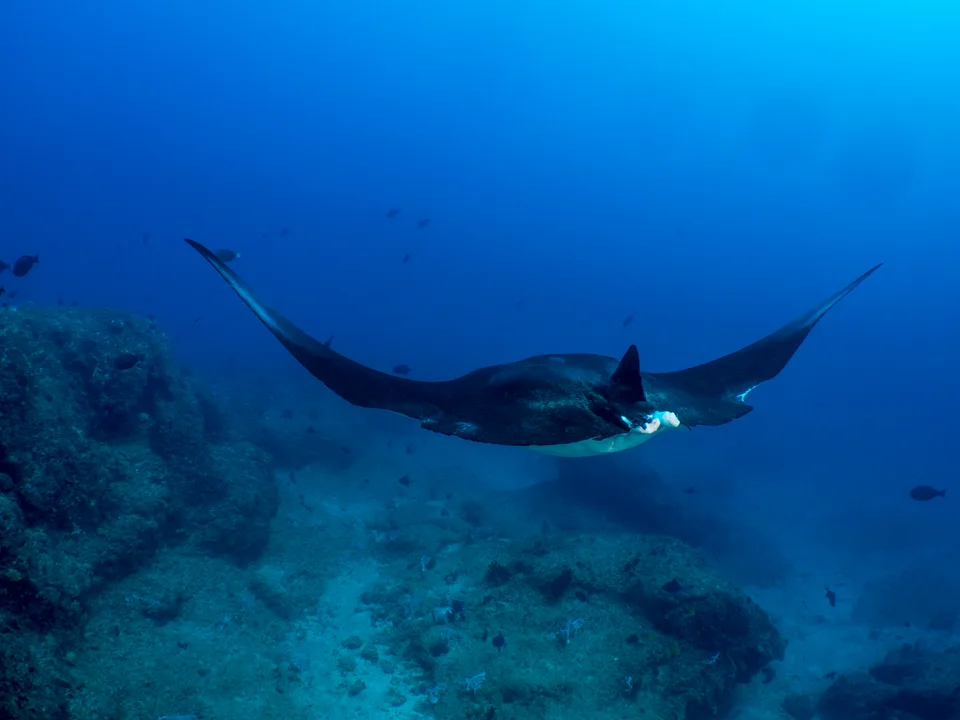
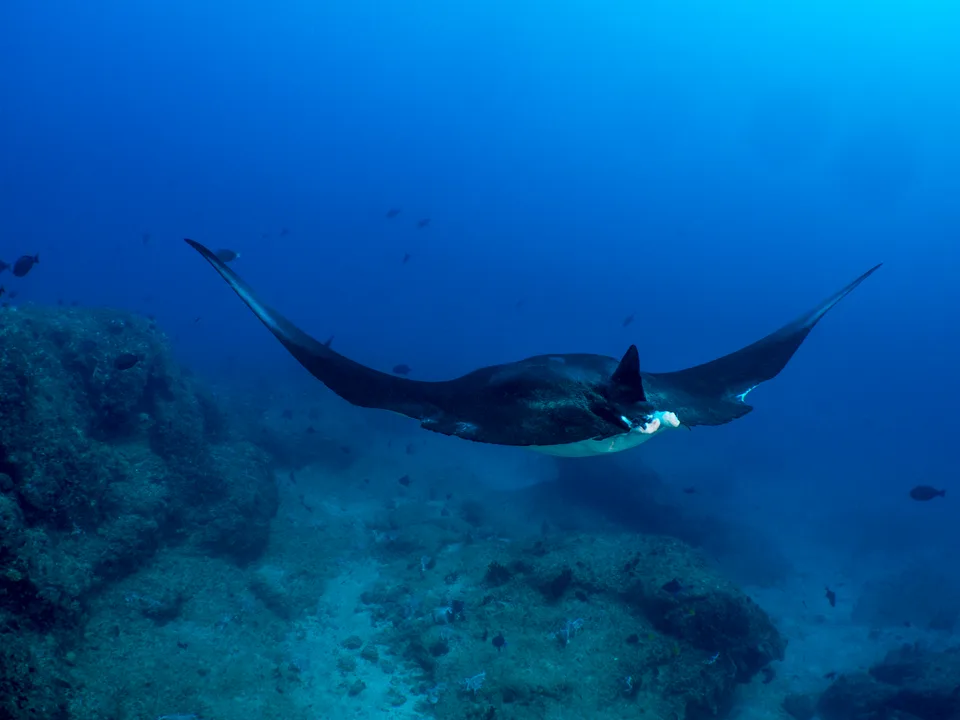
Very large diamond-shaped body, broad triangular pectoral fins, wide terminal mouth, two prominent cephalic lobes and a long whip-like tail lacking a functional stinger. The dorsal surface is generally dark with light markings on the shoulders; the ventral spot pattern, variable among individuals, allows photo-identification.
Similar species
It is most often confused with the reef manta ray, Mobula alfredi. M. birostris is generally larger, more oceanic, and has a relatively wider terminal mouth; identification from photographs should be based on several criteria, as coloration and markings vary. It may also be confused with the smaller devil rays (Mobula spp.), which have a narrower mouth and are markedly smaller.
Approach rules
Observe calmly and let the animal choose its distance and direction. Stay out of its path and away from cleaning stations; do not pursue, touch, ride, encircle or block its passage; keep at least 3 m away. Avoid flash photography and never feed or bait mantas.
Protection
IUCN Red List: Endangered. Listed in CITES Appendix II; international trade is regulated. This slow-reproducing species is vulnerable to targeted fishing and bycatch; avoid trading in its products and favor responsible wildlife tourism without contact.