Rocky substrates, coralligenous reefs, crevices and cavities, from shallow coastal waters to deeper rocky areas.
Distribution
Northeastern Atlantic from southern Norway to Mauritania, including the Azores and Canary Islands, and the western and central Mediterranean Sea.
Conservation status
Vulnerable
Edibility
Edible and highly valued for its meat. The species is listed as Vulnerable; choose sustainably sourced seafood and respect all applicable local restrictions.
Culinary quality / 5
5
Danger level
Caution
Usual observation depth
5–70 m
Behaviour
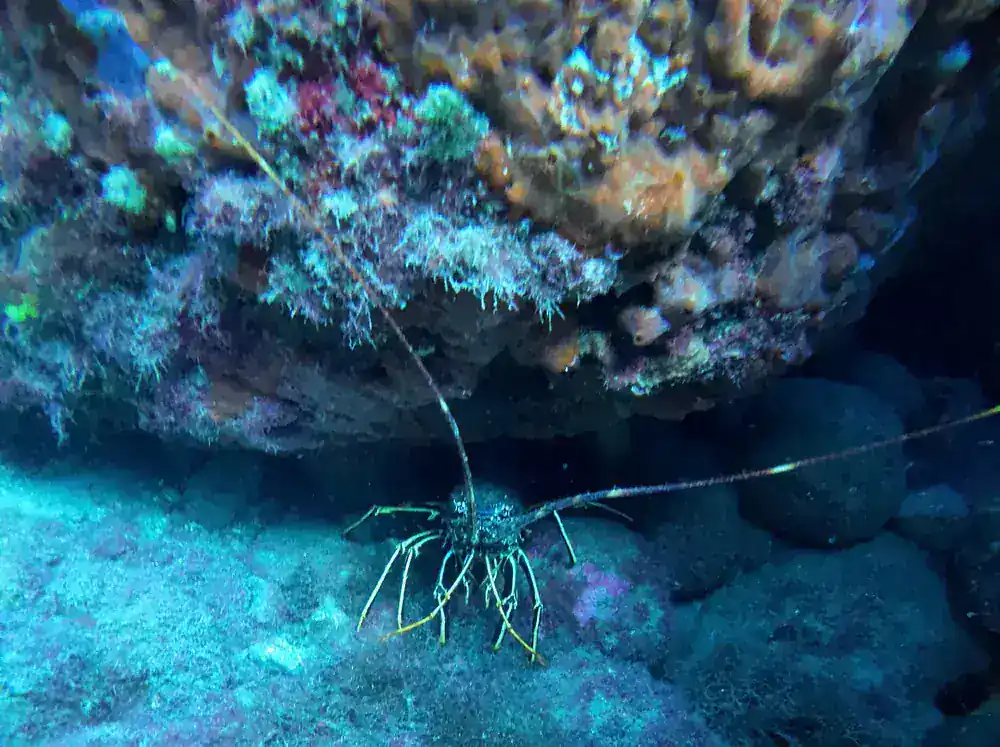
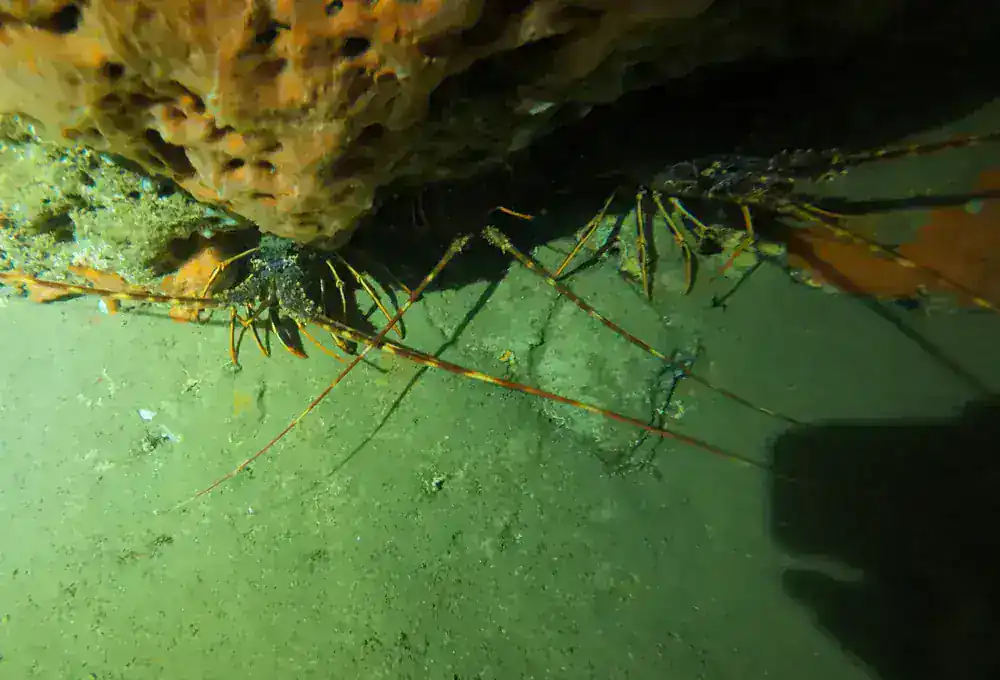
Primarily nocturnal. It generally shelters in a crevice or cave during the day and forages at night; adults may be solitary or in loose aggregations when shelters are abundant.
Observation zones
Rocky reef, coralligenous reef, boulder field, overhang, fissure, cave and some wrecks offering suitable shelters.
Diet
Omnivorous benthic predator, consuming mollusks, crustaceans, echinoderms, worms, carrion, as well as certain algae or plant matter.
Reproduction
Oviparous
Identification marks
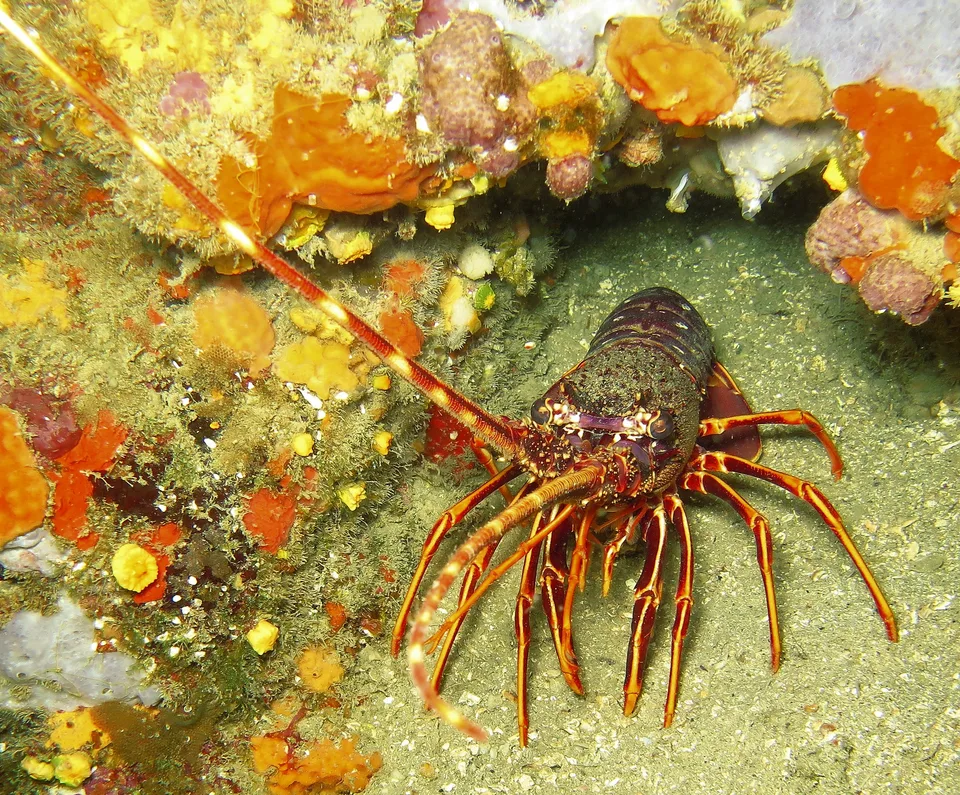
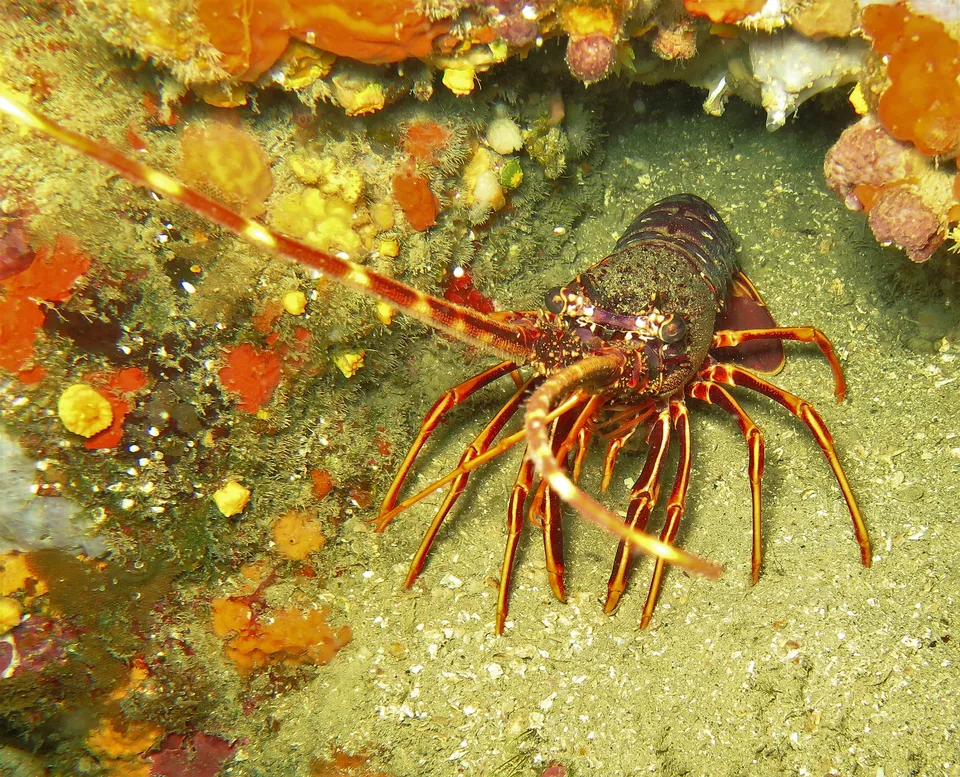
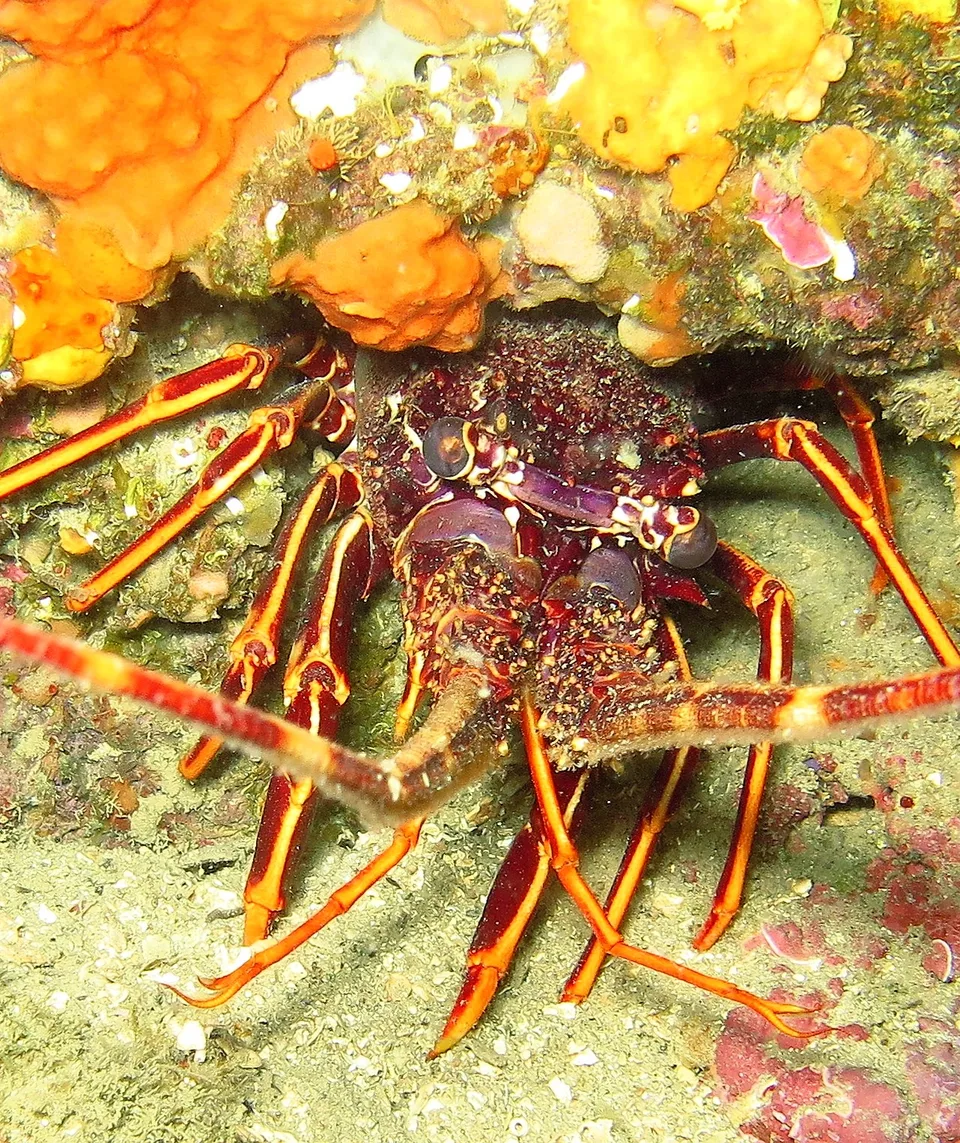
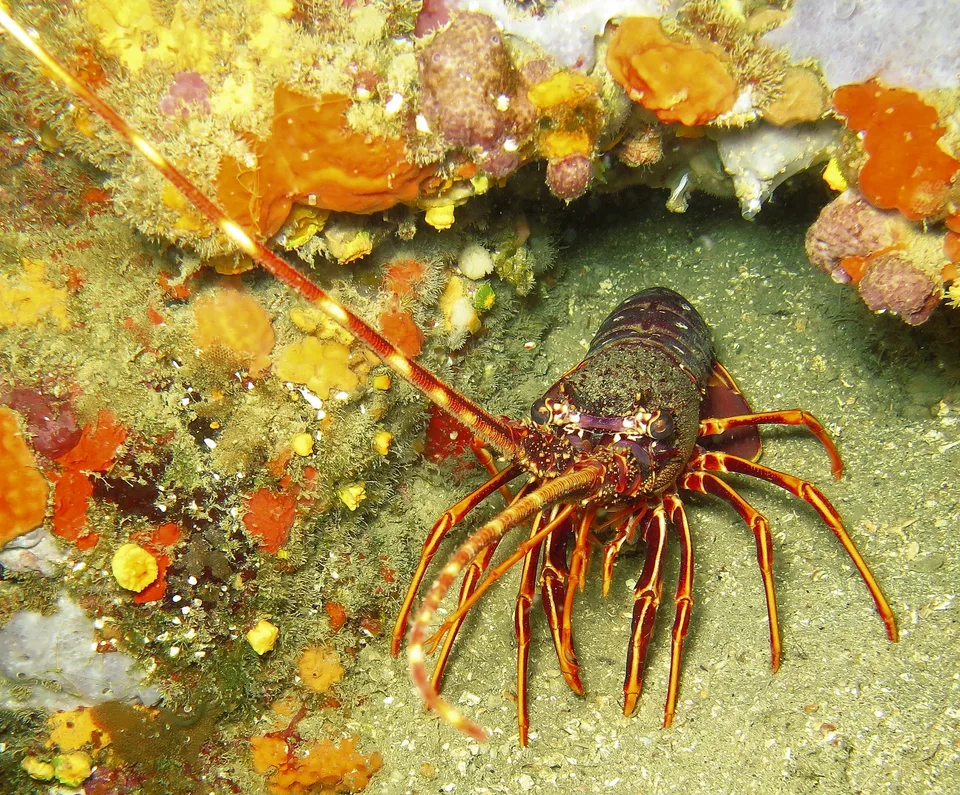
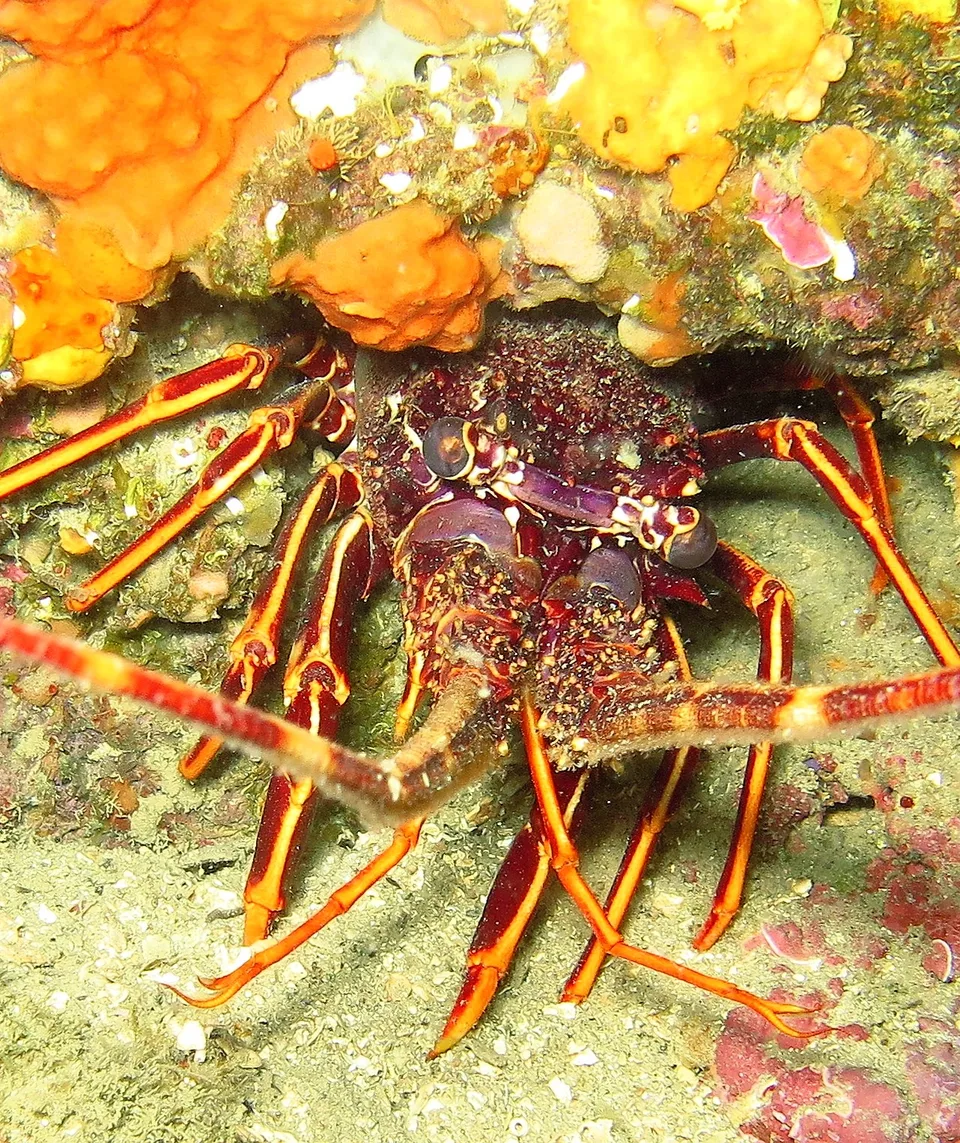
Large spiny lobster lacking large claws; reddish-brown to purplish carapace covered with sharp spines, long orange to red antennae and muscular segmented tail. The abdomen often bears pale yellowish spots.
Similar species
May be confused with the pink spiny lobster, Palinurus mauritanicus, which generally lives much deeper and is more uniformly pink. Slipper lobsters, such as Scyllarides latus, have broad, flattened antennae, unlike the long, whip-like antennae of P. elephas.
Approach rules
Observe calmly without blocking its access to shelter. Keep approximately 1 to 2 m away, do not touch or handle the animal, avoid repeated flashes at close range, and never feed it.
Protection
IUCN Red List: Vulnerable (VU). The species is not listed under CITES. Declines are associated with fishing pressure and habitat impacts; conservation and harvest measures vary by jurisdiction.