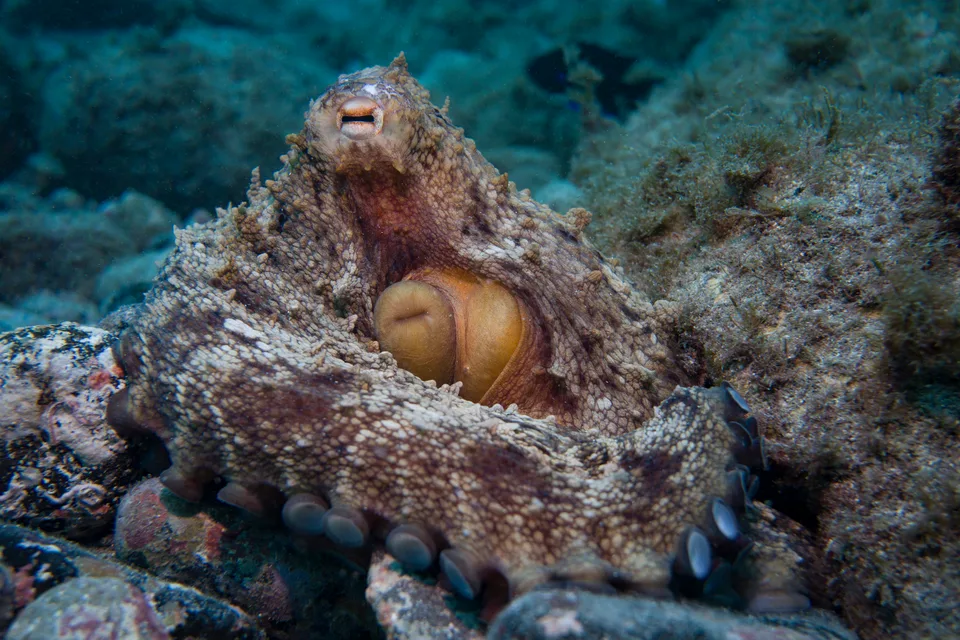
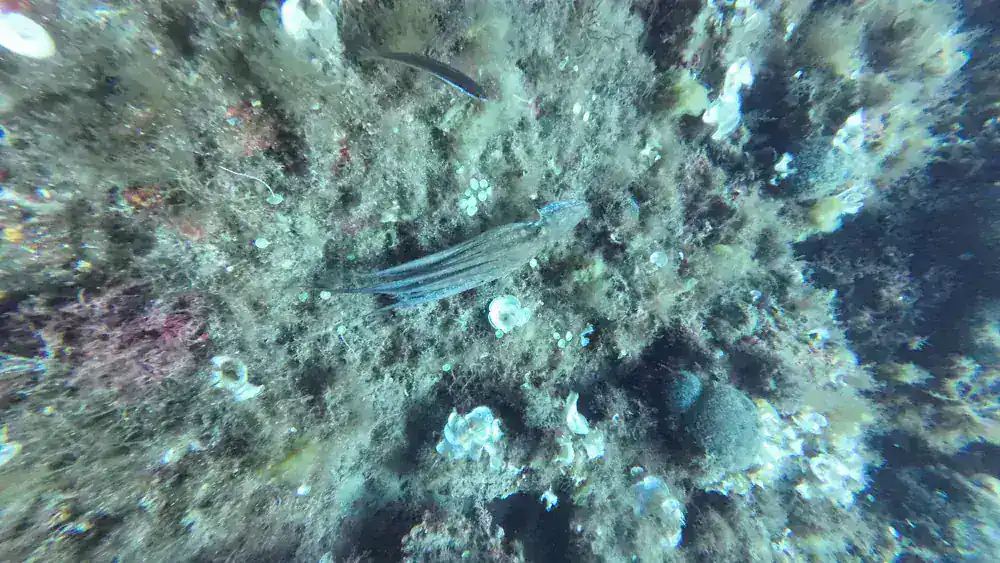
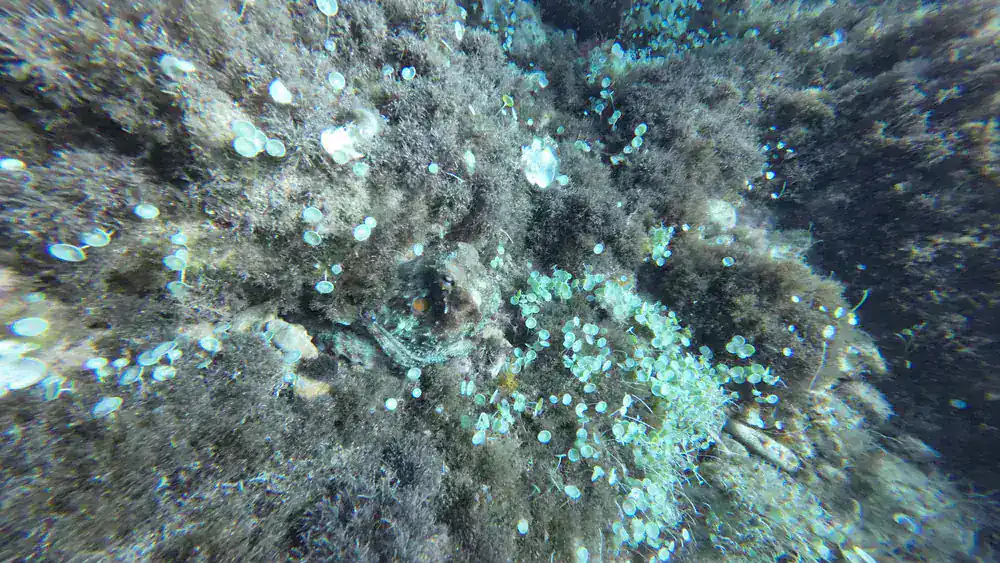
Octopus vulgaris typically inhabits shallow coastal waters, often found in rocky crevices and sandy bottoms.
Distribution
Octopus vulgaris is distributed in tropical and temperate waters around the world, particularly in the Mediterranean Sea and along the Atlantic coasts.
Conservation status
Least Concern
Edibility
Edible and highly regarded in many cuisines. Cook thoroughly; obtain only from legal, sustainable sources and follow local health advice.
Culinary quality / 5
5
Danger level
Caution
Usual observation depth
?–50 m
Lifespan (years)
2
Behaviour
Generally solitary and territorial, it shelters in a den during the day and often becomes more active at dusk and at night. Intelligent and highly mobile, it uses camouflage, changes in skin texture, ink, and jet propulsion to avoid threats.
Observation zones
Rocky reefs, scree, crevices, caves, seagrass beds, sand and mud; also artificial structures such as jetties and wrecks.
Diet
Active predator feeding mainly on crabs and other crustaceans, bivalves, gastropods and fish. It uses its arms, suckers, beak and venomous saliva to capture and consume its prey.
Reproduction
Oviparous
Identification marks
Robust octopus with a rounded mantle, eight arms of generally similar length, and two rows of suckers on each arm. Skin color and texture change rapidly; color alone is therefore unreliable, and identification is difficult within the O. vulgaris complex.
Similar species
Often confused with other members of the Octopus vulgaris complex. The long-armed octopus, Octopus macropus, generally has proportionally longer arms and clearly visible pale spots. Reliable species identification may require location, detailed anatomical examination, or genetic analyses.
Approach rules
Approach slowly and stay clear of the entrance to its shelter; do not touch, chase, handle, block its escape, or feed it. Avoid flash and bright lights, especially at night. Give it more space if it displays a dark warning coloration, an erect posture, or attempts to flee.
Protection
Classified as “Least Concern” on the IUCN Red List. It is not listed in the CITES appendices. Fisheries and collection management regulations, where they exist, are local or regional.