Edible and locally consumed, but tropical reef fish can present a ciguatera poisoning risk in some areas, especially large individuals. Follow local health advisories.
Culinary quality / 5
3
Danger level
Harmless
Usual observation depth
5–30 m
Lifespan (years)
13
Behaviour
Diurnal grazer, observed alone, in pairs or in loose groups while feeding. It generally grazes reef surfaces during the day and shelters in the reef structure at night.
Observation zones
Coral reef, reef flat, lagoon, reef pass, coral rubble zone and outer slope.
Diet
Primarily benthic algae, notably turf and coralline algae, scraped or extracted from hard reef surfaces; it also ingests associated detritus.
Reproduction
Oviparous
Identification marks
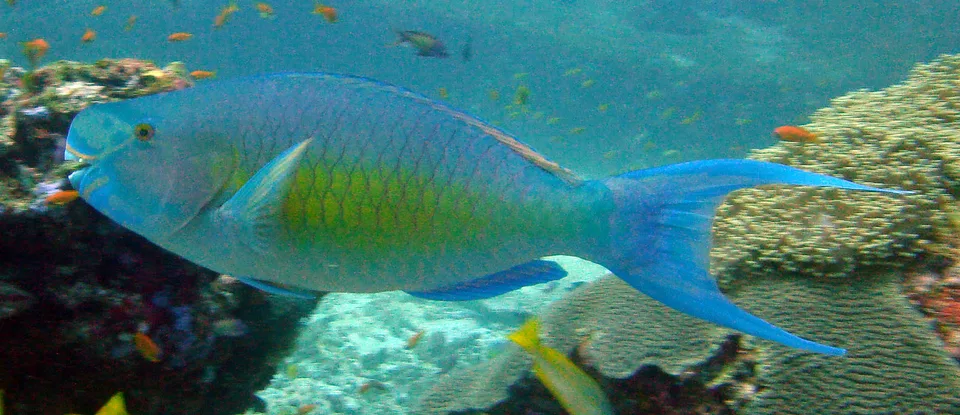
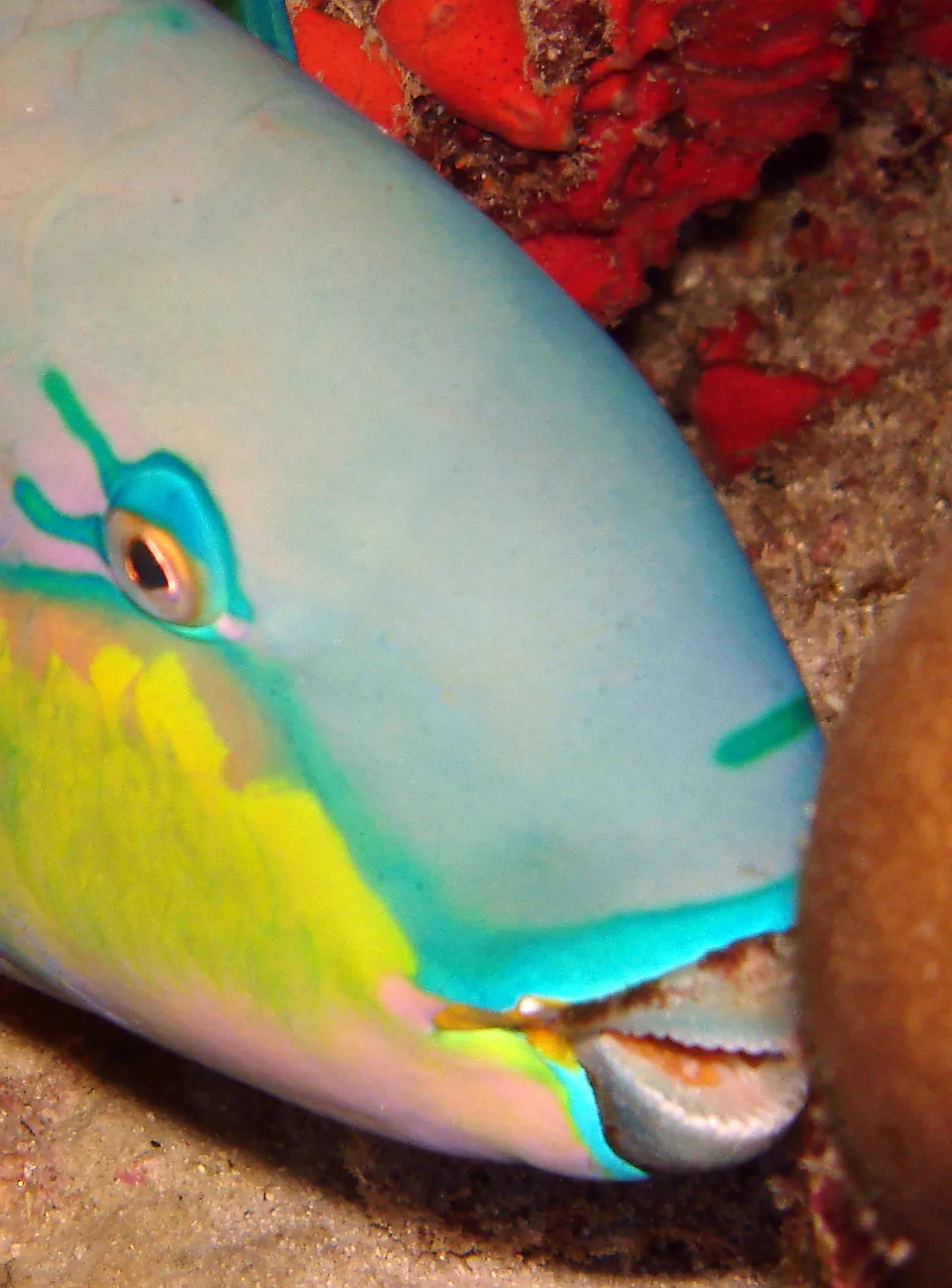
Sturdy parrotfish with fused, beak-shaped teeth. Adults are generally bluish to greenish, with several vertical blue bars visible on the rear half of the body and yellow-orange markings around the head; coloration varies according to sex and life phase.
Similar species
May be confused with other blue-green parrotfishes of the genus Scarus, notably the common parrotfish (Scarus psittacus) and similar regional species. Check the combination of distinct blue bars, head markings, body shape, and location; color alone is not entirely reliable because phases differ.
Approach rules
Approach slowly and calmly, keep at least 2 to 3 m away, and do not block its feeding or escape route. Do not touch it, chase it, feed it, or corner it. Avoid repeated flashes at close range.
Protection
Listed as Least Concern on the IUCN Red List. It is not listed under CITES. No general restrictions on international trade are indicated, but reef habitats and local populations benefit from responsible fishing and reef protection measures.