Indo-Pacific region, including the Red Sea and the coast of East Africa.
Conservation status
Least Concern
Edibility
Do not eat. Like other pufferfishes, it may contain the potentially fatal neurotoxin tetrodotoxin; cooking does not reliably make it safe.
Danger level
Caution
Usual observation depth
1–20 m
Behaviour
Generally solitary, sometimes observed in pairs. Primarily active during the day, it often rests or shelters in the reef structure. It can inflate when threatened.
An omnivorous benthic feeder that consumes algae and various sessile or bottom-dwelling invertebrates, notably sponges, tunicates, molluscs, crustaceans and sometimes coral material.
Reproduction
Oviparous
Identification marks
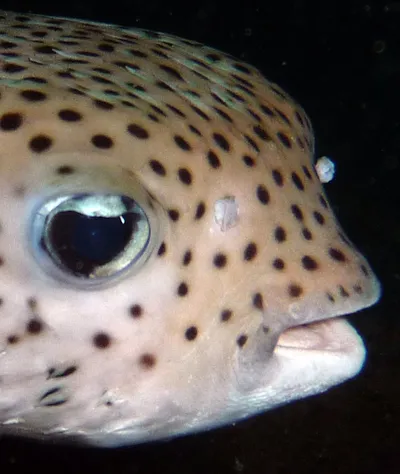
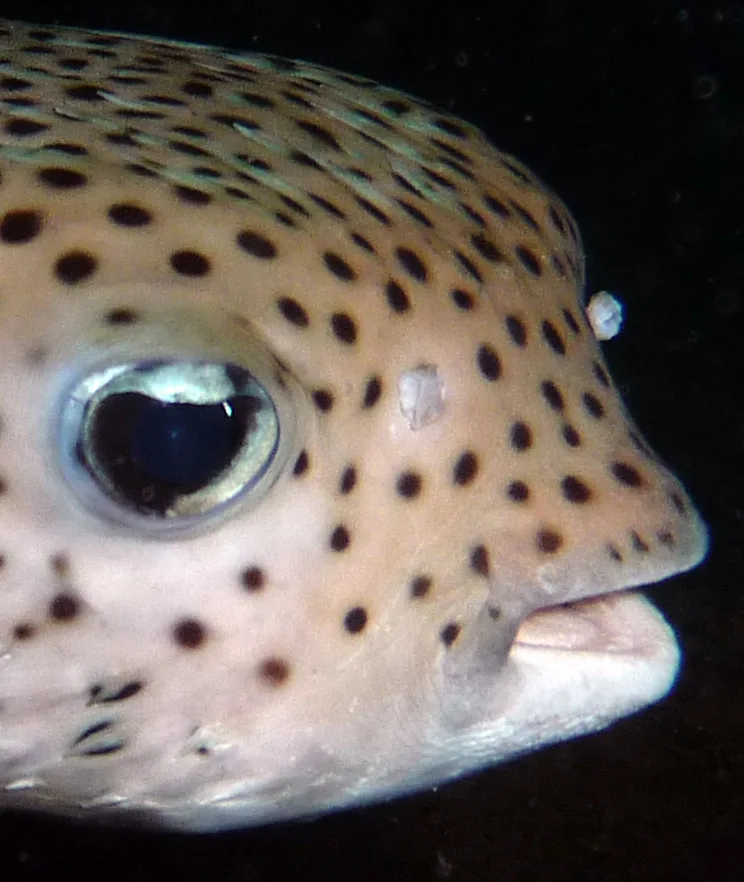
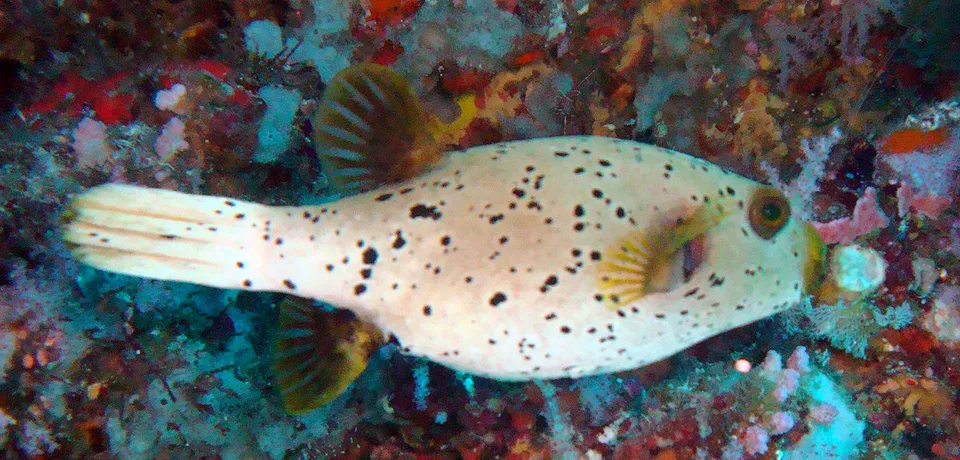
Stocky and rounded pufferfish, with a blunt face reminiscent of that of a dog, a small mouth and clearly visible nostrils. Coloration is variable, often grey, bluish, yellowish or brown, with numerous small dark spots; a dark mark often extends behind the eye.
Similar species
May be confused with other pufferfish of the genus Arothron. Arothron hispidus is generally more elongated and bears lighter spots and lines; Arothron meleagris often has a darker body with contrasting pale spots; Arothron stellatus grows much larger and has larger star-shaped markings.
Approach rules
Observe it calmly while keeping a respectful distance; do not touch it, pursue it, corner it, or try to make it inflate. Avoid flash at close range and never feed it. Do not handle it because of its toxin and powerful beak-like bite.
Protection
Globally assessed as Least Concern on the IUCN Red List. It is not listed in the CITES appendices. Protect reef habitat and avoid collection or disturbance.