Found in shallow coastal waters, often on rocky substrates.
Distribution
Primarily found in the Indo-Pacific region.
Conservation status
Data Deficient
Edibility
Not suitable for consumption. Like other phyllidiid nudibranchs, it contains defensive toxic compounds acquired from its sponge diet.
Danger level
Caution
Usual observation depth
1–20 m
Behaviour
Generally solitary and active during the day, it crawls slowly over the reef in search of sponges. It relies on its conspicuous warning coloration and chemical defenses rather than on speed or camouflage.
Observation zones
Coral reef, reef flat, reef slope, rubble zones and rocky substrate.
Diet
Feeds mainly on marine sponges, particularly chemically defended sponges; it sequesters certain compounds derived from sponges for its own defense.
Reproduction
Oviparous
Identification marks
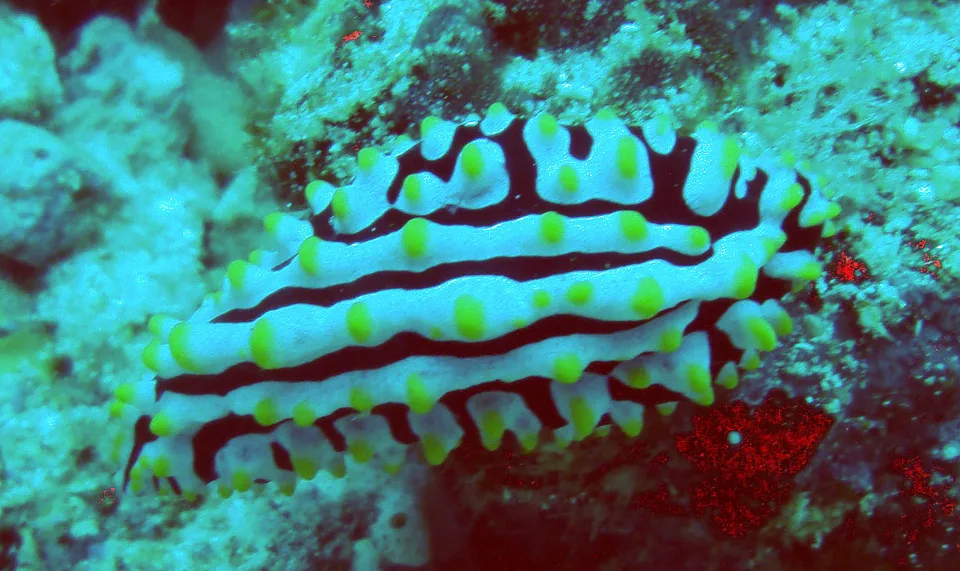
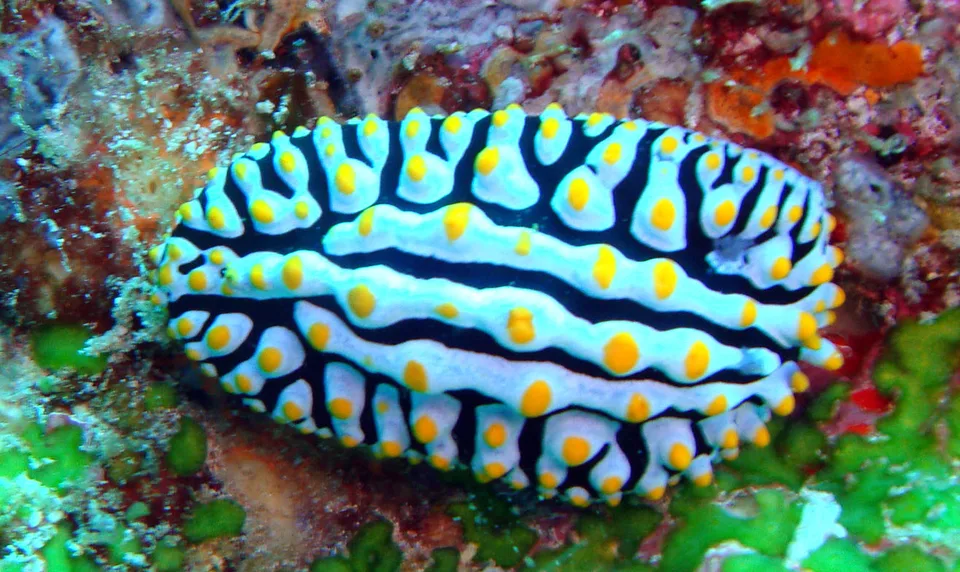
Large dorid nudibranch with a firm body, black background and yellow to orange longitudinal ridges, as well as verrucous tubercles. The rhinophores are black and retractile; it has no external gills, characteristic of Phyllidiidae.
Similar species
May be confused with other Phyllidia species. Phyllidia coelestis is generally lighter, often bluish-white between the black lines, whereas P. varicosa has more black and prominent yellow-orange ridges. Phyllidia ocellata usually bears more isolated yellow tubercles or ocelli, rather than continuous longitudinal ridges.
Approach rules
Observe without touching or collecting. Keep a respectful distance, do not block its path, and do not feed it. Use moderate lighting; avoid close and repeated flashes, particularly at night.
Protection
Listed as “Least Concern” on the IUCN Red List. It is not listed in the CITES appendices. Avoid collection and disturbance, particularly in reef habitats.