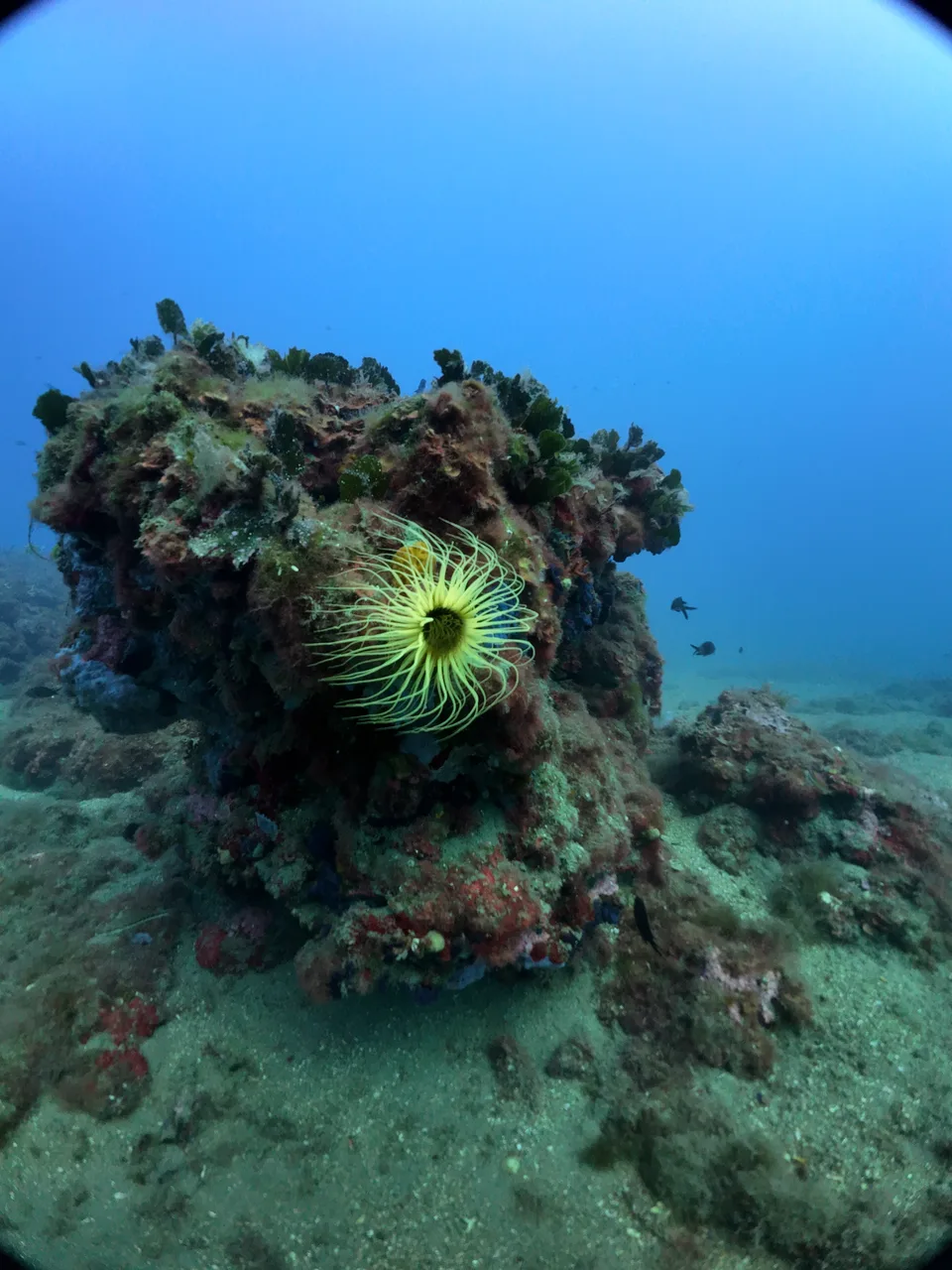
Found in sandy or muddy substrates, often buried in the sediment.
Distribution
Native to the northeastern Atlantic, from Norway to the Mediterranean.
Conservation status
Data Deficient
Edibility
Not regarded as food; culinary use is undocumented. Do not handle or consume it, as its tentacles contain stinging cells.
Danger level
Caution
Usual observation depth
5–30 m
Behaviour
Solitary and sessile ambush predator. It remains anchored in its tube and deploys its tentacles to feed; it can quickly retract into the tube when disturbed. Feeding activity may be greater at night.
Observation zones
Sand, mud, sheltered coastal bottoms and sandy patches near rocky reefs.
Diet
Capture of zooplankton, small crustaceans and other small suspended or drifting animals using its stinging tentacles.
Reproduction
Oviparous
Identification marks
Large tube-dwelling anemone, with a crown of long, slender external tentacles and a shorter inner ring around the mouth. Coloration variable, often whitish, beige, brown, violet or striped; only the tentacles are usually visible above the sediment.
Similar species
Can be confused with other tube anemones, notably species of Pachycerianthus and Cerianthus lloydii. Reliable identification may require examination of the arrangement of the tentacles, the tube, and microscopic anatomical characters; color alone is not reliable.
Approach rules
Observe without touching, feeding, stirring the sediment, or placing equipment near the tube. Keep a respectful distance to prevent it from retracting. Avoid flash at close range and never handle the tentacles, which may sting.
Protection
Not listed under CITES and not known to have undergone a global IUCN assessment. Apply good general wildlife observation practices and avoid collecting or damaging individuals and their habitat.