Coral reefs and rocky areas in tropical and subtropical waters.
Distribution
Found in the Indo-Pacific region, including the Red Sea and the coasts of East Africa, Southeast Asia, and the Pacific Islands.
Conservation status
Least Concern
Edibility
Edible, but consumption should be approached cautiously because large reef fish can carry ciguatera toxins in some regions. Do not eat fish suspected of ciguatera exposure.
Culinary quality / 5
3
Danger level
Caution
Usual observation depth
1–30 m
Lifespan (years)
7
Behaviour
Generally observed alone or in pairs. Diurnal and territorial, it actively searches for food on the bottom. During the breeding season, adults vigorously defend their nest and may charge or bite intruders, including divers.
Observation zones
Coral reef, reef flat, lagoon, pass, sandy bottom, rubble zone and reef slope.
Diet
Powerful omnivorous predator, feeding mainly on sea urchins, crustaceans, mollusks, worms, and other benthic invertebrates; it may also consume algae and coral fragments.
Reproduction
Oviparous
Identification marks
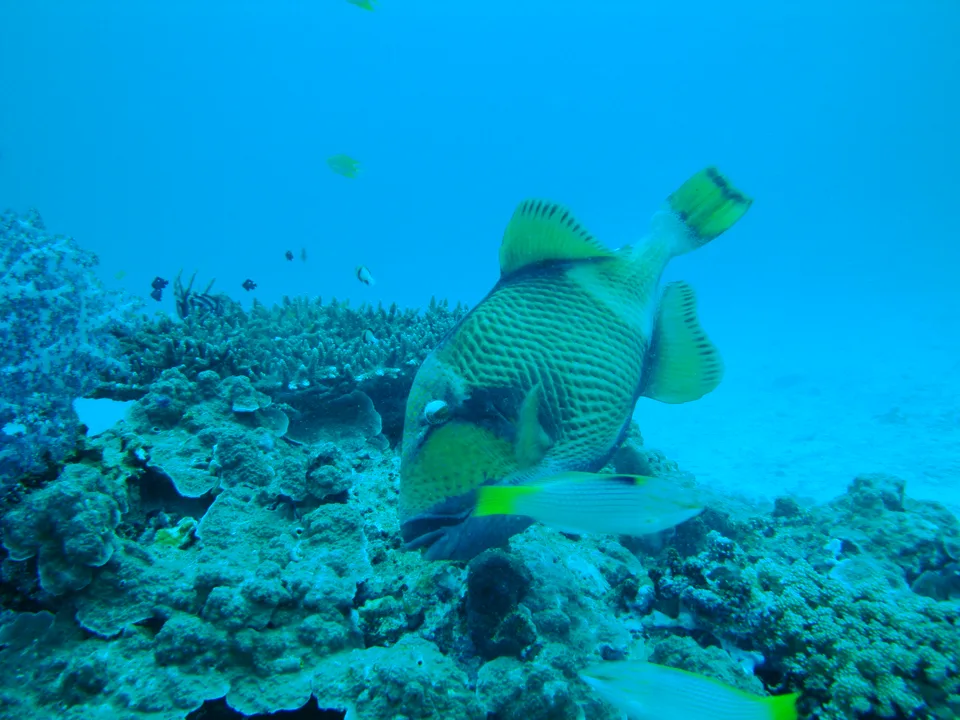
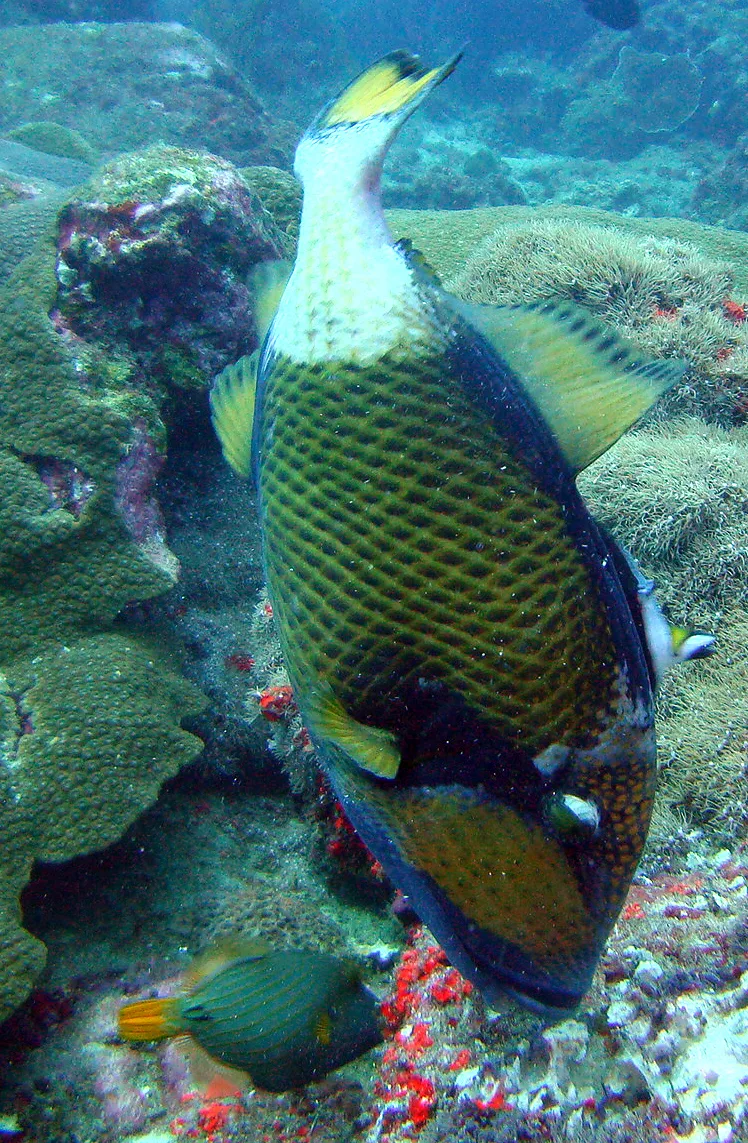
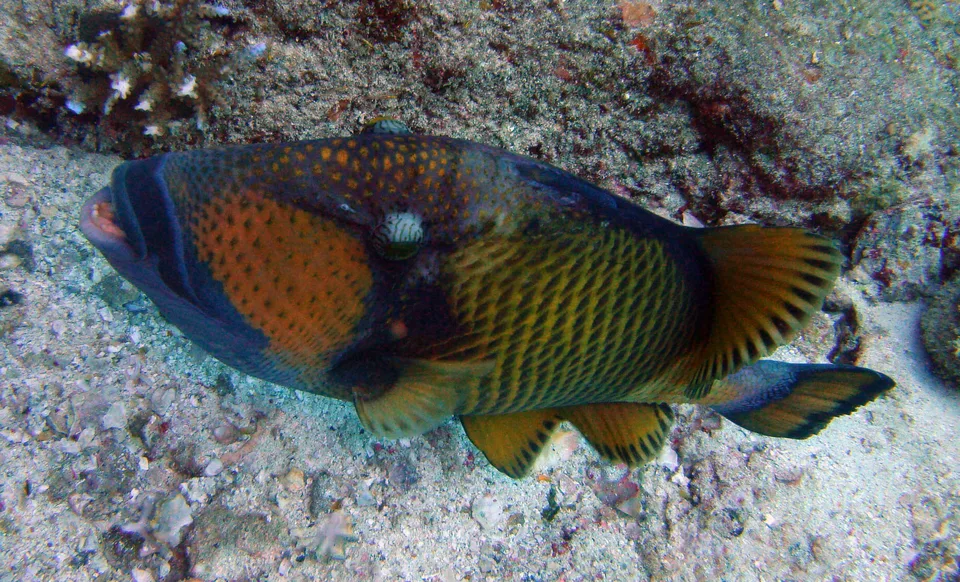
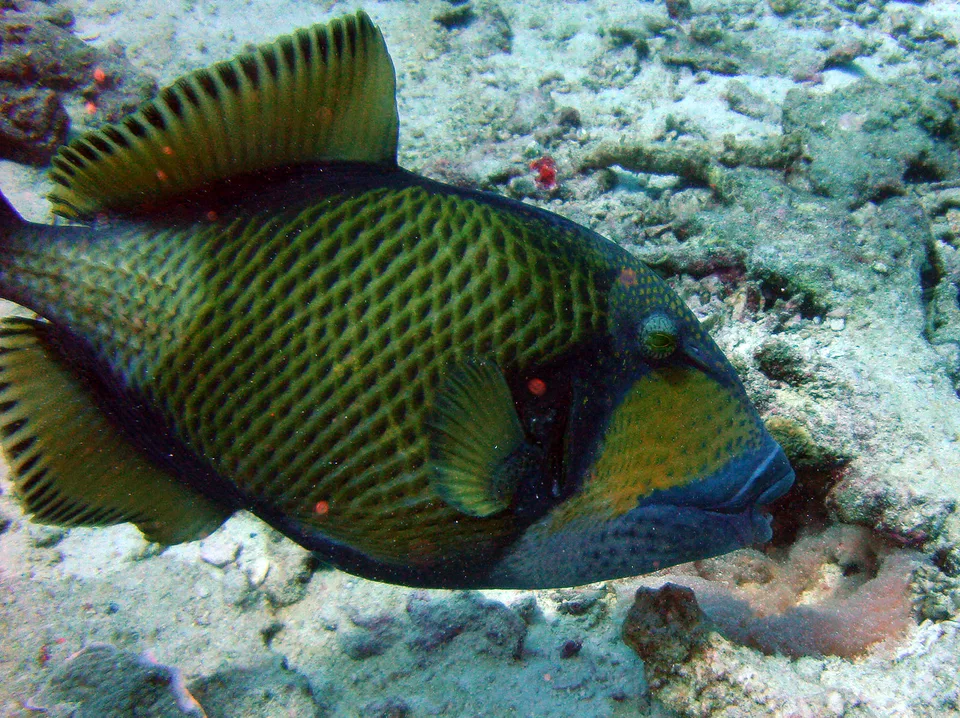
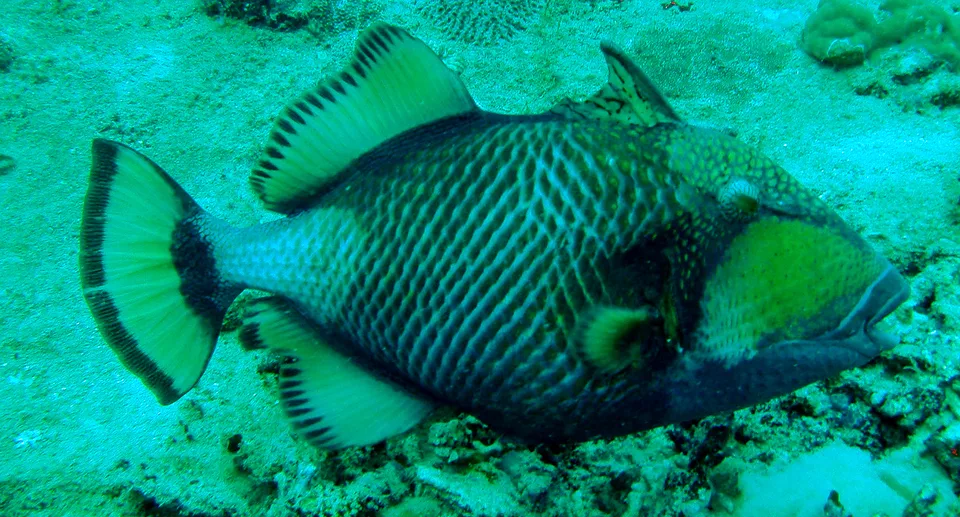
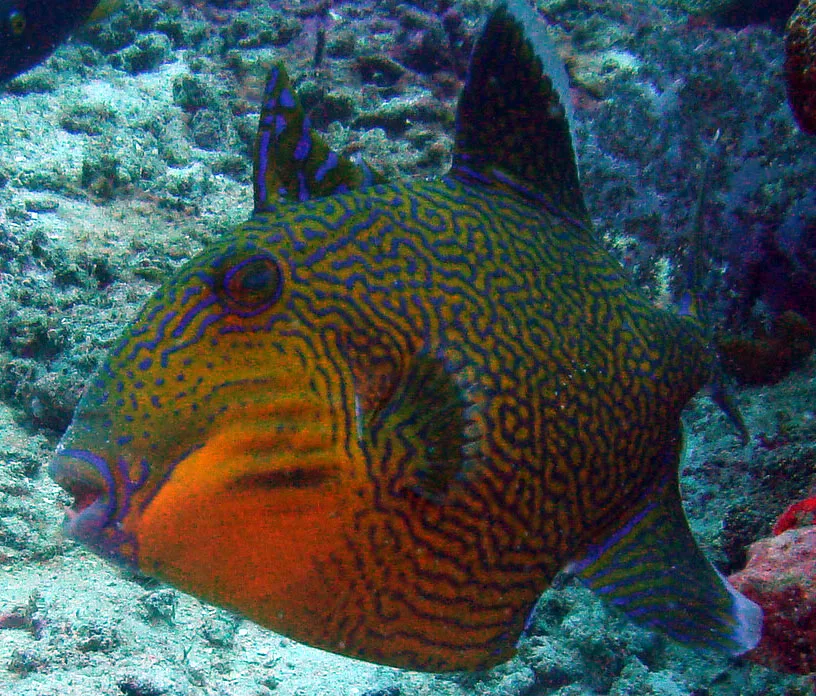
Very large triggerfish with a deep body, robust head, and strong beak-like teeth. Adults are greenish to grayish brown, often with blue lines on the lower head and throat, a dark band across the eye, and a pale to yellowish caudal margin. The first dorsal spine can be locked in the erect position.
Similar species
It may be confused with the yellowmargin triggerfish (Pseudobalistes flavimarginatus) and the blue triggerfish (Pseudobalistes fuscus). The titan triggerfish is generally larger, has a noticeably more massive head, prominent blue facial lines in many adults, and a characteristic dark band across the eye. As coloration varies with age and region, the body shape and head markings are useful.
Approach rules
Observe calmly and keep a generous distance, especially near a bottom-dwelling individual that may be guarding a nest. Do not block its escape route, touch it, feed it, or use a flash at close range. In case of aggressive behavior, move horizontally away from the nesting area rather than swimming directly above it.
Protection
Globally assessed as Least Concern on the IUCN Red List. It is not listed under CITES. Avoid disturbing nesting fish and comply with the rules specific to marine protected areas where applicable.