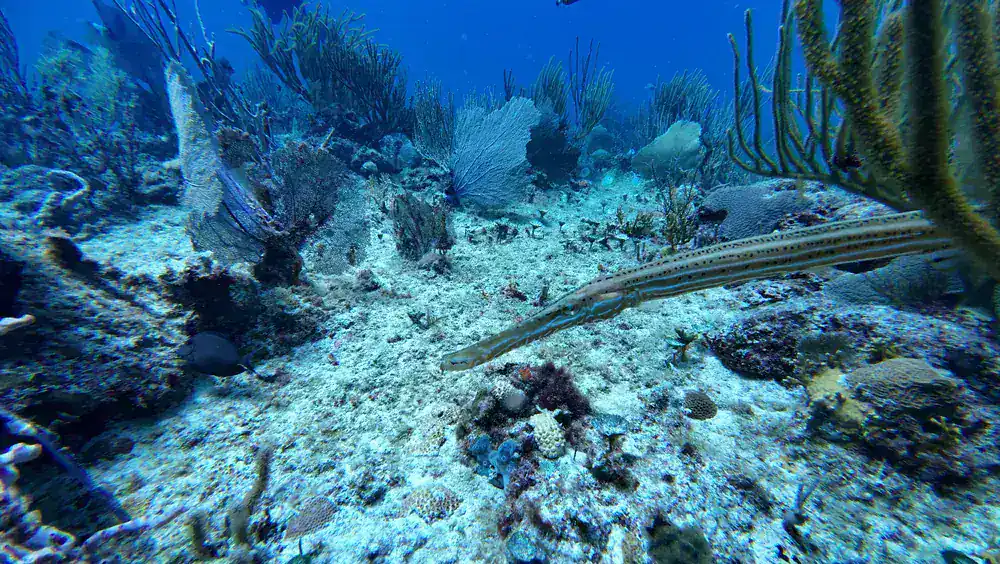
Aulostomus maculatus is typically found in shallow waters, often around coral reefs and rocky areas.
Distribution
This species is distributed in the western Atlantic Ocean, including the Caribbean Sea and the Gulf of Mexico.
Conservation status
Least Concern
Edibility
Edible and occasionally taken for food, but it may present a ciguatera risk in some tropical regions. Avoid consuming large reef-associated individuals where ciguatera is known to occur.
Culinary quality / 5
3
Danger level
Harmless
Usual observation depth
3–30 m
Behaviour
Generally solitary or observed in loose pairs. A slow and discreet ambush predator, it often adopts a vertical or head-down position among corals and gorgonians, and may follow large fish to approach its prey.
Observation zones
Coral reef, rocky reef, reef slope, lagoon, seagrass bed, mangrove edge and sometimes around pilings or other vertical structures.
Diet
Feeds primarily on small fish, including juvenile reef fish; it sucks in its prey by rapidly expanding its long tubular mouth. Small crustaceans may also be consumed.
Reproduction
Oviparous
Identification marks
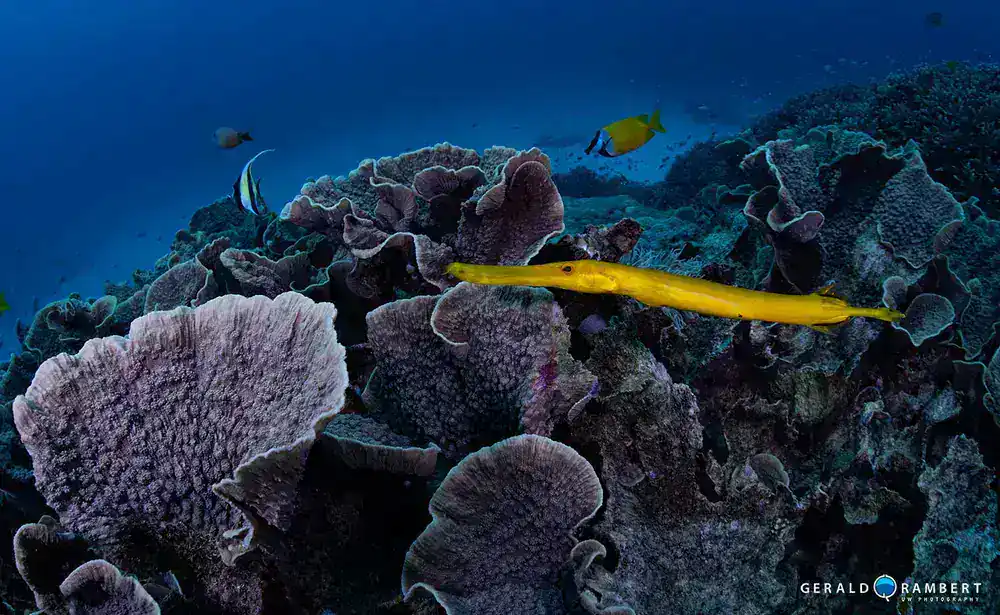
Very elongated and laterally compressed body; exceptionally long tubular snout with a small upturned mouth; small dorsal and anal fins positioned far back; long central filament extending from the tail. Coloration is variable, often brown, greenish, yellow or mottled, and favors camouflage.
Similar species
Can be confused with cornetfishes (Fistularia spp.), which are generally more slender and have a much longer, whip-like caudal filament. The other trumpetfishes of the genus Aulostomus are distinguished mainly by their geographical distribution and coloration details; A. maculatus is the Atlantic species.
Approach rules
Approach slowly and calmly without blocking its escape route. Keep a respectful distance of approximately 2 to 3 m, do not touch or pursue the animal, and do not feed it. Use moderate lighting and avoid repeated flashes at very close range.
Protection
Globally assessed as Least Concern by the IUCN. It is not listed in the CITES Appendices. Respect the rules of marine protected areas and avoid any unnecessary collection or disturbance.