Shallow sandy or muddy substrates in tropical and subtropical waters.
Distribution
Found in the Caribbean Sea and along the coasts of Central America.
Conservation status
Least Concern
Edibility
Edible and harvested in some areas. The muscular foot is usually cooked; consume only from safe, responsibly sourced waters and cook thoroughly.
Culinary quality / 5
3
Danger level
Harmless
Usual observation depth
1–20 m
Behaviour
A slow-moving, mostly solitary grazing gastropod. It is commonly active on the bottom during daylight and may partly bury or shelter among rubble.
Observation zones
Reef flats, lagoon reefs, sandy and coral-rubble bottoms, and seagrass beds; often in very shallow water.
Diet
Primarily grazes on benthic algae, microalgae, detritus and organic films on sand, seagrass and hard substrates.
Reproduction
Oviparous
Identification marks
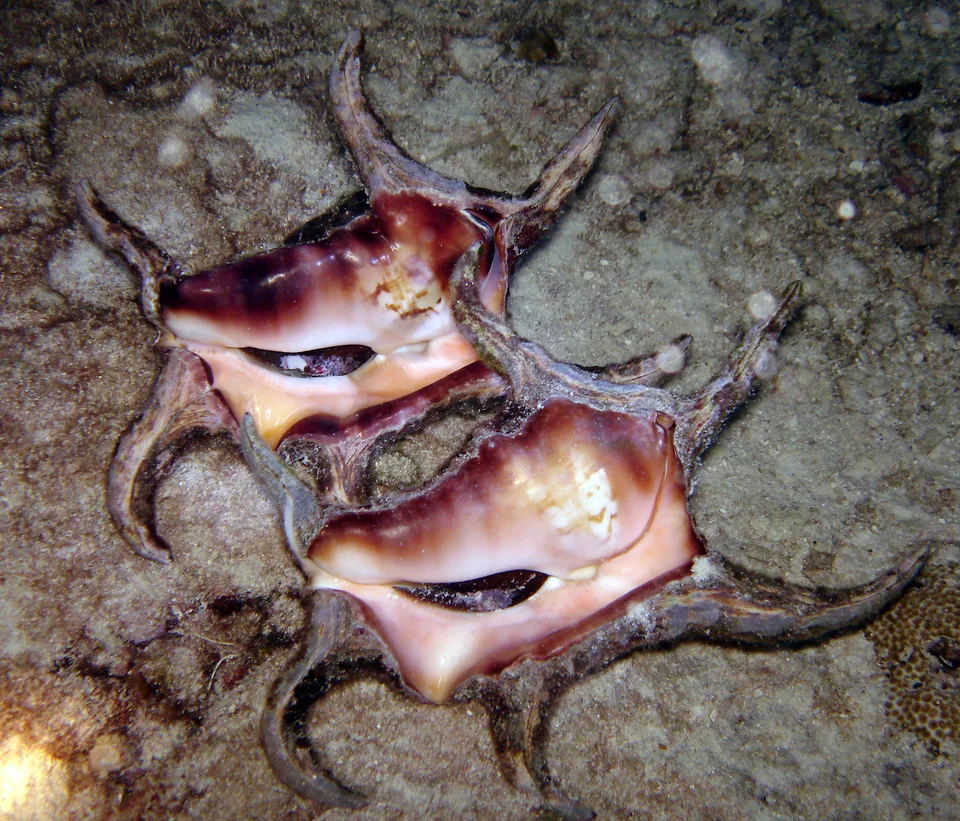
Large, heavy conch shell with a broad flared outer lip bearing long finger-like projections, usually six prominent digits. The shell is cream to pale brown with darker brown markings; the aperture is often orange to pinkish.
Similar species
Often confused with other spider conchs, especially Lambis lambis and Lambis crocata. L. chiragra is generally recognized by its heavy shell, long relatively narrow lip digits and characteristic brown-patterned coloration; shell characters vary with growth and location.
Approach rules
Observe without touching, collecting or turning the animal over. Keep a respectful distance, avoid blocking its path, use flash sparingly and never feed it.
Protection
IUCN Least Concern globally. It is not listed in CITES; avoid unnecessary collection because reef-shell harvesting can reduce local populations.