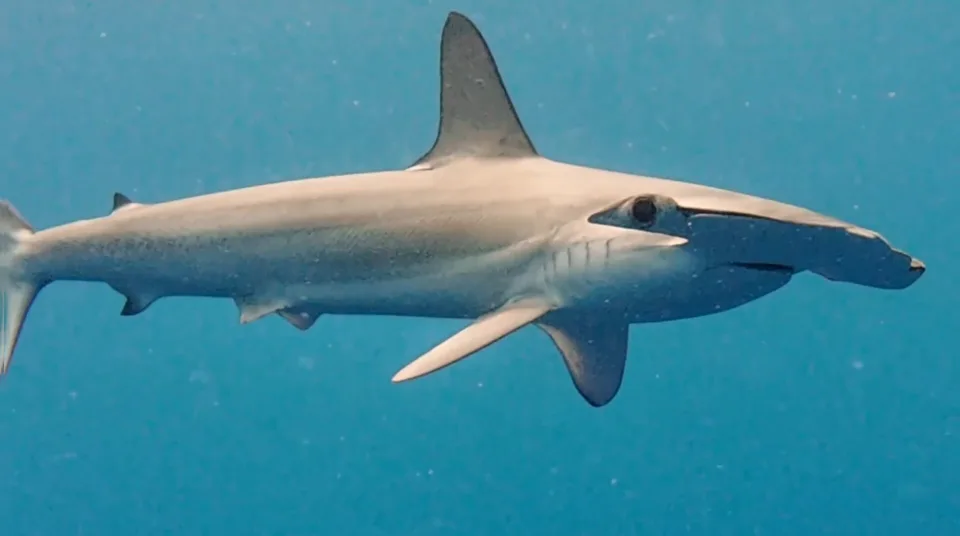
Coastal and continental shelf waters, often near the bottom.
Distribution
Found in tropical and warm temperate seas worldwide.
Conservation status
Least Concern
Edibility
Its meat is edible, but consumption is discouraged: this Vulnerable shark is affected by fishing pressure, and shark meat may accumulate mercury. Follow current seafood-health advice and applicable regulations.
Culinary quality / 5
3
Danger level
Caution
Usual observation depth
?–100 m
Lifespan (years)
20
Behaviour
Generally solitary or observed in small groups; juveniles may form schools. An active swimmer, it undertakes seasonal movements and may frequent both the surface and offshore waters. It is active by day and night, depending on feeding opportunities.
Observation zones
Open water, offshore seamounts, continental shelf drop-offs, open coastal waters, bays and estuary entrances; it is not primarily a reef or cave species.
Diet
Opportunistic predator feeding mainly on bony fish, cephalopods, and other sharks and rays; it may also consume crustaceans.
Reproduction
Viviparous
Identification marks
Great hammerhead with a broad, regularly rounded cephalofoil. The anterior margin lacks the central notch of scalloped hammerheads. Upper side gray to grayish brown, underside pale; first dorsal fin high and falcate.
Similar species
Often confused with the scalloped hammerhead (Sphyrna lewini), which has a distinct central notch and a scalloped frontal margin. The great hammerhead (Sphyrna mokarran) has a more straight frontal margin and a distinctly taller first dorsal fin.
Approach rules
Observe calmly from a respectful distance, preferably at least 3 to 4 m away. Do not chase it, block its path, touch it, use flash photography, or feed it. Monitor its movements and leave the water if it shows signs of agitation or repeatedly approaches.
Protection
IUCN Red List: Vulnerable. Listed in CITES Appendix II; international trade is regulated. Protection measures and local fishing regulations vary and should be verified with the relevant authorities.