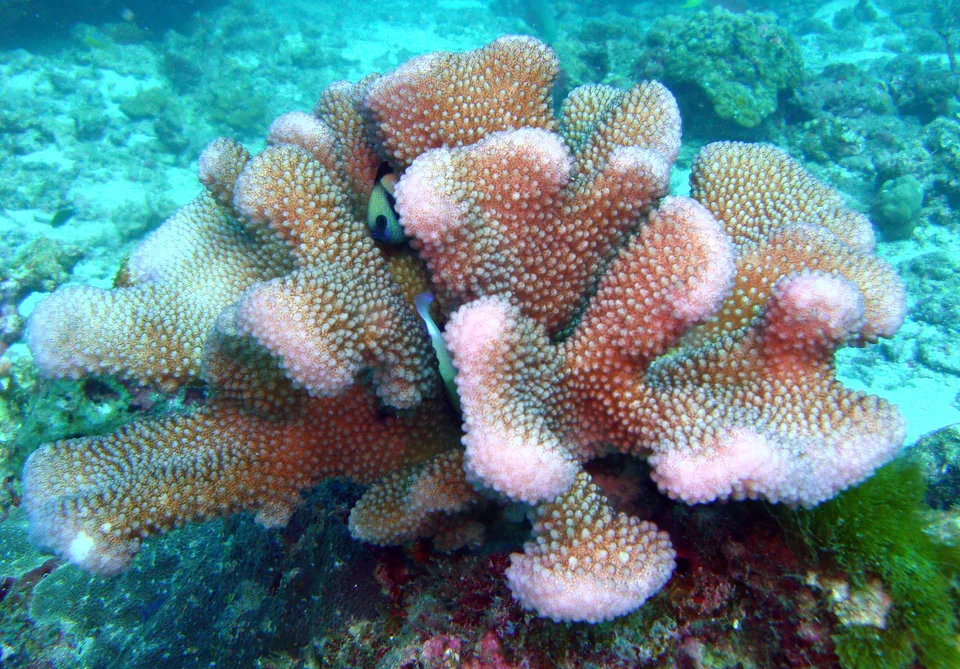
Typically found in shallow, warm waters of coral reefs.
Distribution
Found in the Indo-Pacific region.
Conservation status
Least Concern
Edibility
Not suitable for consumption. This soft coral is not a food species and should not be collected.
Danger level
Harmless
Usual observation depth
5–30 m
Behaviour
Sessile colonial coral. Its polyps extend to capture plankton, especially where water movement is strong.
Observation zones
Current-swept reef walls, slopes, overhangs and reef passages.
Diet
Plankton and suspended organic particles captured by the polyps.
Reproduction
Oviparous
Identification marks
Usually forms bushy, branched colonies with pink, red, orange or purple tissue and numerous pale polyps. Colour alone is not sufficient for species identification.
Similar species
Frequently confused with other Dendronephthya and related nephtheid soft corals. Reliable species-level identification often requires examination of colony form and microscopic skeletal sclerites.
Approach rules
Keep neutral buoyancy and avoid all contact. Do not hold onto the substrate, feed wildlife, collect fragments or use flash at close range.
Protection
No global IUCN assessment is currently identified for Dendronephthya hemprichi. Avoid collection and follow site-specific coral and marine protected-area rules.