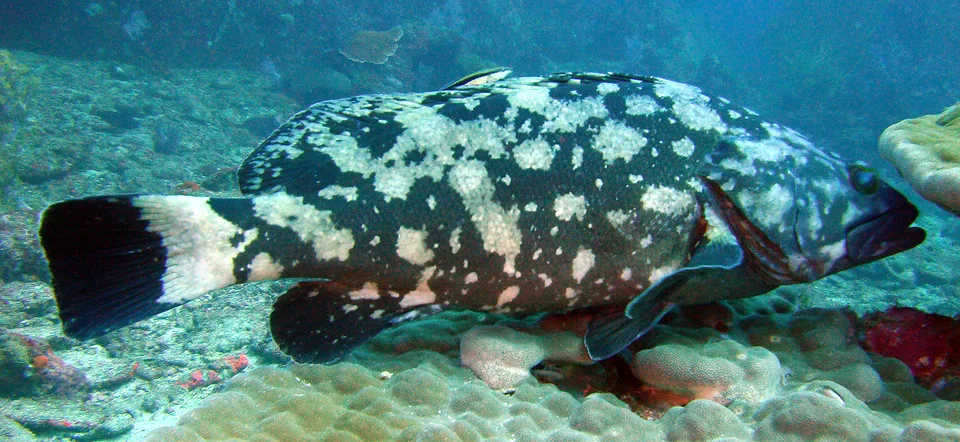
Reef-associated species, typically found in shallow waters around coral reefs.
Distribution
Found in the Indo-Pacific region, including the Red Sea and the western Pacific.
Conservation status
Least Concern
Edibility
Edible and highly regarded as food, but large reef fish can carry ciguatera toxins. Follow local seafood-health advice and avoid eating large individuals from ciguatera-risk areas.
Culinary quality / 5
4
Danger level
Harmless
Usual observation depth
3–30 m
Lifespan (years)
40
Behaviour
Generally solitary and territorial, it rests near reef shelters and ambushes its prey. It may form temporary breeding aggregations, often seasonal; juveniles frequently use shallow, sheltered reef habitats.
Observation zones
Coral reef, lagoon, reef slope, channel, reef flat and coral rubble areas; often under overhangs or near coral bommies.
Diet
Carnivorous ambush predator, feeding mainly on fish, crustaceans, and other benthic invertebrates.
Reproduction
Oviparous
Identification marks
Robust grouper with a deep body and rounded caudal fin. The light grayish-brown body is densely covered with small dark brown spots and mottling, forming a camouflage pattern; faint dark vertical bars may be visible.
Similar species
Often confused with the brown-marbled grouper (Epinephelus fuscoguttatus). E. fuscoguttatus generally has larger, more irregular dark spots, with a less finely speckled appearance; reliable identification may require close examination of the colour pattern and fin markings.
Approach rules
Approach slowly and calmly without blocking its escape route. Keep a respectful distance of at least 3 m, do not pursue or touch it, avoid or limit flash photography, and never feed it. Give breeding aggregations more space.
Protection
Assessed globally as Least Concern by the IUCN. Nevertheless, it remains vulnerable to overfishing because it forms spawning aggregations; avoid disturbing these aggregations and support reef fish management and marine protected areas.