Coastal waters, often found in estuaries and bays.
Distribution
Found along the Pacific coast of North America, from Alaska to California.
Conservation status
Least Concern
Edibility
Not recommended for consumption. Its stinging cells can remain active after handling, and its culinary use and safety are not well documented.
Danger level
Caution
Usual observation depth
?–30 m
Lifespan (years)
1
Behaviour
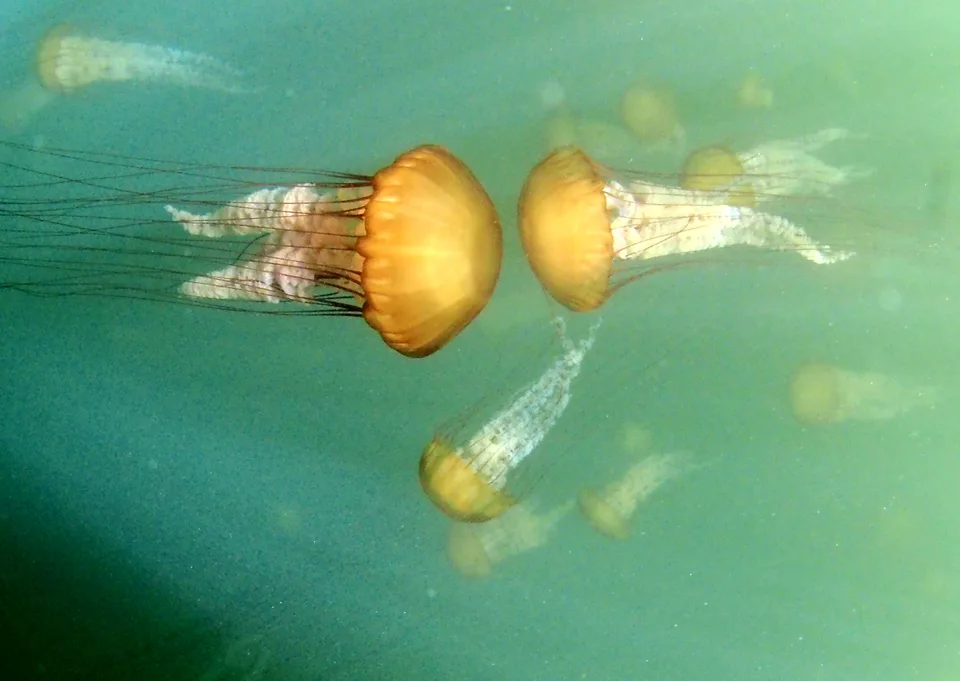
Generally solitary drifting scyphozoan, although seasonal proliferations and dense aggregations may occur. It moves by pulsations of the bell while being largely transported by currents. It captures its prey with its stinging tentacles.
Observation zones
Open water, coastal waters, bays, estuaries, edges of kelp forests, and sometimes near docks or in sheltered harbors.
Diet
Zooplankton, small crustaceans, fish eggs and larvae, as well as small fish; it may also consume other jellyfish.
Reproduction
Oviparous
Identification marks
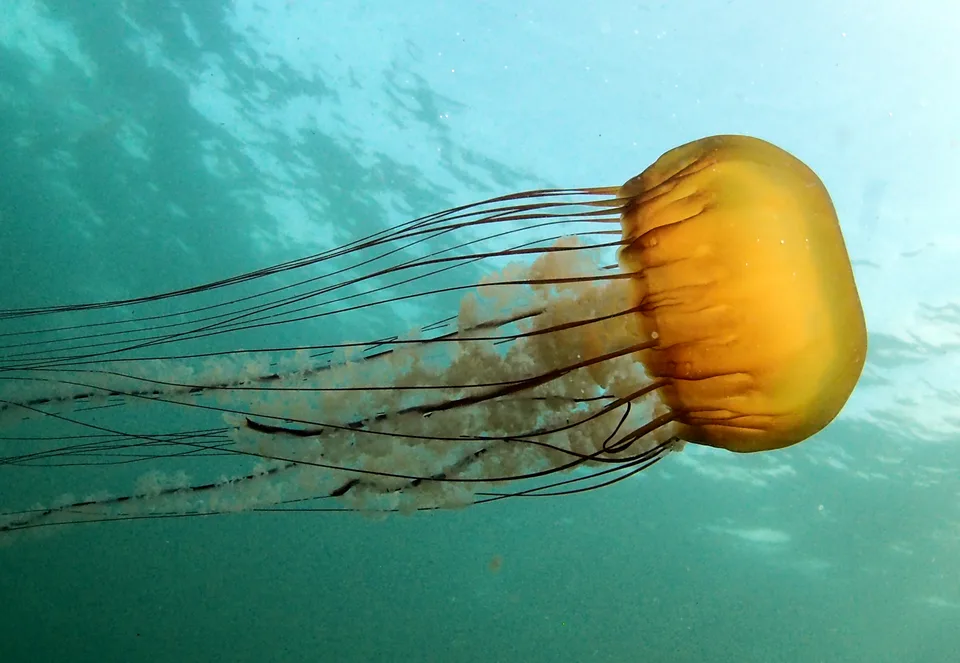
Large golden-brown to reddish-brown bell, often marked with 24 dark bands or rays. It has long, slender marginal tentacles and four frilled oral arms; the tentacles can extend several meters behind the bell.
Similar species
It can be confused with other sea nettles of the genus Chrysaora. Compared with the Atlantic sea nettle (Chrysaora quinquecirrha), the Pacific sea nettle is generally larger and has a golden-brown to reddish-brown bell with numerous dark radial markings. Identification should take locality and bell pattern into account.
Approach rules
Observe without touching. Stay well clear of the tentacles, which can extend several metres and sting even when detached. Do not feed, handle or attempt to move the animal. Avoid using flash at very close range and maintain good buoyancy to prevent any contact.
Protection
No specific CITES listing is known. General protection recommendation: avoid handling, collecting or disturbing, and comply with the rules applicable to the site, parks and wildlife.