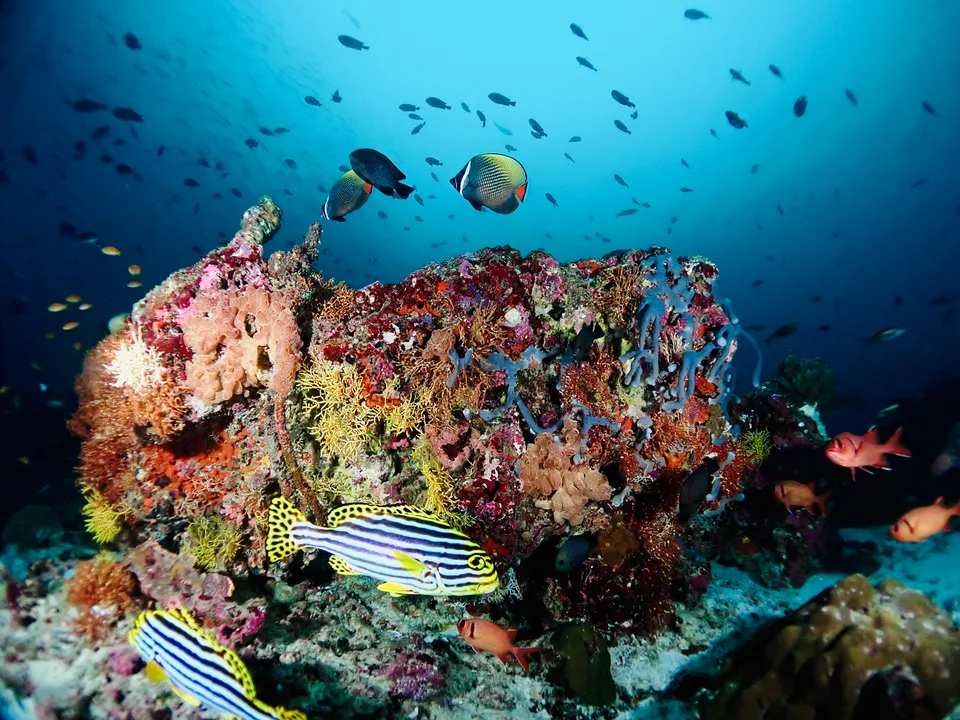
Edible and locally consumed. Flesh is considered good, but large reef fish can present a ciguatera risk in affected regions; follow local health advice.
Culinary quality / 5
3
Danger level
Harmless
Usual observation depth
3–30 m
Behaviour
Observed alone or in small groups. Adults often rest under overhangs or in sheltered reef areas during the day and primarily forage at night. Juveniles may swim with a characteristic undulating movement that mimics a flatworm.
Observation zones
Reef, lagoon, reef slope, coral heads, caves, overhangs and sheltered sandy areas near reefs.
Diet
Primarily benthic invertebrates, including crustaceans, mollusks, worms, and other small bottom-dwelling animals.
Reproduction
Oviparous
Identification marks
Body deep and laterally compressed, with thick lips; adults are silvery white to yellowish, adorned with several broad dark horizontal bands on the flanks. The fins are generally yellowish, often marked with dark coloration. Juveniles are darker and exhibit a different pattern.
Similar species
May be confused with other sweetlips of the genus Plectorhinchus, notably lined or harlequin sweetlips. Plectorhinchus vittatus is recognized by its broad, regular dark longitudinal bands on a pale body; examine the number and continuity of the bands and the fin pattern carefully.
Approach rules
Approach slowly and calmly without blocking its retreat toward shelter. Keep a respectful distance, touch neither the reef nor the fish, and do not feed it. Do not use flash, or use it very sparingly, near resting fish and in confined shelters.
Protection
Listed as Least Concern on the IUCN Red List. It is not listed under CITES. Protect reef habitat and avoid any unnecessary disturbance or collection.