Not recommended for consumption. Like other nudibranchs, it may retain defensive chemicals from its prey, and its culinary use is undocumented.
Danger level
Harmless
Usual observation depth
5–20 m
Behaviour
Slow nudibranch, generally solitary and diurnal. It crawls openly over the reef in search of ascidians.
Observation zones
Coral reef, reef slope, areas of coral rubble and hard substrates covered with ascidians.
Diet
Primarily colonial ascidians, notably species of the genus Clavelina.
Reproduction
Oviparous
Identification marks
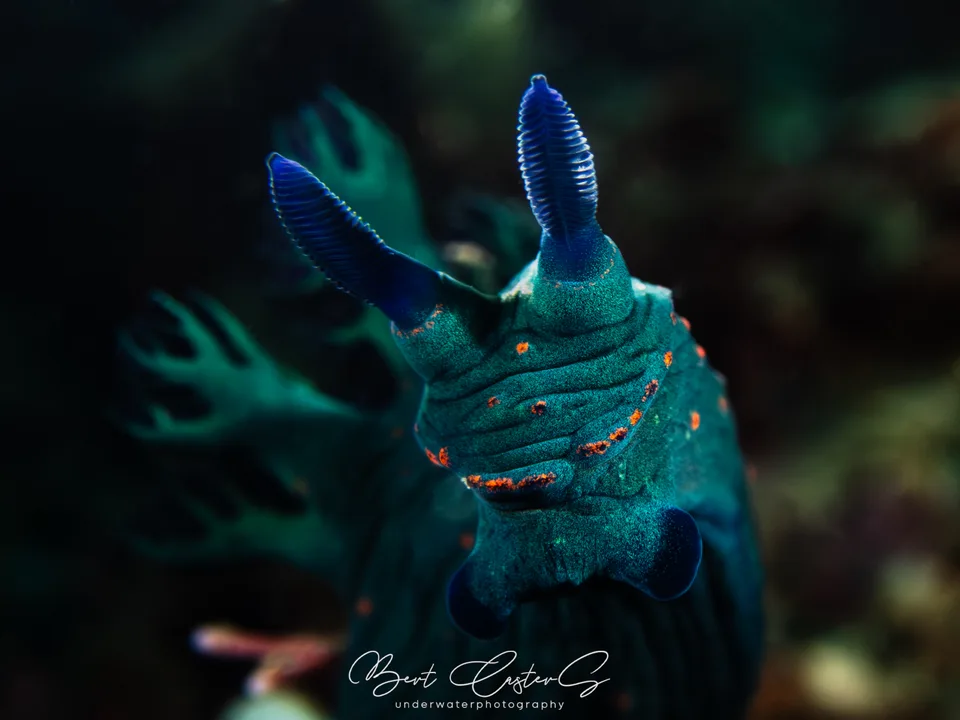
Stocky body dark green to black, densely covered with prominent bright green tubercles; rhinophores and branchial plume black; usually lacking the orange-red margin typical of certain closely related Nembrotha.
Similar species
Often confused with Nembrotha kubaryana. N. kubaryana generally has visible orange-red rhinophores, oral tentacles, and a foot margin, whereas N. cristata is mostly black and green, with black rhinophores and gills.
Approach rules
Observe without touching or moving the animal. Maintain good buoyancy to avoid damaging the reef; use flash sparingly and never feed or collect it.
Protection
No specific global CITES listing is known for this species. Avoid collection and support the protection of reef habitats; local regulations may apply.