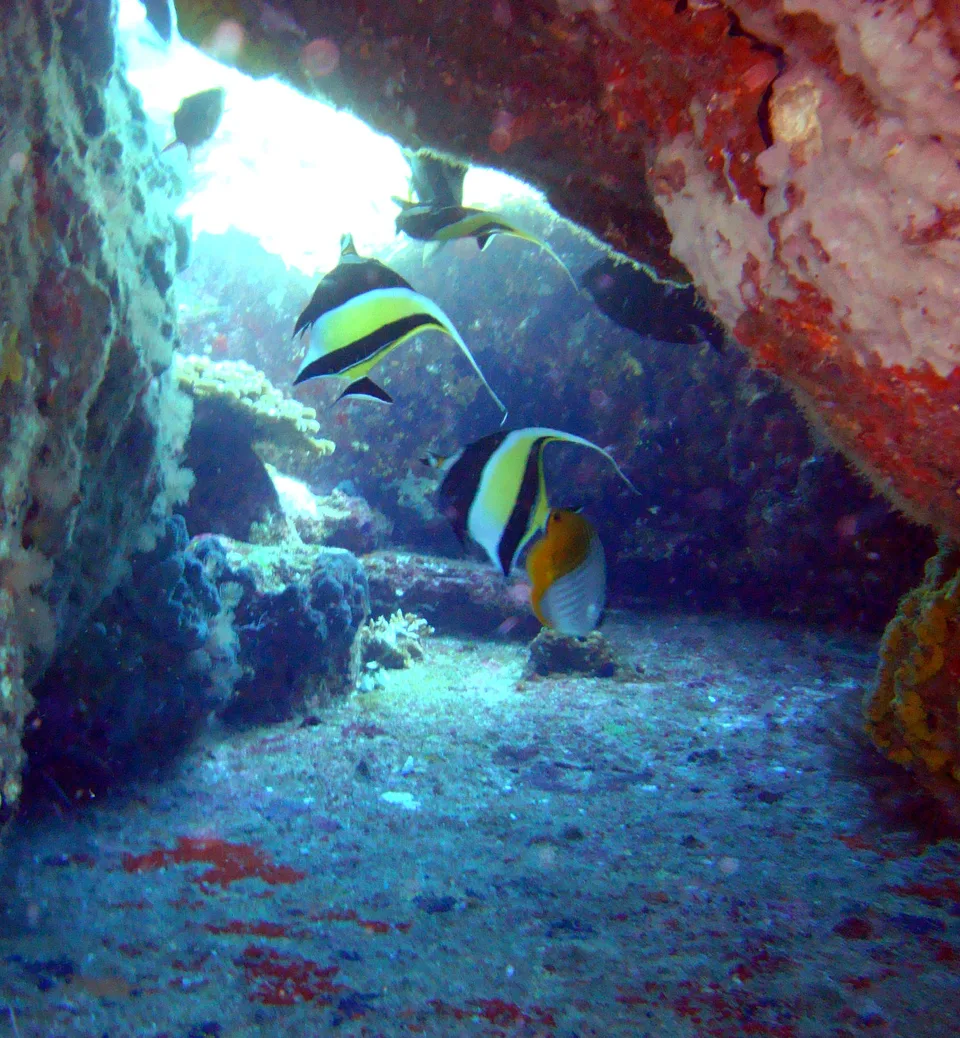
Tropical and subtropical coral reefs, especially clear lagoons, reef flats, outer reef slopes and areas with abundant sponges.
Distribution
Indo-Pacific, from the Red Sea and East Africa across the Indian and Pacific Oceans to Hawaii and eastern Polynesia; north to southern Japan and south to Australia and New Zealand.
Conservation status
Least Concern
Edibility
Edible but not commonly used as a food fish. Consumption of reef fish can carry a ciguatera risk in some regions; follow local public-health advice.
Culinary quality / 5
2
Danger level
Harmless
Usual observation depth
3–30 m
Lifespan (years)
0
Behaviour
Diurnal and active. Usually seen alone, in pairs, or in small groups; pairs may maintain territories. It continuously picks food from the reef surface.
Observation zones
Coral reef, lagoon, reef flat, outer reef slope, channels and rocky reef; occasionally around reef-associated structures.
Diet
Primarily sponges, algae and other attached benthic invertebrates, supplemented by small crustaceans and other zoobenthos.
Reproduction
Oviparous
Identification marks
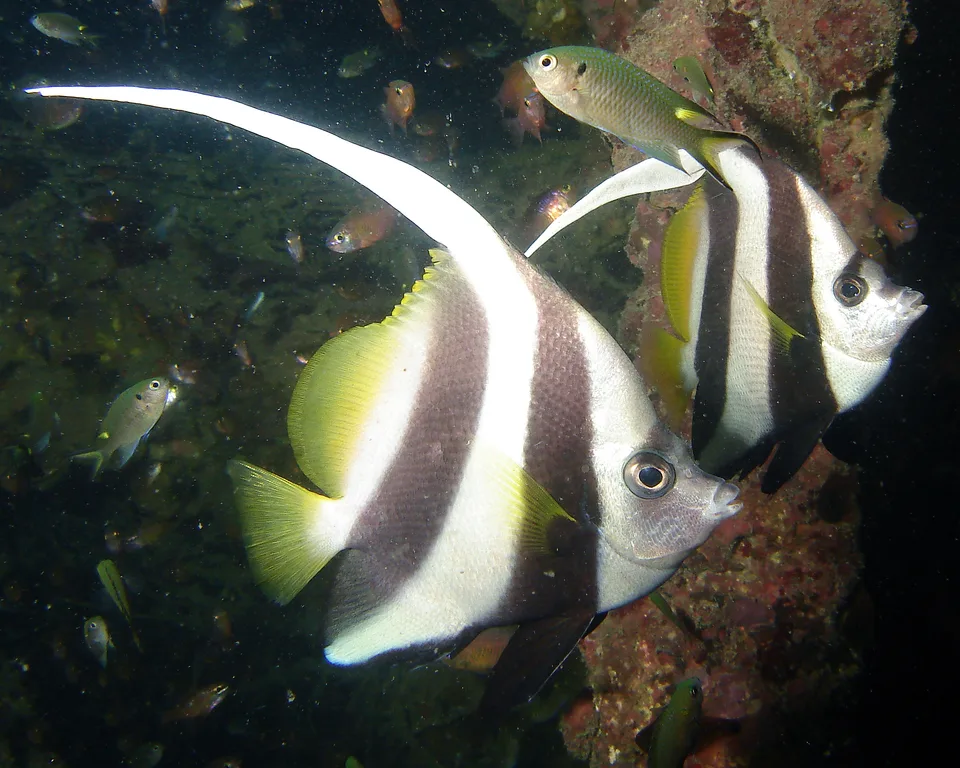
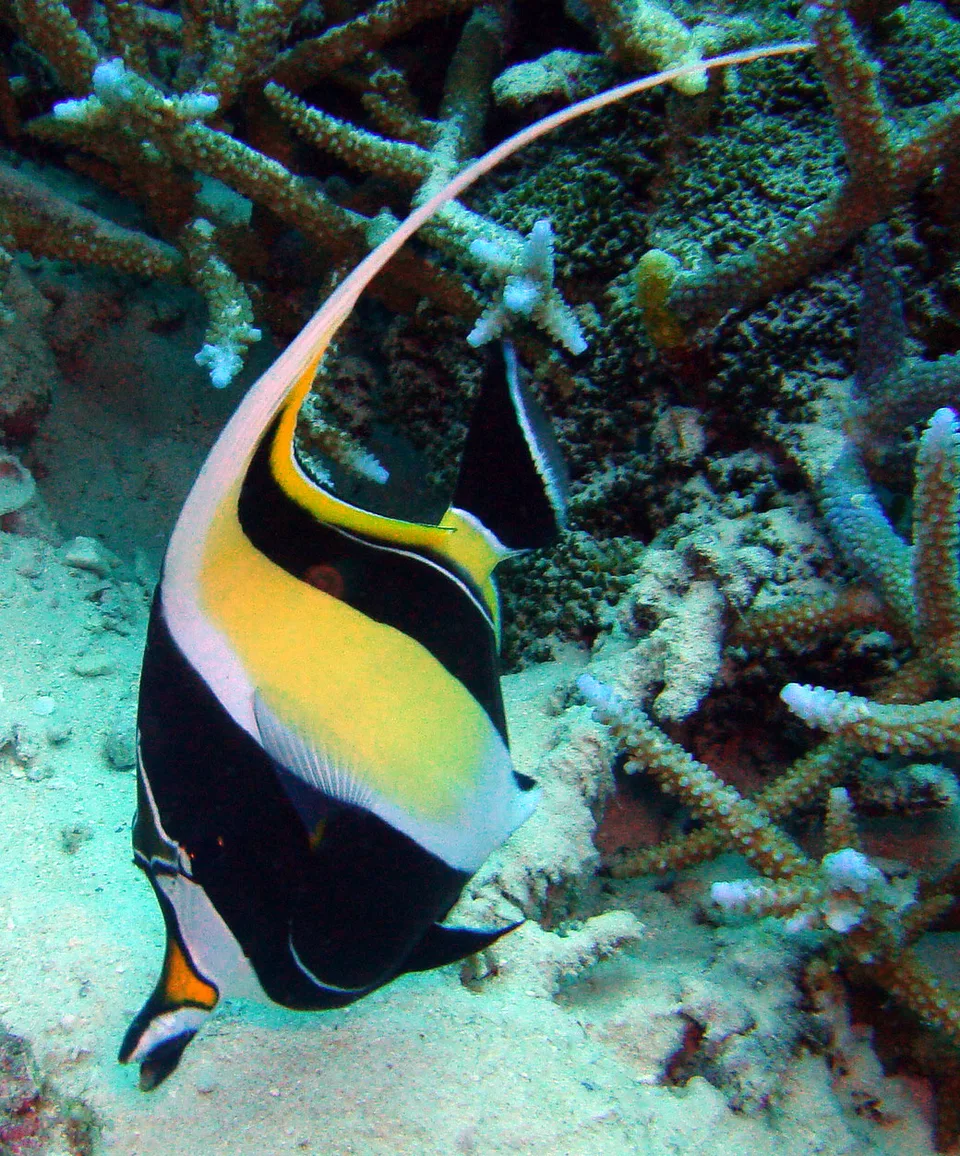
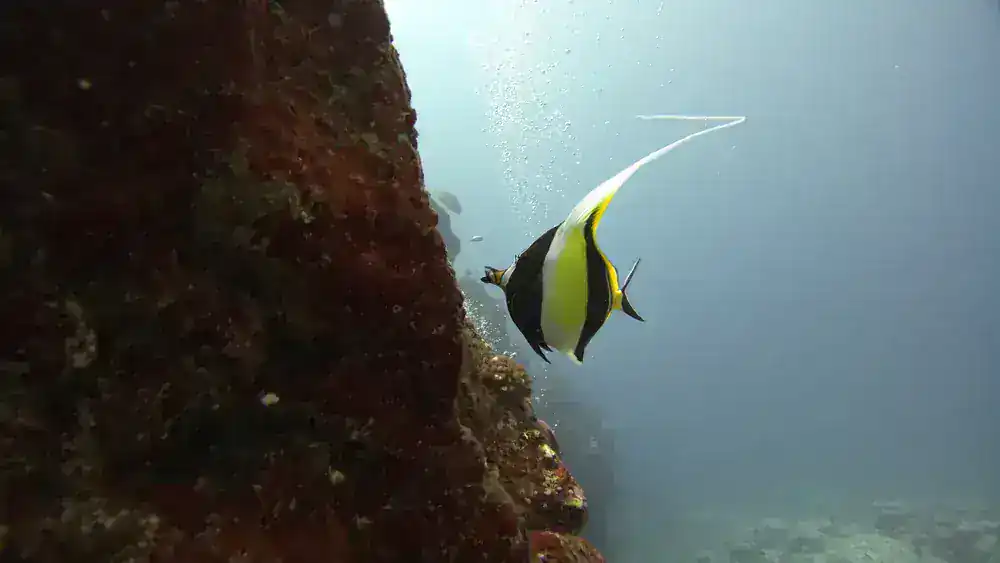
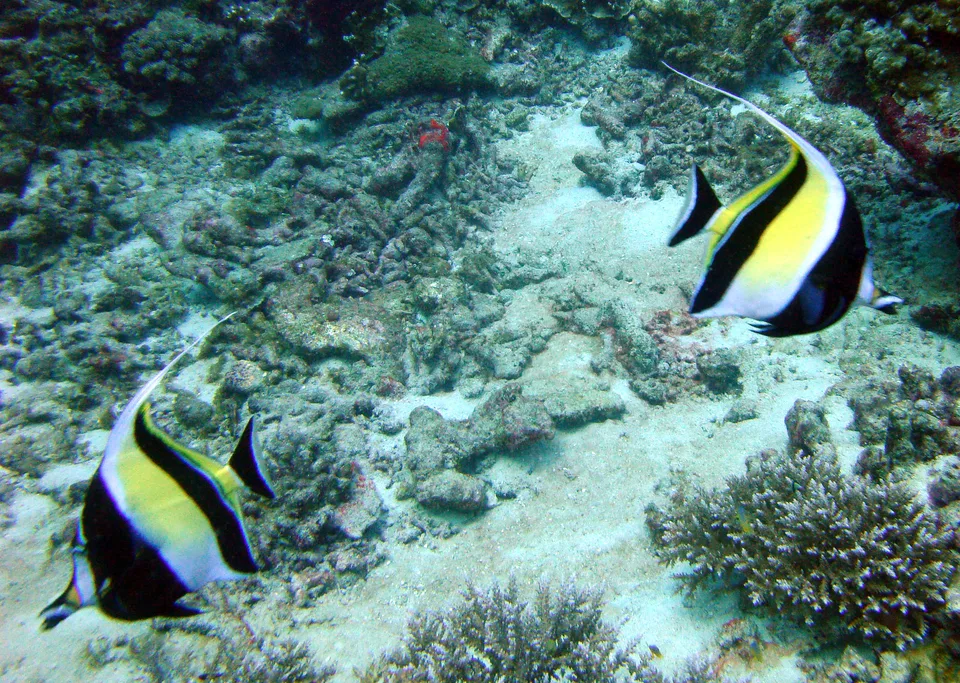
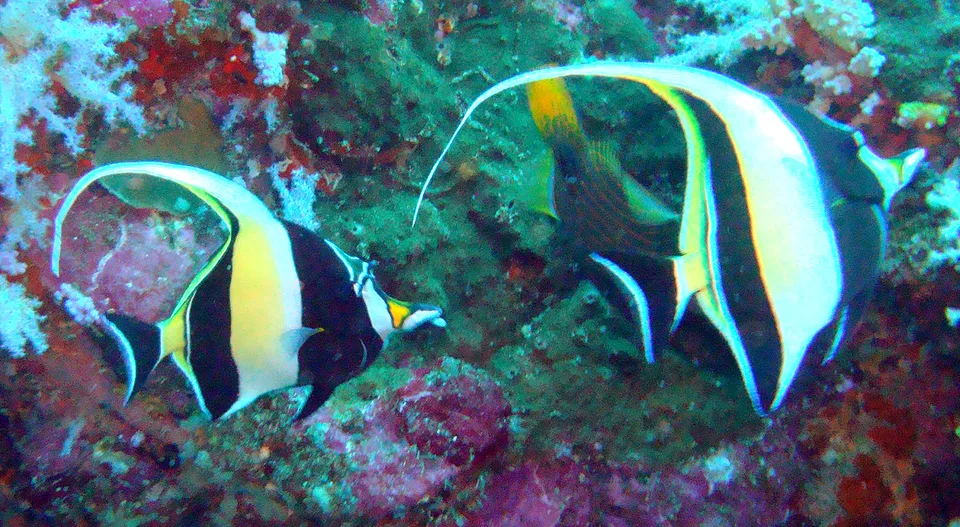
Deep, laterally compressed white body with broad black vertical bands and bright yellow areas; long tubular snout; very long, whip-like dorsal-fin filament; black tail bordered with yellow.
Similar species
Often confused with bannerfishes (Heniochus spp.), especially Heniochus acuminatus and H. diphreutes. Moorish idols have a much longer tubular snout, a more disk-shaped body, and a distinctive black-and-yellow tail pattern.
Approach rules
Approach slowly and remain at least about 2 m away where possible. Do not block its feeding path, touch it, chase it, or feed it. Avoid repeated close flash photography.
Protection
IUCN Least Concern. No CITES listing is known. Protect reef habitat and avoid unnecessary collection or disturbance.