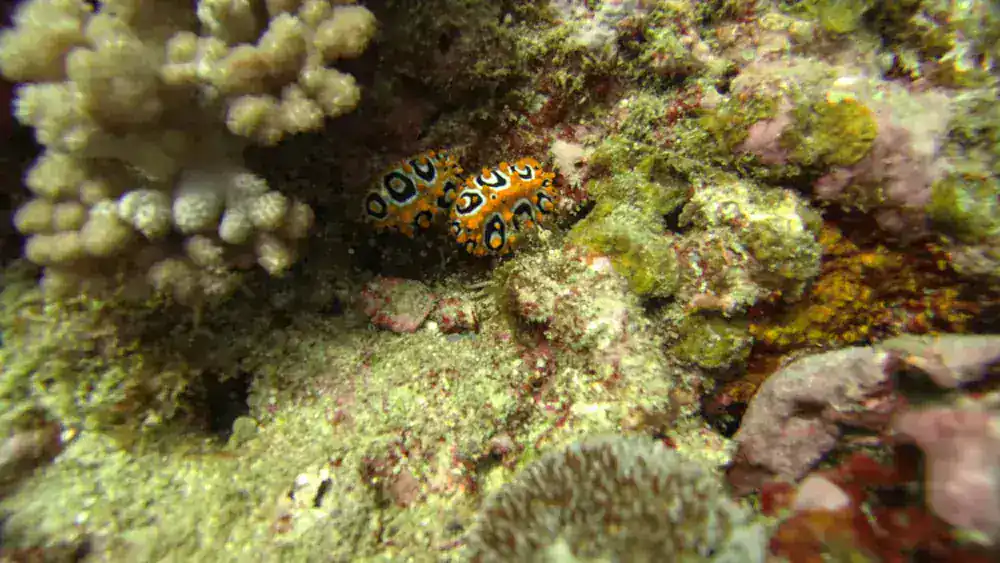
Coral reefs and rocky substrates in shallow waters
Distribution
Indo-Pacific region, including the Great Barrier Reef
Conservation status
Least Concern
Edibility
Not suitable for consumption. Like other chromodorid nudibranchs, it may contain sequestered or produced defensive chemicals; do not collect or eat it.
Danger level
Harmless
Usual observation depth
5–20 m
Behaviour
Generally observed alone, crawling slowly over the reef in search of sponges. It is active during the day and relies on its warning coloration and chemical defenses rather than speed.
Observation zones
Reef; coral heads; reef slope; rubble zones and sponge-rich reef areas.
Diet
Specialist sponge predator, consuming certain demosponges. It can retain defensive compounds originating from its prey.
Reproduction
Oviparous
Identification marks
Large oval chromodorid, with a white to cream mantle bearing broad longitudinal orange-red lines, generally bordered or separated by black. The mantle edge is often orange-red, and the rhinophores and branchial plume are orange to red.
Similar species
Often confused with other Goniobranchus species with orange, white, and black lines, notably Goniobranchus quadricolor. G. quadricolor generally has four clearly visible orange lines and is particularly associated with the Red Sea and the western Indian Ocean; identification may require careful examination of the line pattern and locality.
Approach rules
Observe without touching, collecting, or moving the animal. Maintain good buoyancy to avoid any contact with the reef; use only brief, non-intrusive lighting or flash, and do not feed it.
Protection
No specific international CITES listing is known. Avoid collection and disturbance; protection of reef habitats and responsible diving practices are important for this species.