Found in shallow waters, often in coral reefs and rocky substrates.
Distribution
Indo-Pacific region, including the Red Sea and parts of the Caribbean.
Conservation status
Least Concern
Edibility
The gonads are edible and are consumed in some regions, but the animal must be handled with great care because its long brittle spines can cause painful punctures. Consume only properly identified, fresh material prepared hygienically; do not eat the spines or test.
Culinary quality / 5
2
Danger level
Caution
Usual observation depth
1–30 m
Behaviour
Generally nocturnal or mainly active at dusk and at night. It frequently forms groups, particularly in sheltered crevices of the reef, and uses its long spines to defend itself. It is a broadcast spawner.
Observation zones
Reef, reef flat, lagoon, rocky bottom, seagrass bed margins and sheltered crevices; occasionally around reef structures and shipwrecks.
Diet
Primarily grazes on algae, particularly algal turfs and algal films. It may also consume detritus and small sessile organisms, making it an opportunistic omnivore.
Reproduction
Oviparous
Identification marks
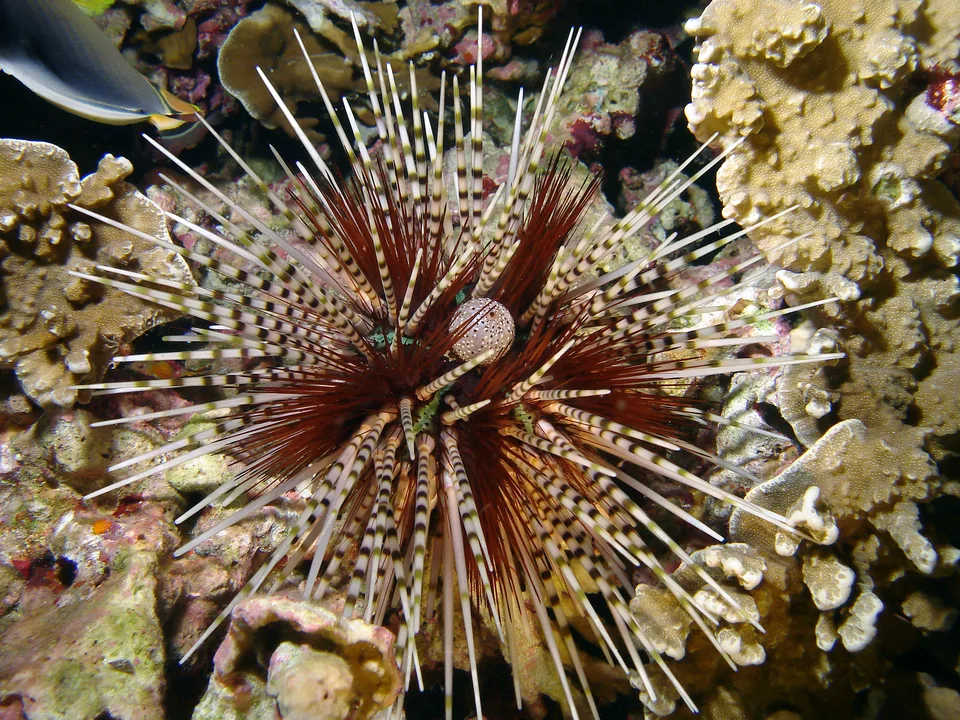
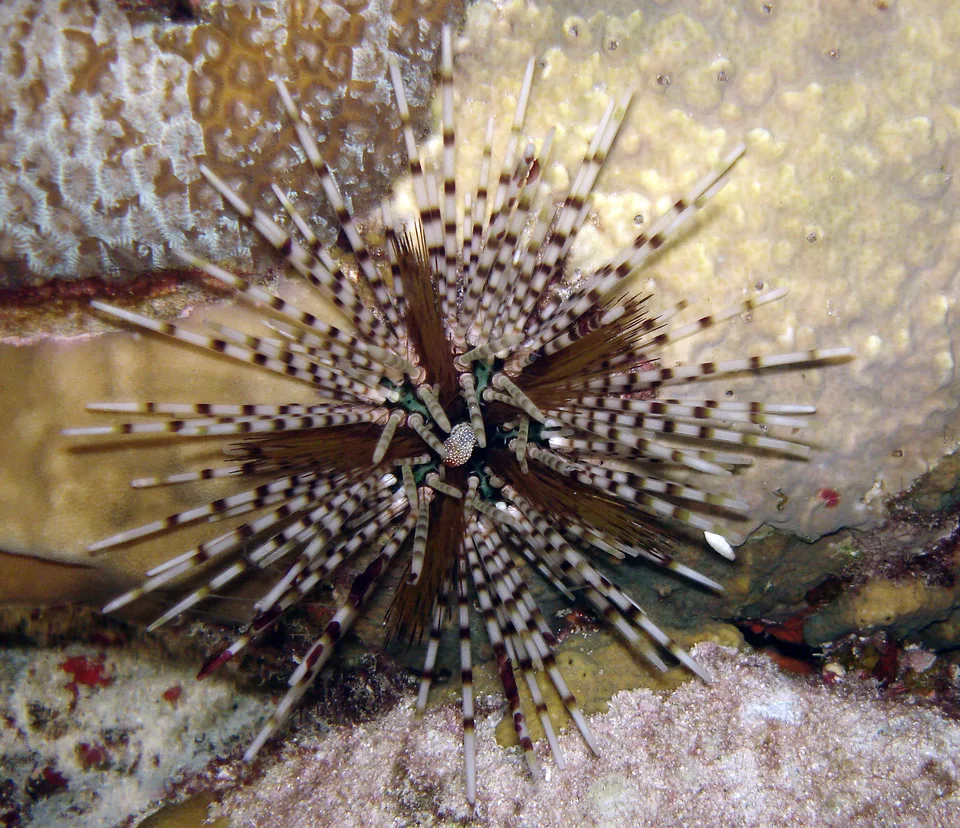
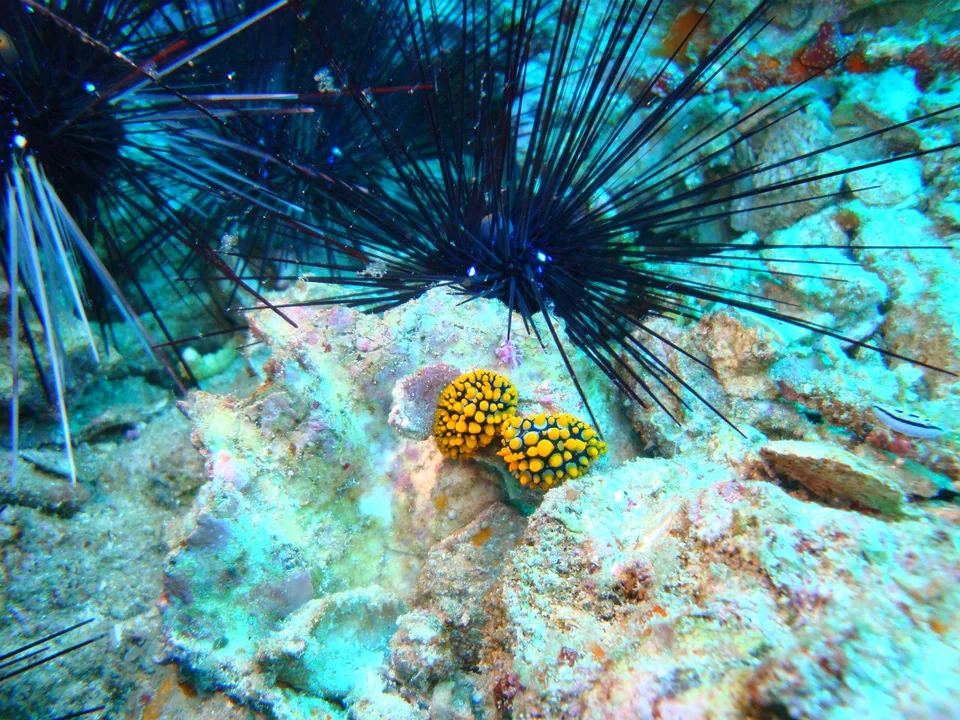
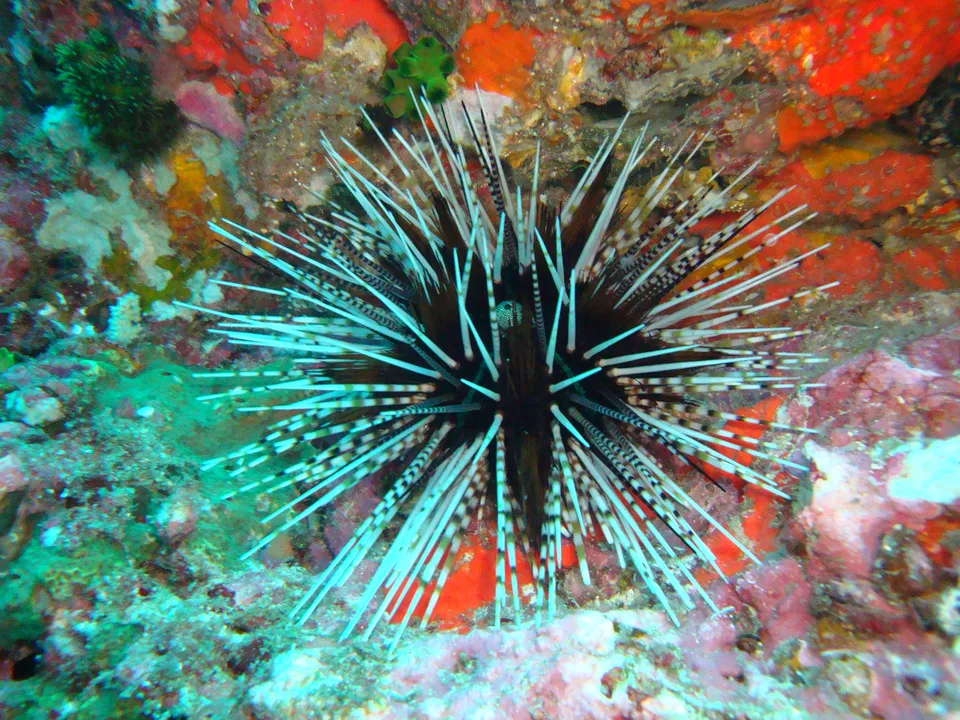
Dark to black test bearing exceptionally long, slender black spines. Reliable criteria include five clearly visible white spots or lines on the upper surface and a characteristic orange ring around the anal cone.
Similar species
Often confused with Diadema savignyi. D. savignyi generally has more extensive iridescent blue lines, but lacks the clearly visible orange ring around the anal cone and the five characteristic white spots of D. setosum. Other Diadema species with long spines may require close examination and consideration of their distribution.
Approach rules
Observe without touching or getting too close. Keep fins, hands, and equipment away from the long, fragile spines; do not collect or feed the animal. Prefer natural light and avoid repeated flashes at close range.
Protection
Classified as Least Concern globally on the IUCN Red List. It is not listed under CITES. Protect reef habitat and avoid unnecessary collection; site-specific regulations may apply.