Western Atlantic, including the Gulf of Mexico and Caribbean Sea
Conservation status
Least Concern
Edibility
Edible and occasionally eaten, but large tropical reef fish can carry ciguatera toxins. Avoid eating large individuals where ciguatera is a known risk.
Culinary quality / 5
3
Danger level
Caution
Usual observation depth
1–30 m
Behaviour
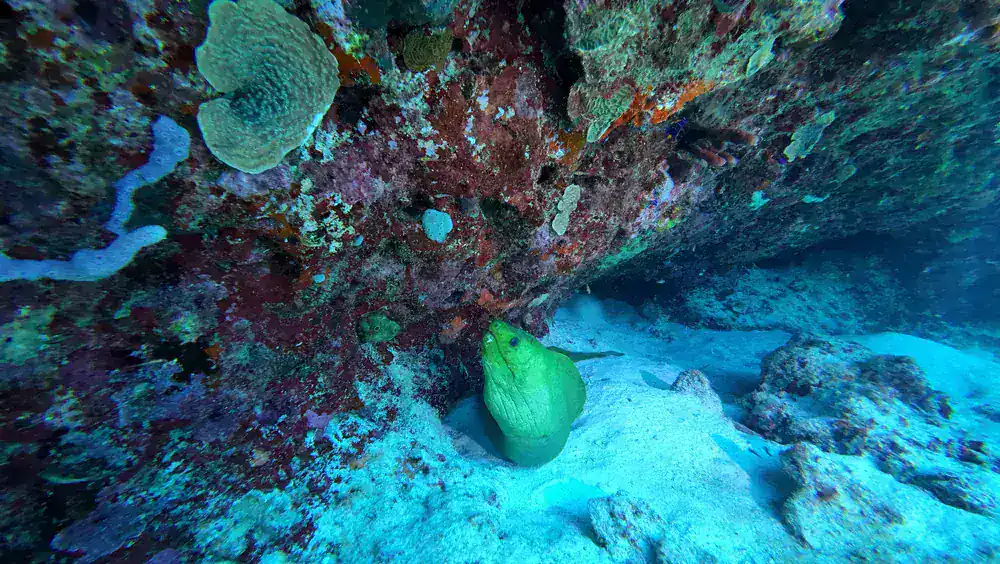
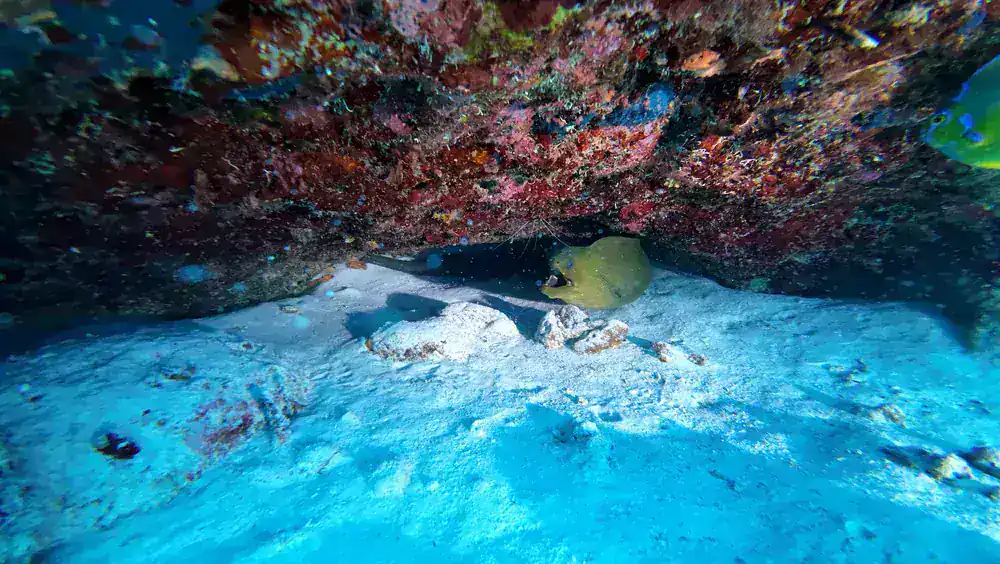
Generally solitary and mostly nocturnal. It spends much of the day with its head protruding from a crevice and comes out to hunt, especially at night. It can defend its shelter and inflict a serious bite if handled or threatened.
Nocturnal predator feeding mainly on fish, crustaceans, and cephalopods.
Reproduction
Oviparous
Identification marks
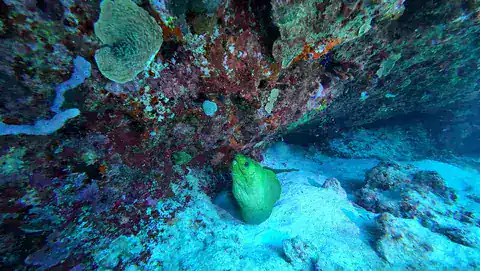
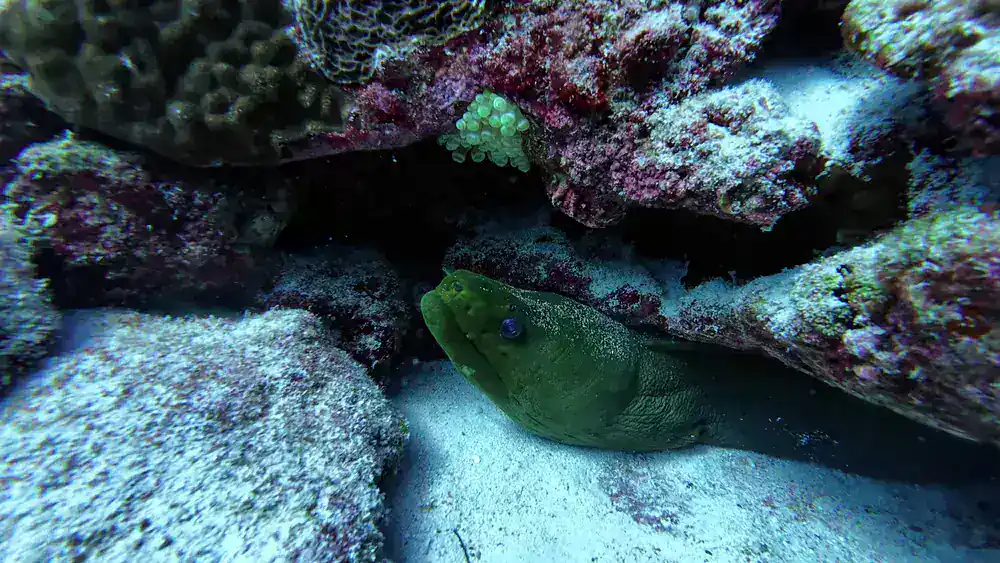
Very large, robust moray eel with an apparently uniform green to yellowish-green body, a broad head, a large mouth, and visible tubular nostrils. Its green appearance comes from yellow mucus covering dark skin.
Similar species
It can be confused with other Caribbean morays. The spotted moray (Gymnothorax moringa) is lighter and covered with dark spots, while the green moray is much larger and generally appears uniformly green.
Approach rules
Observe calmly at a respectful distance, preferably at least 2 m when conditions permit. Do not touch, corner, place hands near its shelter or feed it. Avoid repeated flashes at close range, especially if the animal retreats.
Protection
Globally assessed as “Least Concern” on the IUCN Red List. It is not listed under CITES; respect applicable marine protected areas and conservation measures.