Edible in principle, but consumption is not recommended because the species is threatened and subject to international trade controls.
Culinary quality / 5
2
Danger level
Harmless
Usual observation depth
?–40 m
Lifespan (years)
40
Behaviour
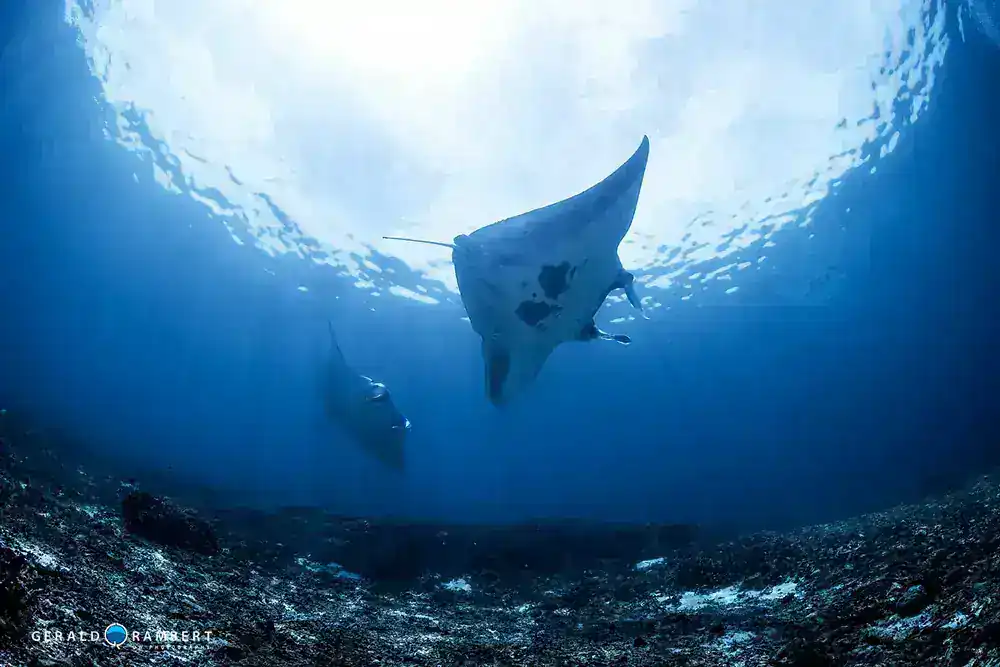
Often solitary or in small groups, but may form large seasonal aggregations at feeding sites and cleaning stations. A highly mobile filter feeder and migratory species, active mainly during the day but also at night.
Observation zones
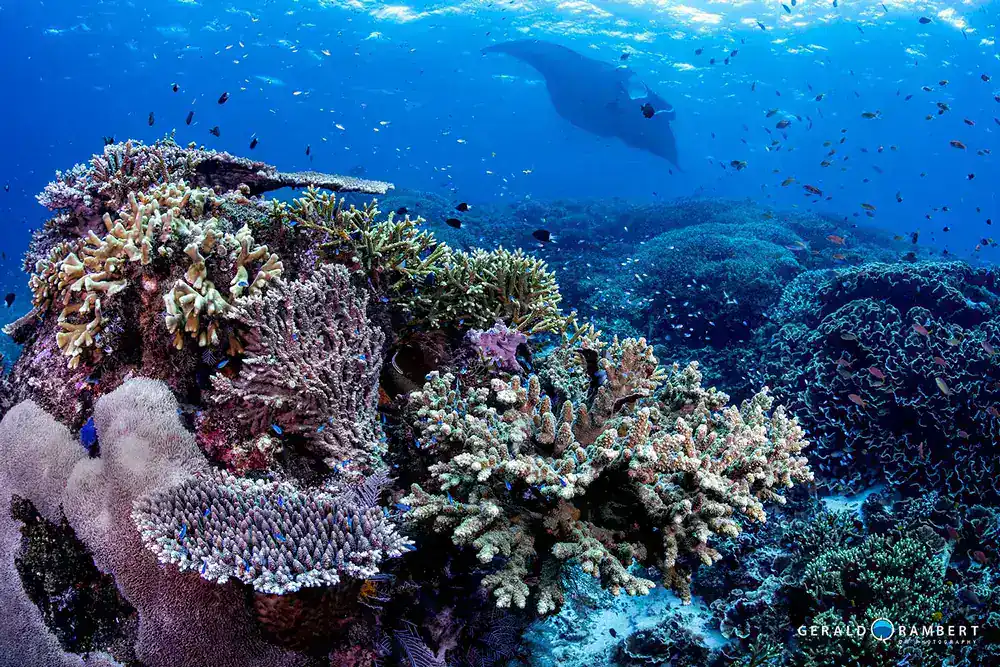
Open water, offshore reefs, reef passes and channels, seamounts, cleaning stations and plankton-rich surface waters.
Diet
Mainly zooplankton, particularly copepods, krill, shrimp larvae and other small crustaceans; it filters its food through its gill plates.
Reproduction
Ovoviviparous
Identification marks
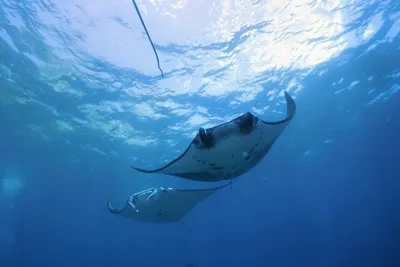
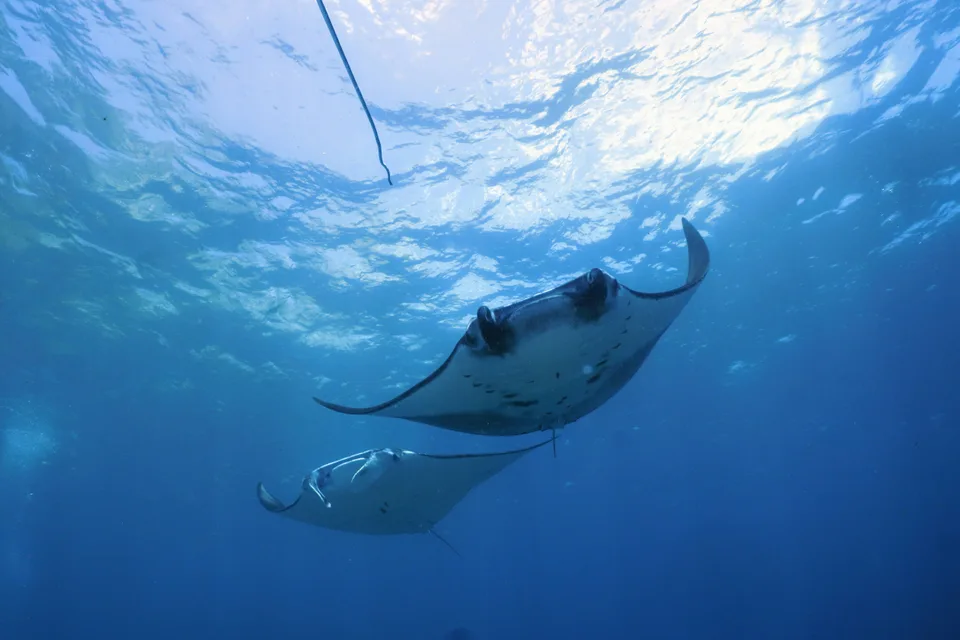
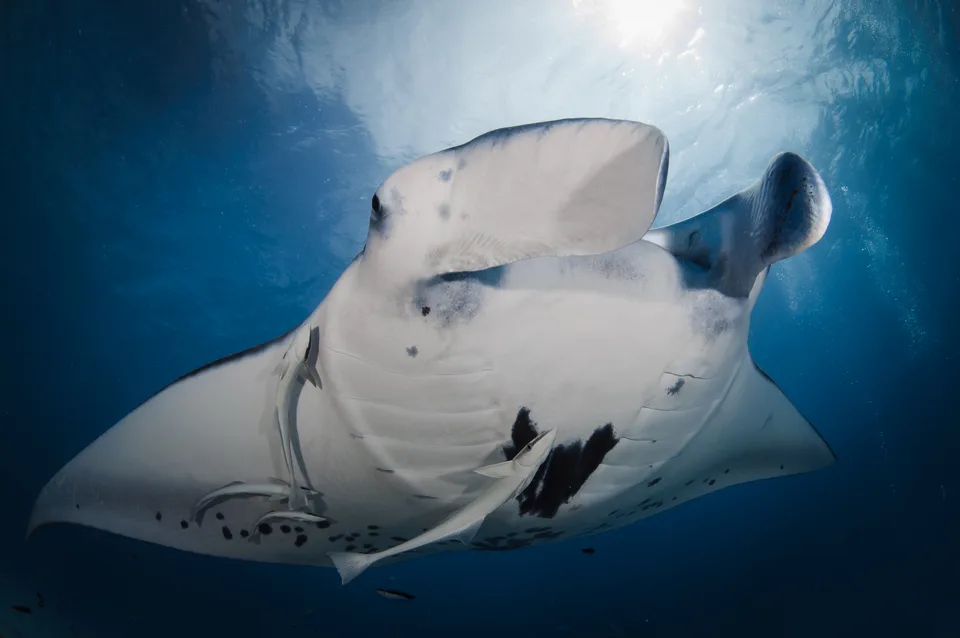
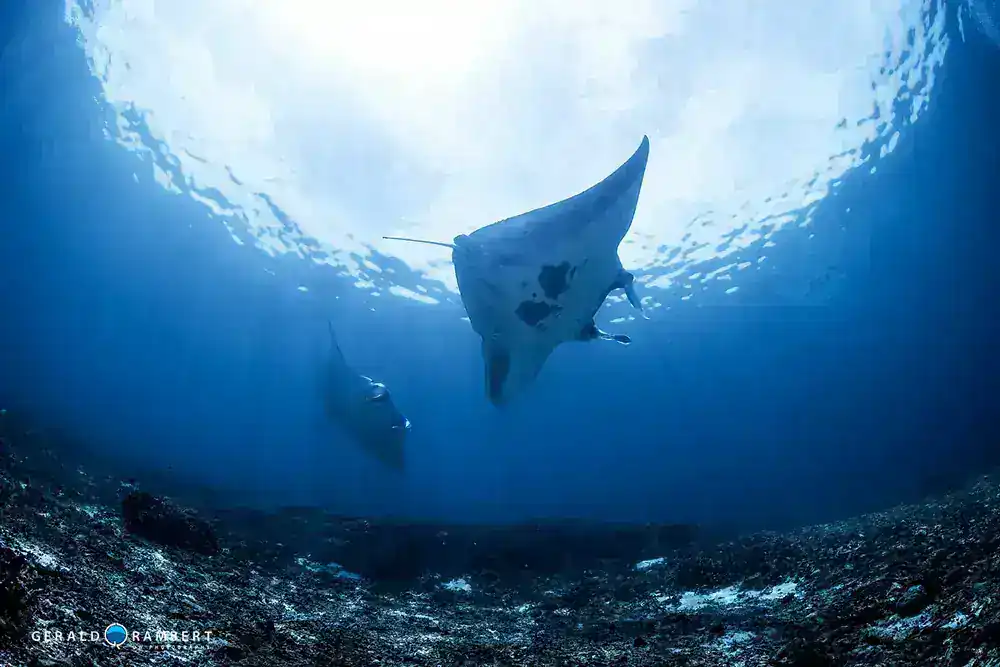
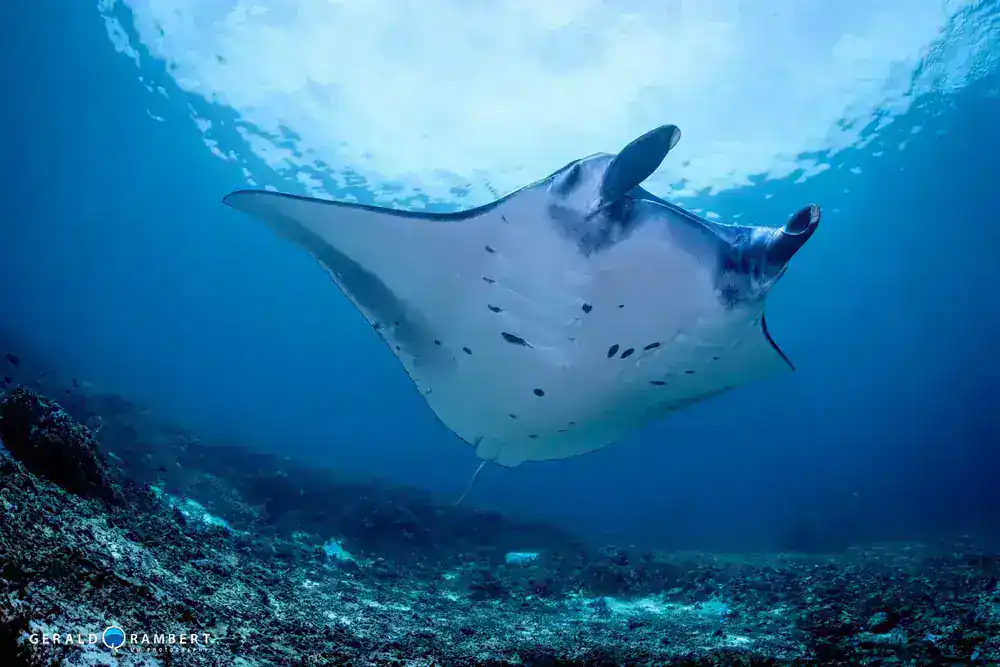
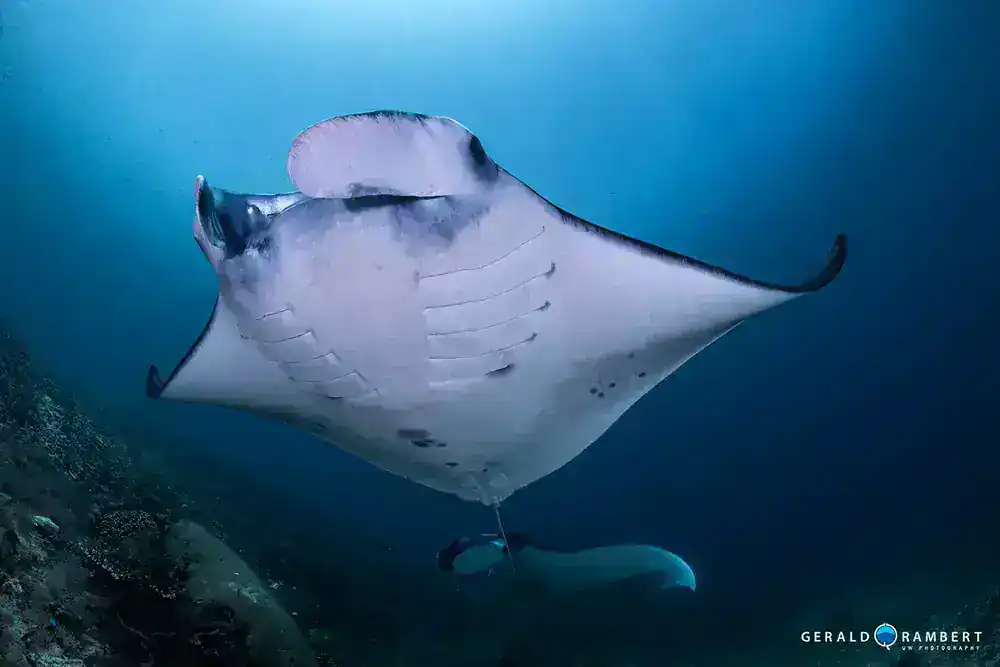
Very large diamond-shaped ray, with a terminal mouth directed forward, broad triangular pectoral fins and prominent cephalic lobes. Generally black or dark above and white below, with individual dark ventral spots. Unlike stingrays, it does not possess a caudal spine.
Similar species
Often confused with the reef manta ray, Mobula alfredi. M. birostris is generally larger, has a more terminal mouth, darker coloration around the mouth, and often distinct dark spots on the underside between the gill slits. It can also be confused with other devil rays of the genus Mobula, which are generally smaller and have narrower mouths.
Approach rules
Observe calmly; remain at least 3 m away and let the ray choose the interaction. Do not touch it, chase it, block its path, encircle it, ride it, feed it or disturb cleaning stations. Avoid flash photography and use minimal lighting.
Protection
Vulnerable according to the IUCN. Listed in CITES Appendix II; international trade is regulated. Additional national or regional protections may apply.