Edible and locally harvested in parts of its range. Consume only from safely sourced areas and cook thoroughly; avoid eating animals from polluted waters or during harmful algal toxin events.
Culinary quality / 5
3
Danger level
Caution
Usual observation depth
1–20 m
Behaviour
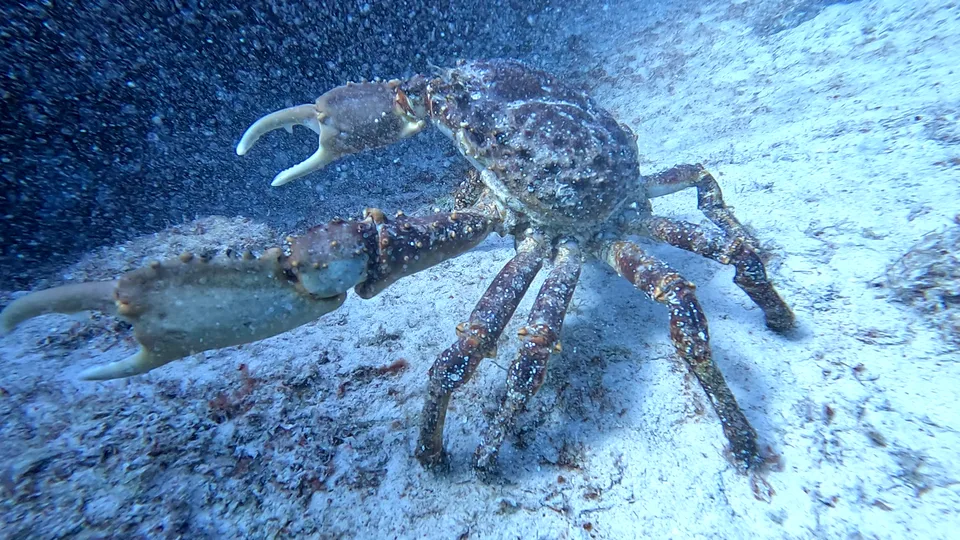
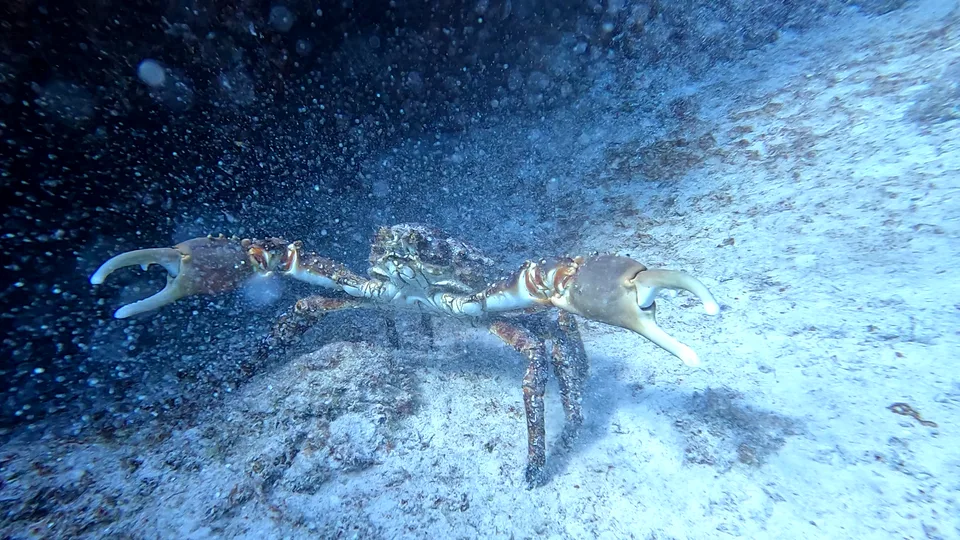
Generally solitary and primarily nocturnal. During the day, it often remains hidden in reef crevices and emerges at night to feed. It can defend itself with its strong pincers if handled or cornered.
Observation zones
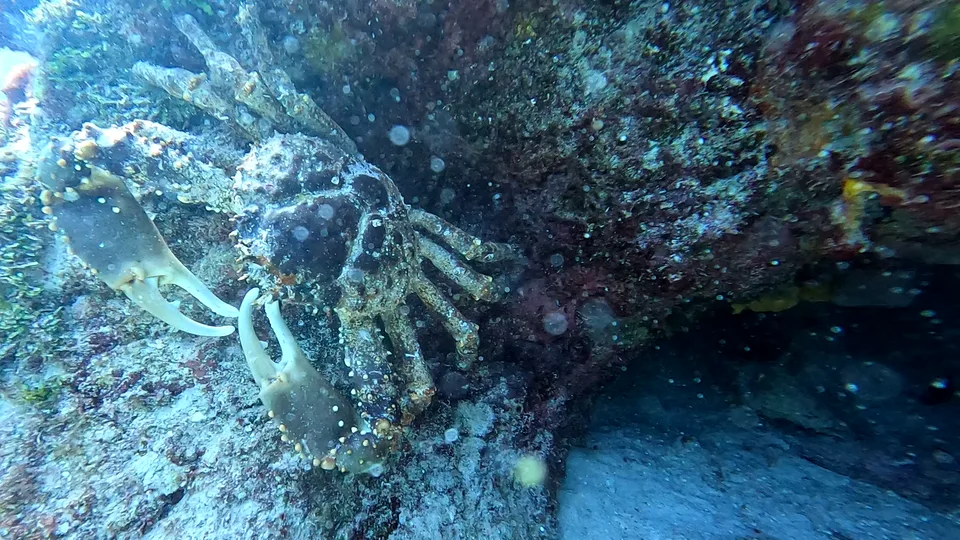
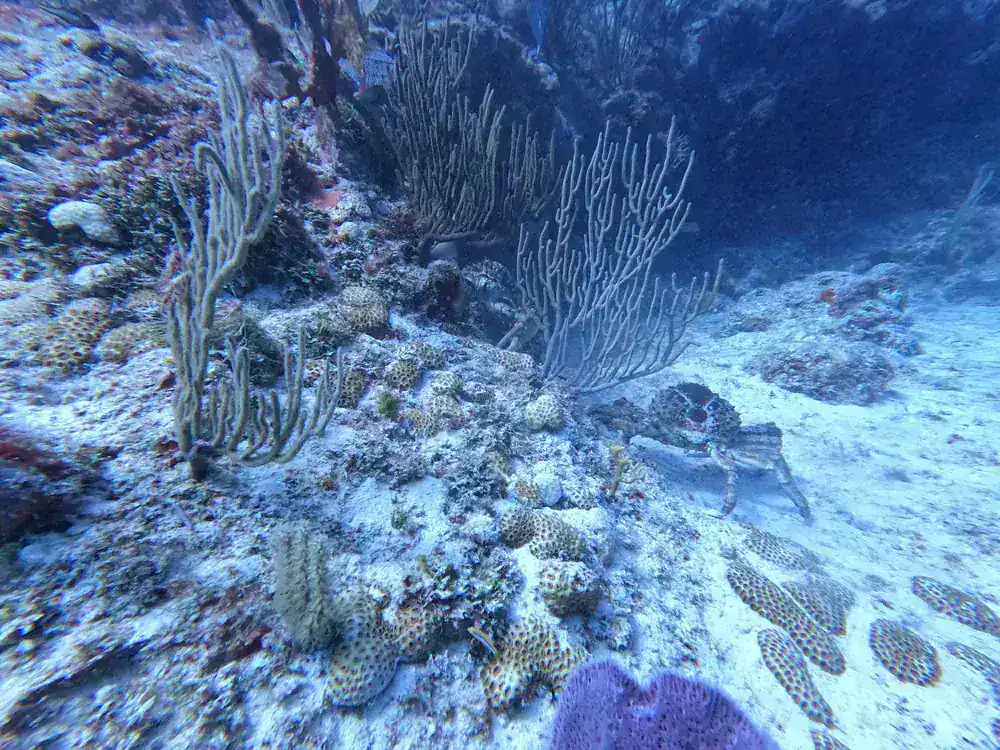
Coral reef, rocky reef, reef rubble, seagrass bed edges and sheltered crevices or overhangs; most often observed during night dives.
Diet
Opportunistic omnivore. It feeds on algae and other plant matter, as well as small benthic invertebrates, detritus, carrion and sometimes sessile animals.
Reproduction
Oviparous
Identification marks
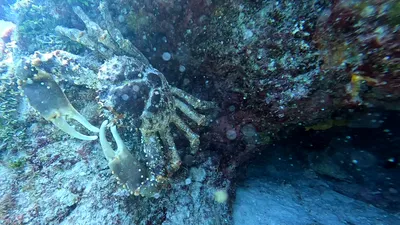
Very large, robust spider crab, with a broad, heavily sculpted carapace covered with sharp spines and clearly visible tubercles. It has long, powerful walking legs and large claws; its colour is variable, often brownish, reddish brown or mottled.
Similar species
It may be confused with other mithracid crabs of the western Atlantic, including Mithrax hispidus and species of Mithraculus. Maguimithrax spinosissimus is distinguished by its much larger adult size, exceptionally robust build, and very spiny, strongly sculptured carapace.
Approach rules
Observe it without touching it or blocking its retreat toward a crevice. Keep a respectful distance, do not bring your hands near its pincers, and do not feed or handle it. Use flash sparingly, especially during night dives.
Protection
No CITES listing is known for this species. A global IUCN assessment may be unavailable; protect reef habitat and avoid any unnecessary collection or disturbance.