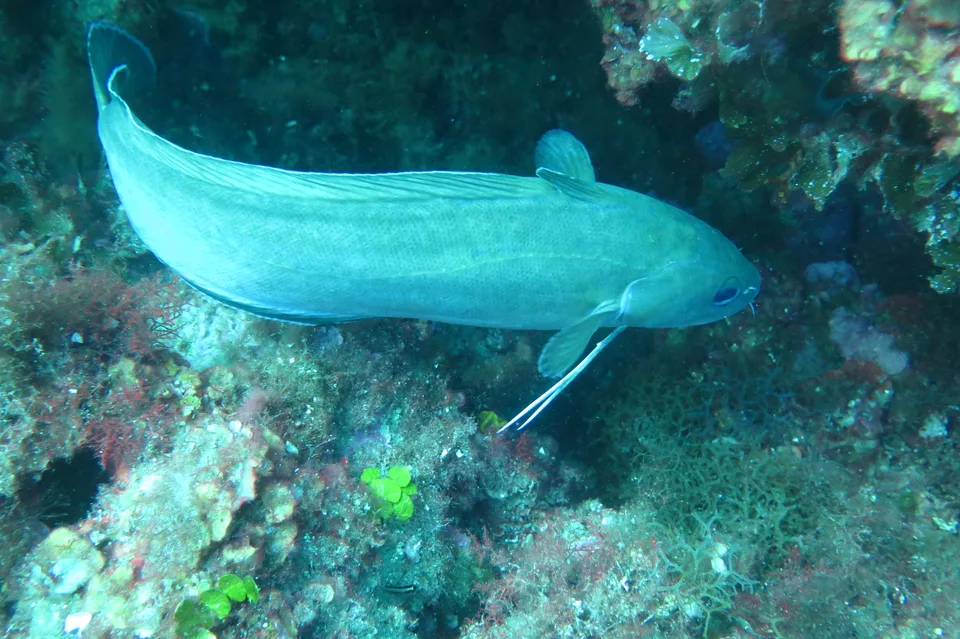
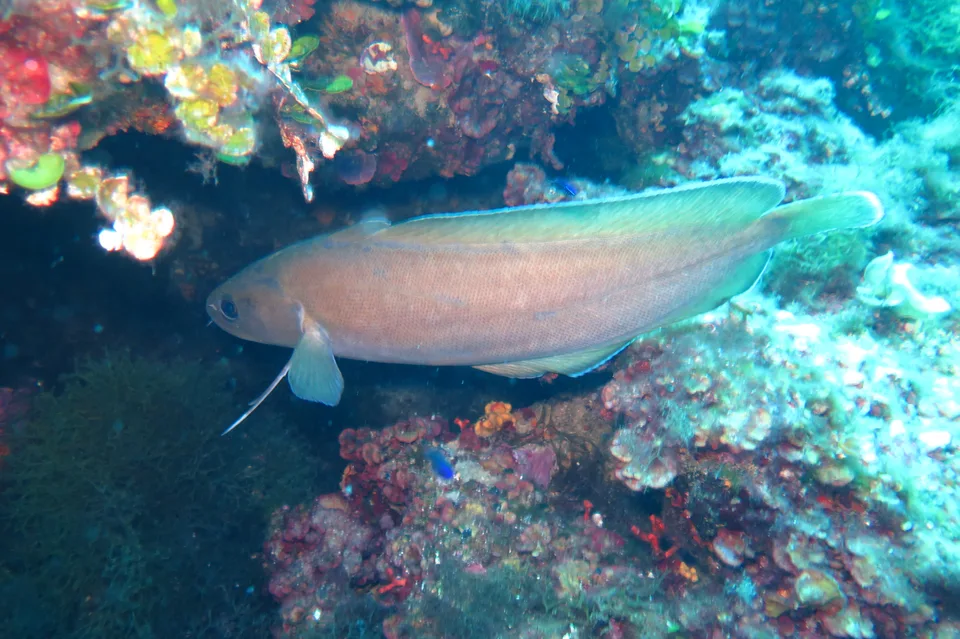
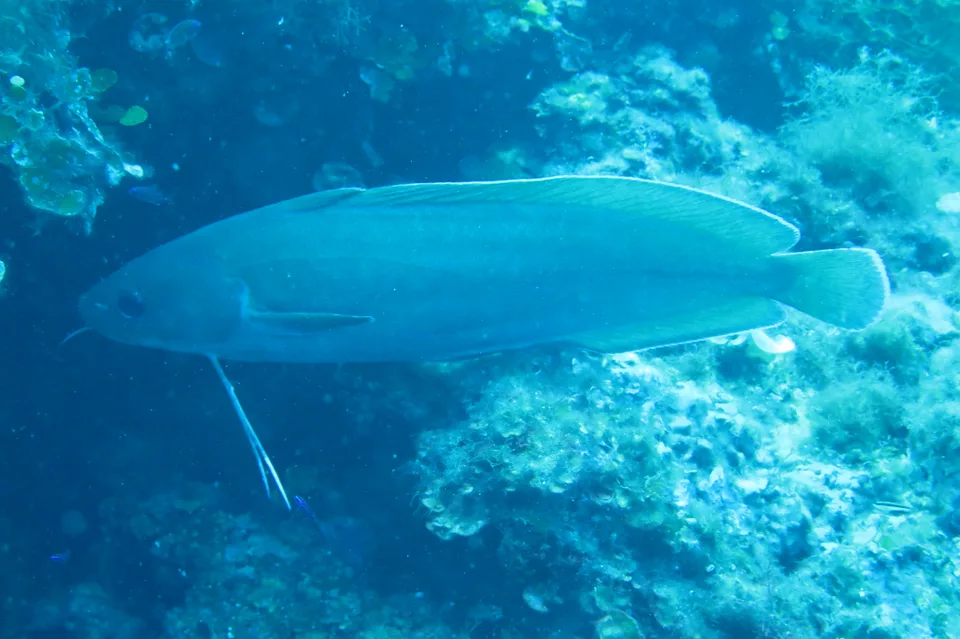
A demersal fish of rocky bottoms, reefs, ledges, caves and wrecks, usually where there are crevices for shelter.
Distribution
Eastern Atlantic, from Norway southward to Morocco and the Macaronesian islands, and throughout the Mediterranean Sea.
Conservation status
Least Concern
Edibility
Edible and valued for its firm white flesh. Consume only fish obtained through responsible, lawful sources; cook thoroughly.
Culinary quality / 5
4
Danger level
Harmless
Usual observation depth
20–200 m
Lifespan (years)
0
Behaviour
Usually solitary or in small groups. Primarily nocturnal, it rests hidden in holes or under ledges by day and forages near the bottom at night.
Observation zones
Rocky reef, ledges, caves, overhangs and wrecks; occasionally on adjacent sand or mixed bottoms.
Diet
An opportunistic predator feeding mainly on small fishes, crustaceans and cephalopods.
Reproduction
Oviparous
Identification marks
Elongate cod-like body; two dorsal fins, with the second dorsal and anal fins long; a single chin barbel; large mouth; and mottled brown to reddish-brown coloration. The pelvic fins are set far forward, beneath the head.
Similar species
Most often confused with the greater forkbeard (Phycis blennoides). Both have a chin barbel and long dorsal and anal fins; reliable separation may require close examination of proportions and fin characters, especially where both occur. Do not identify solely from colour.
Approach rules
Approach slowly and quietly without blocking its refuge. Keep a respectful distance, avoid touching or chasing it, limit flash photography near its eyes, and never feed it.
Protection
Globally assessed as Least Concern on the IUCN Red List. No CITES listing is known. Follow applicable fisheries, protected-area and collection rules.